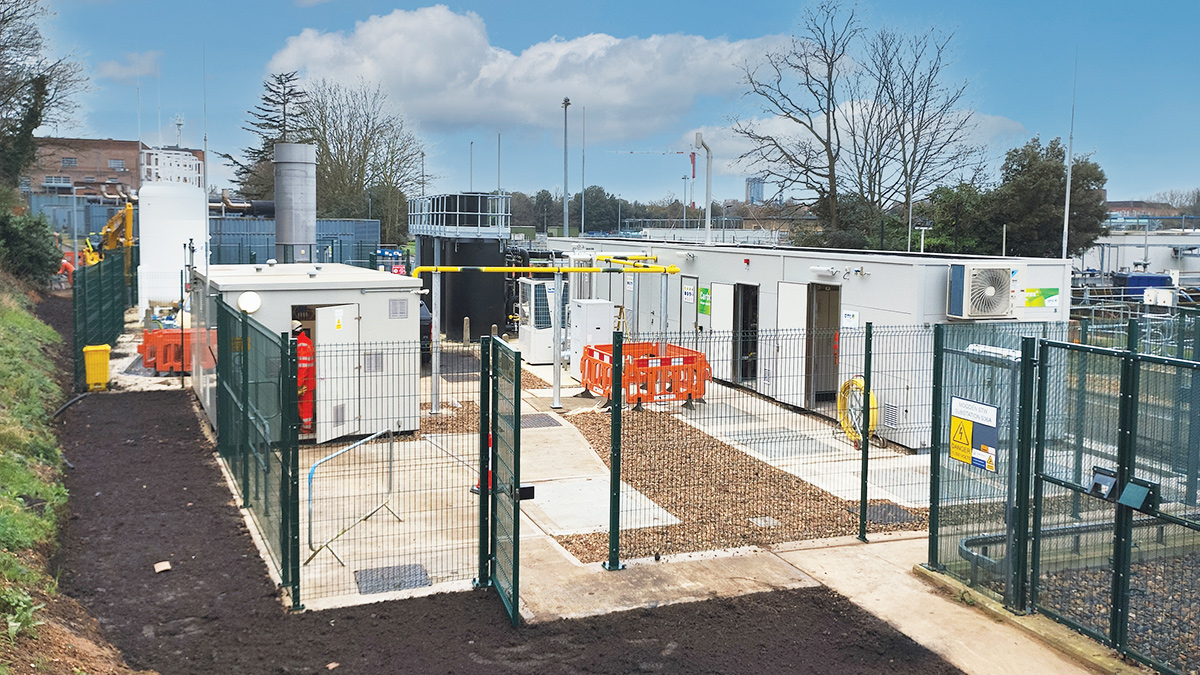
Knostrop & Blackburn Meadows G2G Pro...
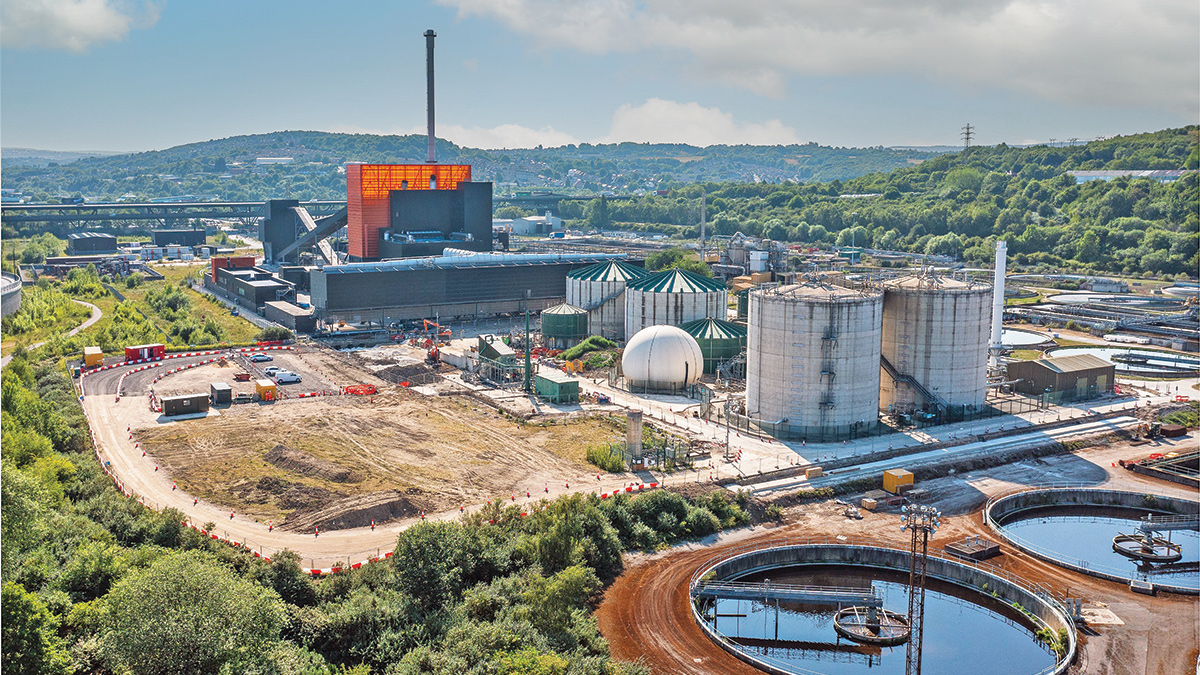
Located in Leeds, Knostrop WwTW serves a population equivalent (PE) of approximately 990,00 while Blackburn Meadows WwTW serves a PE of approximately 500,000 in Sheffield. Both wastewater treatment works are owned and operated by Yorkshire Water and have undergone major development over recent years. The Green Gas Solutions Team at SGN Commercial Services is now underway delivering two large new gas to grid (G2G) installations that will give Yorkshire Water their first biomethane G2G capacity, maximising both green energy generation and fossil carbon abatement potential from their existing anaerobic digestion processes.
Commercial details
The projects are being delivered by the Green Gas Solutions Team at SGN Commercial Services via a Design /Build /Finance /Operate /Maintain (DBFOM) model. In this novel model, Yorkshire Water retain control of process volumes, despite the gas to grid plants being owned and operated by SGN Commercial Services.
The biomethane produced will be shipped by Centrica Energy on behalf of Yorkshire Water. SGN Commercial Services will be paid a monthly service charge to cover capital repayment and O&M services for the duration of the project terms. SGN’s performance commitment is on the gas to grid plants availability, with gain/pain share against the contract availability target.
This model ensures that the parties are in control of the aspect that they are best at, and crucially, correctly motivated to perform optimally. Another great feature of this model provides Yorkshire Water with the option to either sell the green gas certificates associated with their biomethane or retain and retire them to offset their own greenhouse gas emissions.
[caption id="attachment_24444" align="alignnone" width="1200"] Commercial model schematic[/caption]
Project scope & solutions
Both project sites currently have anaerobic digestion (AD) plants that process sewage sludge to make it safe for onward applications. The AD process also yields biogas as the organic matter in the sewage sludge is broken down by a carefully controlled culture of bacteria.
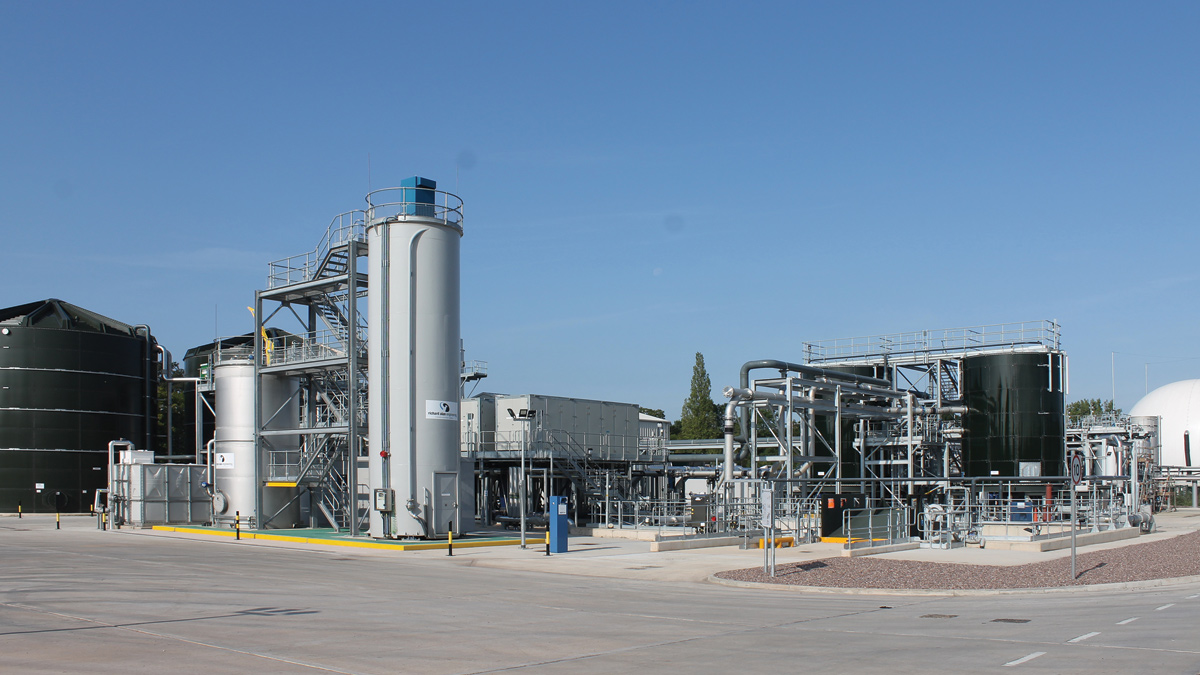
For decades, this biogas has been combusted in reciprocating engines to drive generators to produce green electricity. However, as the UK electricity grid decarbonises, the option to clean up this biogas and inject it into the gas grid represents far more benefit from a fossil carbon abatement perspective. The new gas to grid plants at Knostrop and Blackburn Meadows will do just that; removing impurities and biogenic CO2 from the biogas to leave pure methane that can be injected into the local gas network.
The gas to grid plants at both Blackburn Meadows and Knostrop STWs have been sized to take into account biogas production volume forecasts, as the local populations of Sheffield and Leeds continue to grow. The raw biogas capacities are 1,300 Nm3/h and 2,900 m3/h respectively.
Given that biogas from sewage sludge AD is typically about 60% methane, this means that around 800 Nm3/h and 1,800 Nm3/h of product biomethane respectively will be available for grid injection. A membrane upgrading process technology (to clean up the biogas and separate the methane for grid injection) will be deployed for both projects. This technology uses selective membranes to achieve this separation and has become the favoured option in recent years.
[caption id="attachment_24445" align="alignnone" width="1200"] Blackburn Meadows G2G schematic - Courtesy of DMT Environmental[/caption]
The product gas is >99% methane, and this is passed forward to the grid entry unit for metering and analysis ahead of grid injection. It is at this stage that a small quantity of propane must be added to ensure the calorific value (CV) of the biomethane being exported is equal to that of the gas network.
The waste stream of biogenic CO2 will initially be vented, although plans are already being developed to add CO2 capture facilities that will provide the possibility of a carbon negative process. On both projects, the membrane plants are from DMT Environmental Technology, and the grid entry units are of SGN Commercial Services’ own design and are being built in partnership with Bohr Engineering.
In both cases, the existing AD and hence G2G plants are located in the middle of the wider Yorkshire Water sites. In both cases therefore, SGN CS are laying new pipelines to convey the product biomethane out of the site to connect to the local gas network.
Blackburn Meadows: In the case of Blackburn Meadows, the export pipeline will connect to a Cadent medium pressure system. As the biogas upgrading process operates at pressures above that in the Cadent MP system, the pressures can simply be regulated down to suit.
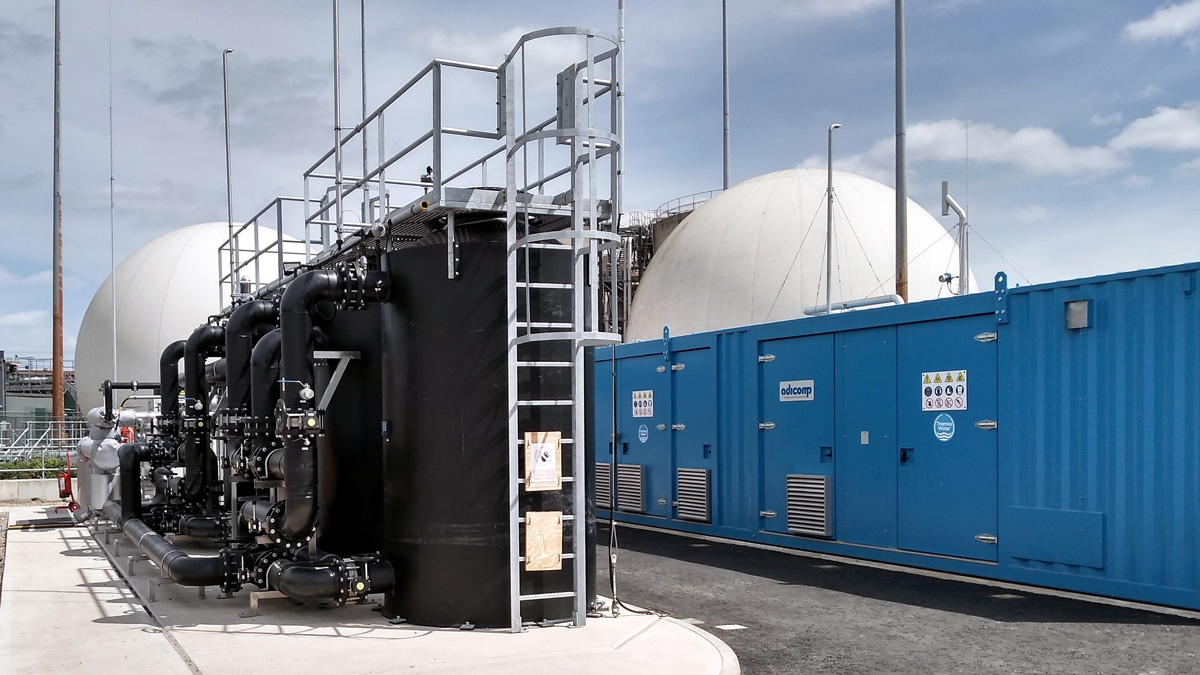
Knostrop: For Knostrop, the best connection option is onto a Northern Gas Networks high pressure system. As the residual biomethane pressure off the back of the upgrading process is below that in the HP system, a further lift compressor installation will be required. In order to reduce the quantity of high-pressure pipework, the project team located the lift compressor compound in a separate compound on the boundary of the Yorkshire Water site.
Knostrop & Blackburn Meadows G2G Projects: Supply chain - key participants
Principal designer & contractor: SGN Commercial Services
Planning & permitting: AtkinsRéalis
Ground remediation: Hague
Civils: Carter Taylor Civil Engineering Limited
Export pipeline: Fox Hill Projects
Biogas pipeline & ducting: Advance Engineering
Biogas upgrade unit supplier: DMT Environmental
Compressor equipment: Adicomp
Grid entry unit supplier: Bohr Ltd
Flow controls: AFFCO Flow Control (UK) Ltd
[caption id="attachment_24453" align="alignnone" width="1200"] (left) Blackburn Meadows pipeline materials, (top right) export pipeline trenching and (bottom right) butt fusion welding - Courtesy of SGN Commercial Services[/caption]
Implementation phase progress (as of June 2025)
Having progressed design to a suitable point, and in their capacity as the asset owner and site operator, SGN Commercial Services was required to submit a planning permission for both projects. Planning permission was successfully obtained in the latter part of 2024 and detailed design, allowing procurement to commence. SGN worked closely with the supply chain to optimise package plant designs to ensure safe and reliable operation.
The Blackburn Meadows project is slightly ahead of Knostrop in programme terms, with the compound area now cleared and ready for civils and, at the time of writing (June 2025), the cross-site biomethane export pipeline is being laid. The pipeline between the G2G plant and the site boundary is well underway but work to date on this element has not been without its challenges. Wastewater treatment works are notorious for a congestion of buried services and redundant underground structures. These challenges have tested the skills and experience of the project team, but a route has now been successfully mapped.
The project team has visited the supplier’s manufacturing facilities to view progress and witness factory performance tests. The majority of the mechanical G2G equipment is made in mainland Europe; which helps with the projects’ embodied carbon credentials.
The containerised/modular nature of G2G equipment facilitates extensive factory testing. This, in turn, minimises costly and potentially more hazardous site works conditions. The increased plant capacity and high-pressure connection introduce additional technical challenges for the Knostrop project, but the design is substantially complete, and the majority of plant is now on order.
On both projects, the compound areas are leased from Yorkshire Water for the duration of the term. At Knostrop, the opportunity is being taken to include offices and stores to facilitate the level of planned and reactive maintenance that will be required to uphold (and hopefully exceed) the contract availability commitments.
[caption id="attachment_24451" align="alignnone" width="1200"] Membrane unit factory visits - Courtesy of SGN Commercial Services[/caption]
Outcomes and onward opportunities
The Blackburn Meadows G2G Plant is due to start commissioning at the end of 2025, with commercial operation expected early in 2026. Knostrop will be following on shortly after. Once complete, the two projects will allow Yorkshire Water to cumulatively generate 225 MWh of green gas per year. That’s enough to heat 20,000 UK homes, offsetting the release of 44,000 tonnes of fossil CO2.
Should SGN Commercial Services subsequently be appointed to deliver the aforementioned CO2 capture feature at both sites, Yorkshire Water could generate as much as 15,000 tonnes per year of biogenic CO2. This biogenic CO2 has value as an industrial product, offsetting the use of fossil derived industrial CO2.
More tantalisingly however, this biogenic CO2 could potentially be sequestered into permanent storage. If this were the case, Yorkshire Water would be taking CO2 out of the atmosphere and locking it away, allowing them to claim and/or sell carbon removal credits. The market value for these credits is still an emerging picture but they are likely to be extremely lucrative.
Another exciting prospect that is currently being investigated is the option to trim the amount of propane being added to the biomethane as it is injected into the grid. Using a concept solution that SGN Commercial Services developed for the SGN network, this trim is achieved by assessing the instantaneous ratio of network flow and export flow. Not only could this trim save biomethane producers a significant amount of money, but it would also further enhance the fossil carbon abatement impact of the project(s).
With the Knostrop and Blackburn Meadows Gas to Grid projects progressing well, Yorkshire Water are looking at further anaerobic digestion sites across their estate where G2G could bring environmental and commercial enhancements.