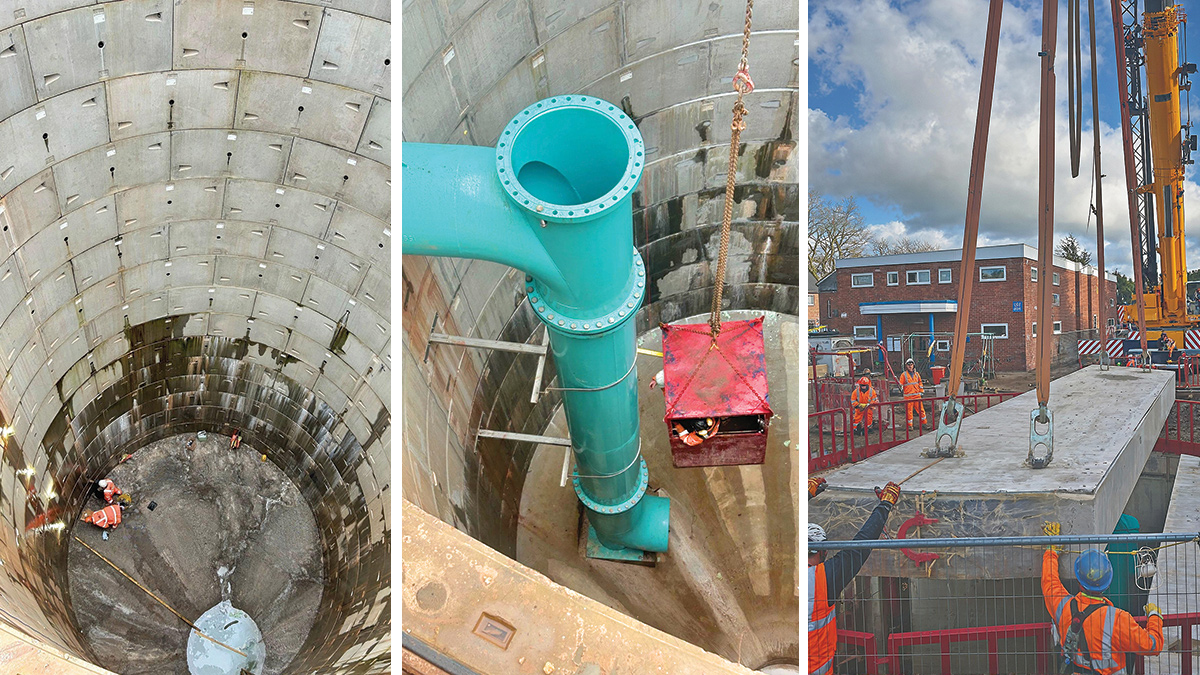
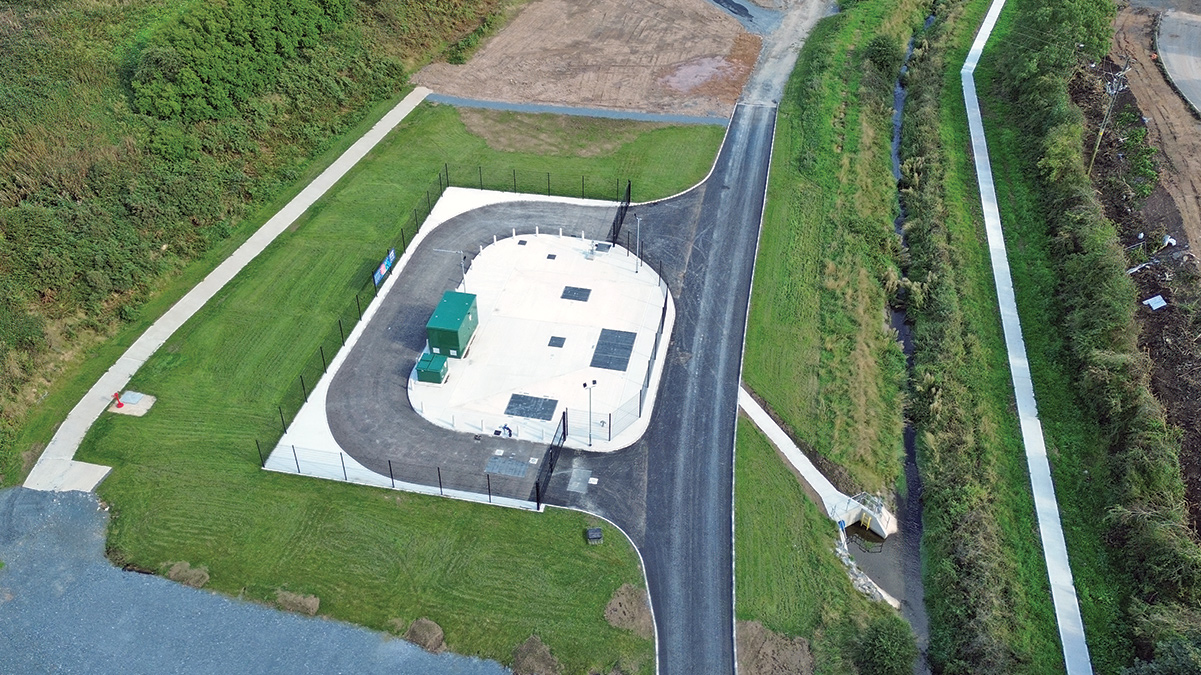
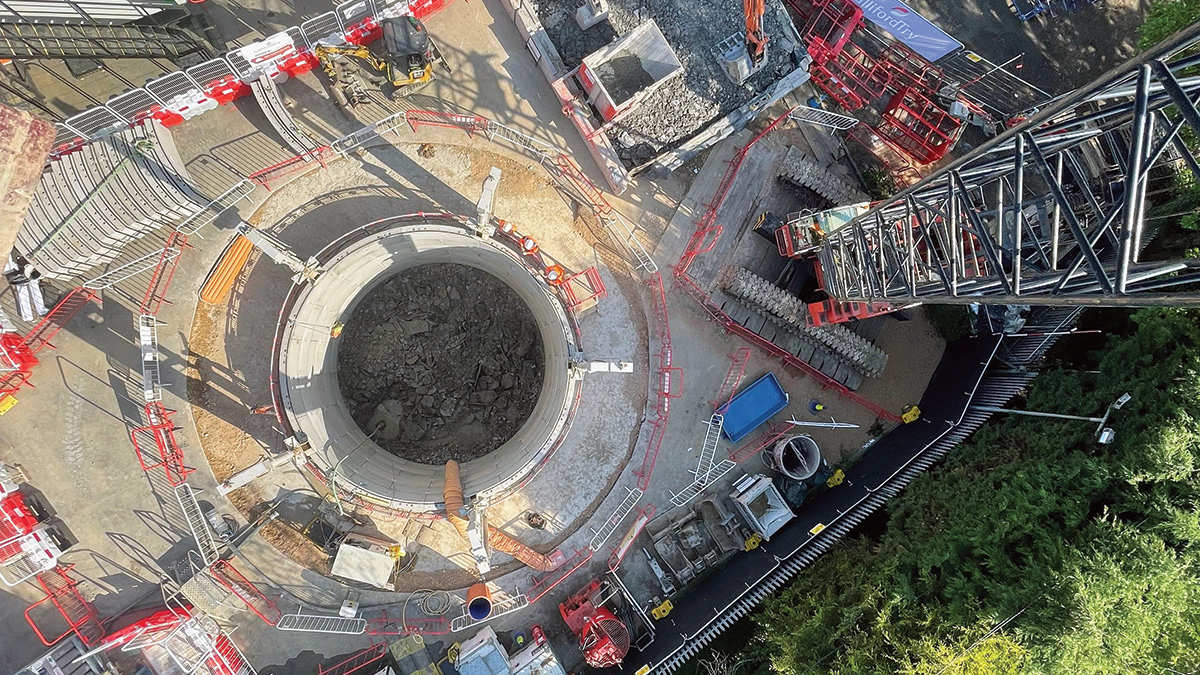
Newtownbreda DAP - Knockbracken Stor...
Within the Newtownbreda Drainage Area Plan (DAP) catchment, two existing storm overflows (SOs) were identified as requiring significant capital investment. These assets were subsequently progressed as two separate schemes: the Knockbracken SO and Mill Road West SO. The Knockbracken SO was identified as a priority intervention due to a number of hydraulic, environmental and physical constraints within the wider Carryduff wastewater network. Development constraints within the Carryduff area limited opportunities for future network expansion. In parallel, the existing combined sewer system provided insufficient hydraulic storage capacity to adequately deal with periods of high rainfall, therefore increasing the frequency of storm overflow events.
Project background & drivers for investment
The existing storm overflow arrangement at Knockbracken discharged unscreened storm flows into the Carryduff River during periods of heavy rainfall. Given the limited dilution available within the receiving watercourse, these discharges posed a potential risk to water quality and downstream environmental receptors.
[caption id="attachment_34110" align="alignnone" width="1200"] Existing Knockbracken site - Courtesy of Dawson-WAM Ltd[/caption]
To address these issues, NI Water developed a scheme centred on a new offline stormwater storage facility and the relocation of the existing storm overflow upstream within the network. The upgraded configuration provides improved hydraulic control and increases the capacity available to attenuate and store storm flows during wet weather events.
The new infrastructure has been designed to accommodate flows associated from a 1-in-1-year storm event and incorporates modern screened overflow arrangements to improve the quality of intermittent discharges when the storm overflow operates. In addition, the scheme provides more than 950m3 of additional stormwater storage, significantly increasing the capacity of the local wastewater network.
The investment forms part of NI Water’s wider programme to address hydraulic and environmental constraints within the Newtownbreda DAP catchment and to support long-term compliance and operational performance.
Early contractor involvement
Following receipt of the initial hydraulic modelling outputs, which formed the basis of the preliminary design, Murphy Dawson WAM JV was appointed under an Early Contractor Involvement (ECI) contract. The objective of the ECI phase was to conduct targeted site and ground investigations, validate the hydraulic requirements, and develop a technically robust, buildable and value-engineered solution for NI Water.
A number of options were assessed to provide the required additional hydraulic storage capacity. These included upsizing existing combined sewers within the urban environment and developing greenfield sites already within NI Water’s landholding in the vicinity. Following detailed consideration by Murphy Dawson WAM JV, both options were determined to be non-viable due to a combination of factors, including significant capital and commercial costs, challenging ground conditions and shallow bedrock, and the potential construction and operational risks posed to adjacent existing reservoir infrastructure.
[caption id="attachment_34109" align="alignnone" width="1200"] (left) The redundant pumping station and (right) the redundant lime dosing plant with Carryduff River to the right - Courtesy of Dawson-WAM Ltd[/caption]
Following consultation with NI Water’s hydraulic modelling team, the required storage volume was subsequently value-engineered through optimisation of the proposed hydraulic control and storage arrangement.
The resulting solution comprised the following key elements:
Replacement of the existing storm overflow and installation of a flow control structure
The existing storm overflow structure would be removed and replaced with a new orifice/flow control chamber constructed on the existing 1,050 mm diameter combined sewer. The flow control arrangement would restrict the downstream pass-forward flow, thereby increasing the available upstream hydraulic storage within the existing 1,050 mm combined sewer during rainfall events. This would effectively utilise the existing sewer network as online attenuation storage.
Construction of a new storm overflow upstream of the flow control structure
A new storm overflow structure would be constructed upstream of the proposed flow control chamber on the 1,050 mm combined sewer. During rainfall events, when the upstream hydraulic level exceeded the design threshold, flows would surcharge and discharge over a double-sided weir arrangement into the proposed offline storage system.
Installation of a new trunk sewer
A new trunk sewer would be constructed between the proposed storm overflow structure and the offline storage tank. This would convey spills to the storage tank and provide additional online hydraulic storage capacity within the new sewer.
[caption id="attachment_34105" align="alignnone" width="1200"] Demolition of redundant lime dosing plant - Courtesy of AECOM[/caption]
Construction of an offline storage tank with pumped return
A new offline storage tank would be constructed to provide the remaining required attenuation volume, complete with a pumped return arrangement. During rainfall events, flows diverted via the new storm overflow would be temporarily retained within the storage tank. Following cessation of the rainfall event and a reduction in upstream hydraulic levels, the stored flows would be returned to the trunk sewer via the pumped return system for onward conveyance through the network.
The proposed arrangement significantly reduced the required volume and footprint of the offline storage tank by maximising the utilisation of available online storage within both the existing 1,050 mm combined sewer and the newly constructed 1,200 mm trunk sewer. This provided a more efficient and buildable hydraulic solution while reducing the size of the new offline storage tank.
Site selection & preparation
Within the Newtownbreda area, NI Water owned an existing redundant potable water infrastructure site. The site had historically been used as a lime dosing facility and included a pumping station associated with the former Mourne Conduit.
The site represented a brownfield development opportunity and, following an assessment of the available sites in the vicinity, was identified as the most favourable location for construction of the proposed offline storage tank. Utilising the existing developed footprint provided an opportunity to minimise the requirement for additional land acquisition while making beneficial use of an existing NI Water asset.
Notwithstanding the site’s suitability, the presence of the redundant Mourne Conduit within the site boundary introduced a number of significant construction and asset-protection constraints. In addition, the redundant pumping station and lime dosing infrastructure required controlled demolition before construction of the proposed storage facility. The works were therefore required to accommodate and manage the interface with the existing water infrastructure throughout the construction phase.
[caption id="attachment_34104" align="alignnone" width="1200"] Drone image of the Mourne Conduit, indicative of a bedrock crown construction - Courtesy of Dawson-WAM Ltd[/caption]
A specialist demolition contractor carefully dismantled and demolished the redundant lime dosing plant and pumping station. The team identified, isolated, and removed existing connections to the Mourne Conduit, then reinstated and repaired the associated interfaces. Because of the conduit’s age and operational history, available asset records could not confirm its residual condition and structural integrity, introducing additional uncertainty and construction risk.
To reduce this uncertainty, a specialist trenchless survey contractor was engaged to undertake a LiDAR-drone survey of the Mourne Conduit. The investigation established the condition and geometry of the existing asset and identified any evidence of infiltration, deterioration, or other conditions that could affect the proposed construction works. The team incorporated the survey information into the construction planning and risk management process.
Although the Mourne Conduit was no longer operational as a potable water asset, its continued physical presence across the development site represented a significant environmental and construction interface. The conduit remained hydraulically connected to its downstream discharge arrangement, terminating at Knockbracken Reservoir via an existing headwall structure. The reservoir is privately owned and currently used as a public water-based recreational facility.
Consequently, protecting the conduit from construction-related damage, ingress of contaminants and uncontrolled pollution was identified as a key project risk. Particular consideration was given to the potential consequences of construction activities in the vicinity of the conduit, including excavation, temporary works, plant movements, demolition activities and the potential migration of construction pollutants. Appropriate controls and mitigation measures were therefore incorporated into the construction methodology to protect the existing conduit and prevent the potential transfer of contaminants to Knockbracken Reservoir.
[caption id="attachment_34106" align="alignnone" width="1200"] LiDAR-drone survey set-up - Courtesy of Dawson-WAM Ltd[/caption]
A key site constraint was the proposed development’s location within the Carryduff River floodplain. Fluvial flood risk was therefore identified as a significant design and operational consideration for the proposed storage tank and associated sewer infrastructure. During detailed design, site levels were strategically raised to establish an appropriate finished ground level, thereby reducing flood risk to the completed infrastructure.
As part of the Early Contractor Involvement phase, targeted geotechnical investigations comprising boreholes and trial pits were undertaken to establish ground conditions across the proposed development footprint. The investigation provided critical information on the underlying geology, including the depth and variability of bedrock, which informed the structural and geotechnical design of the underground assets and the associated excavation requirements.
The investigation also supported the constructability and value-engineering assessment. Significant variability in bedrock levels was identified, with differing rockhead strikes across the site. This information was critical in determining the optimum location and alignment of the offline storage tank, connecting pipelines and the new storm overflow structure.
By integrating the ground investigation findings with the hydraulic requirements and wider site constraints, the infrastructure could be positioned to avoid excavation in bedrock and optimise constructability. This enabled the design team to balance hydraulic performance, geotechnical conditions, construction methodology and capital cost when establishing the final site layout.
[caption id="attachment_34117" align="alignnone" width="1200"] Initial site setup - Courtesy of Dawson WAM[/caption]
Knockbracken CSO: Supply chain - key participants
Client: NI Water
Main contractor: Murphy Dawson-WAM JV
Civil contractor: Dawson-WAM Ltd
MEICA contractor: Murphy
Project managers: AECOM
Civil/structural design: Tetra Tech RPS
MEICA consultant: KCG Group
Ground Investigation: Causeway Geotech Ltd
Geotechnical: Cassidy Geotechnical Ltd
Specialist drone surveying: Environmental Techniques Ltd
Specialist drone surveying: Good Friday Robotics Ltd
Electrical: FM Electrical
Demolition works: McCusker Demolition
Material testing: Mattest
Concrete formwork: Raptic Formwork Ltd
Concrete coring: JM Coring
Rebar: Romtech
Concrete pumping: Erne Concrete Pumping Ltd
Storm overflow screen: Eliquo Hydrok Ltd
Submersible pumpsets: Xylem Water Solutions
MCC & controls: Pronto Automation
GRP kiosk: Morgan Marine
Actuated penstock: Axflow NI Ltd
uPVC pipes/MDPE pipe: APP Fusion Group
Pipe accessories: Total Pipeline Specialists
Precast headwalls & pipes: FP McCann
Steel fabrication: Metalcraft Engineering Ltd
Fencing: Kane Fencing
Storage tank construction: (piling, walls, roof)
Site set-up
Following the contract award, the site layout was developed to optimise the constructability of the storage tank and associated pipework, while providing suitable welfare facilities and off-road parking for construction and delivery teams.
[caption id="attachment_34108" align="alignnone" width="1200"] Secant piling site set-up - Courtesy of Dawson-WAM Ltd[/caption]
As the works were undertaken on both sides of the Carryduff River, Dawson WAM Ltd designed and constructed a temporary access bridge to maintain site connectivity across the watercourse. The bridge utilised in-house steel mats and bridge beams owned by Dawson WAM. Approval was obtained from the Department for Infrastructure (Rivers) for the temporary crossing. The temporary works design was value-engineered by incorporating two existing bridge abutments on site, reducing the extent of new temporary works and associated construction requirements.
The specialist demolition works and ground cleansing were completed, with the redundant structures crushed on site to provide suitable recycled material for use in access roads and platforms.
Ecology
The Dawson WAM Ltd environmental team undertook pre-construction ecological surveys, during which they identified several animal burrows. After consulting with the NIEA, the delivery team conducted targeted CCTV inspections of the burrows to determine their status. The investigations confirmed they were redundant rabbit burrows and posed no ecological constraint or risk to the contract.
The construction site was located parallel to the Carryduff River. Water quality samples were collected both upstream and downstream of the site to establish baseline conditions and monitor for any potential deterioration in water quality or pollution incidents arising from the construction works.
Tank construction
Various sizes and construction methodologies were considered for the offline storage tank. Ground conditions were not considered suitable for a caisson shaft. Groundwater conditions were influenced by the adjacent Carryduff River, with an additional risk of potential settlement or movement of the Mourne Conduit, which was in close proximity to the tank.
[caption id="attachment_34115" align="alignnone" width="1200"] Single sided shutters utilised for wall pours - Courtesy of Dawson WAM[/caption]
A rectangular tank was identified as the most suitable storage solution, measuring 10m wide, 15m long and 9m deep. To mitigate the key geotechnical risks associated with the poor ground conditions and proximity to the Mourne Conduit, Dawson WAM Ltd appointed geotechnical consultant Cassidy Geotechnical Ltd to undertake the design.
Dawson WAM subsequently installed a cased CFA secant-piled rectangular cofferdam, designed to serve as both temporary and permanent works for the tank. The secant-piled box was designed to:
Provide piles of sufficient length to ensure the toe was embedded within the underlying cohesive clay strata, achieving hydraulic cut-off and mitigating the risk of groundwater ingress into the excavation.
Provide piles of sufficient diameter and reinforcement to facilitate excavation of the tank to a depth of 9m without requiring intermediate propping, improving buildability.
Maintain minimal lateral deflection, safeguarding the adjacent Mourne Conduit from ground movement.
Provide adequate support against temporary surcharge loadings generated by the adjacent crawler crane and construction traffic.
The secant-piled cofferdam comprised 108 (No.) 630 mm diameter piles, each 15m long, with all male piles fully reinforced.
[caption id="attachment_34113" align="alignnone" width="1200"] Tank excavation complete - Courtesy of Dawson-WAM Ltd[/caption]
Upon completion of the secant piling, an in situ reinforced concrete capping beam was constructed to connect and restrain the secant piles, facilitating excavation of the tank to formation level. The capping beam provided lateral restraint to the secant piles during the temporary works phase and, as part of the permanent structural arrangement, supported the precast roof structure installed later in the project.
Four separate reinforced concrete wall pours were undertaken within the cofferdam to complete the internal tank structure. Concrete benching was formed to a self-cleansing gradient, eliminating the requirement for mixer pumps and associated pipework.
Precast roof slabs were incorporated into the design as a cost and programme-efficient solution to provide structural closure to the tank. High-security access covers were subsequently installed to provide controlled access to key areas of the tank, followed by the installation of a structural screen to complete the tank structure.
Trunk sewer & flow control chamber
The new storm overflow arrangement was connected to the offline storage tank by installing of 200 m of 1,200 mm diameter precast concrete pipework, including a section that crossed the Carryduff River. A Section 14 permit was obtained, along with 48 permits from the Department of Agriculture, Environment and Rural Affairs (Inland Fisheries), and a Schedule 6 permit from the Department for Infrastructure (Rivers), authorising construction of the works.
A consent to discharge permit was also obtained from the NIEA to allow temporary over-pumping of the watercourse during construction.
[caption id="attachment_34116" align="alignnone" width="1200"] Temporary access bridge aiding works to both sides of the Carryduff River - Courtesy of Dawson-WAM Ltd[/caption]
A key element of the scheme was the implementation of enhanced hydraulic control within the existing sewer network. A new downstream flow control chamber was constructed to replace the existing storm overflow and outfall arrangement. This chamber restricts pass-forward flows to the downstream catchment, reducing the risk of hydraulic surcharge and flooding during storm conditions.
By controlling discharge rates, upstream sewer levels rise and utilise the available storage capacity within the existing 1050 mm diameter combined sewer before spilling into the tank. Upstream of the offline storage tank, the new storm overflow structure was constructed with a double-sided weir arrangement.
This structure provides controlled diversion of excess flows into the storage tank during storm events. The new storm overflow structure does not incorporate screening; screening is provided at the overflow arrangement from the offline storage tank before discharge to the Carryduff River.
Return pumping & environmental protection
Following storm events, stored flows are returned to the combined sewer network via a dedicated return pumping system when downstream hydraulic conditions permit, restoring available storage capacity for subsequent storm events.
The return pumping system comprises storm return pumps, a valve chamber, a flow meter chamber, and a rising main connection.
The offline storage tank discharges into the Carryduff River via a new headwall and flap-valve arrangement, preventing backflow into the tank. A 6mm bi-directional peak screen was installed to prevent debris and larger solids from entering the river during overflow events.
[caption id="attachment_34114" align="alignnone" width="1200"] Precast beams and roof slab installation - Courtesy of Dawson-WAM Ltd[/caption]
Mechanical, electrical & site infrastructure
To support operation and maintenance of the new stormwater storage tank, a range of associated infrastructure was installed, including a motor control centre (MCC) kiosk, washwater booster kiosk, inlet isolation chamber, electrical and telemetry systems, Emergency Management System (EMS) drainage, security fencing, site lighting, and new access roads and hardstanding areas.
The completed facility provides NI Water with a secure, automated and maintainable asset capable of supporting long-term wastewater network operations.
Project benefits
The completed Knockbracken Storm Overflow Scheme delivers significant environmental and operational improvements for the Carryduff area. The new offline storage facility increases wastewater network resilience, reduces the frequency and impact of pollution incidents, and improves storm-flow management during heavy rainfall.
The screened overflow arrangement provides enhanced protection for the Carryduff River, while the new hydraulic controls maximise use of the existing network capacity and improve overall system performance.
Delivered with a project value of £6m, the Knockbracken Storm Overflow upgrade demonstrates successful collaboration between NI Water, AECOM, Murphy Dawson-WAM JV, Tetra Tech RPS and the wider supply chain. The scheme provides a sustainable, long-term solution that improves wastewater performance, supports regulatory compliance, accommodates future demand within the catchment, and delivers enhanced environmental protection for the surrounding area and watercourse. As a result of this NI Water investment and the increased network capacity, a significant number of new homes have been progressed in the Carryduff area.