
Avonmouth WRC (2025)
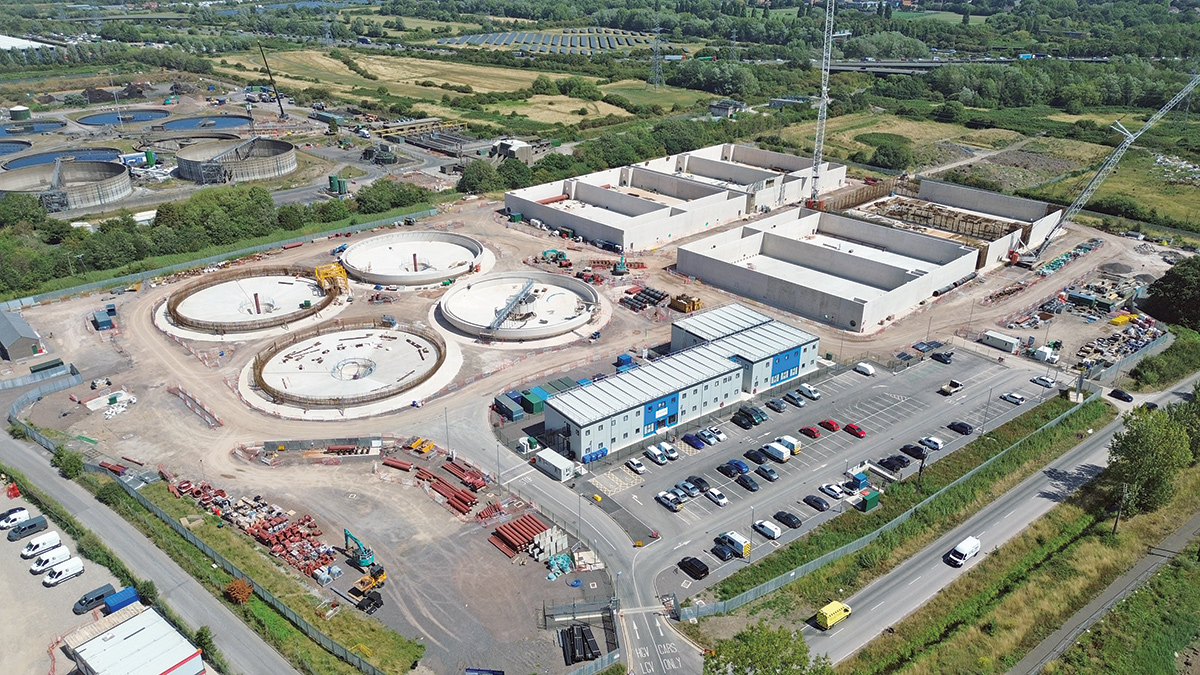
Avonmouth Expansion Project - Courtesy of YTL Construction UK
Built in the early 1960s, Bristol’s water recycling centre (WRC) at Avonmouth serves a catchment encompassing Bristol, South Gloucestershire Council, and parts of the Bath & North East Somerset (B&NES) and North Somerset Council areas. With the population of Bristol projected to increase significantly in the next 20 years, further treatment capacity is needed to meet these demands, ensuring a greater volume of sewage can continue to be treated to the highest standard, while also protecting the environment by improving the quality of treated wastewater released into the Severn Estuary. The expansion will ensure that the permitted flow to full treatment is increased and avoid spills to storm or to the environment on dry days.
Existing works & project scope
The existing site currently treats up to 3,672 l/s. If this is exceeded due to high rainfall in the catchment area, the additional flow is diverted to the storm tanks. This new project will allow the additional treatment of flow up to 5,700 l/s, reducing spills to storm tanks, which will future-proof the site based on forecast population increases in Bristol and the surrounding area.
As the flow enters the site, it is screened and grit is removed. From here, the flow passes along the inlet channel and through to the primary settlement tanks (PST) where settlement occurs and the flow weirs over to the next stage of the process. There is then a split to either send the flow to the activated sludge process (ASP) lanes or into the sequencing batch reactor (SBR), where flow is aerated to allow bacteria to react with the flow. The final effluent then flows to the Severn Estuary via the culvert that runs through site.
The new project will increase the capacity of flow treated by approximately 60%. A key challenge of the expansion works is to ensure that the existing site can continually treat flows while construction takes place.
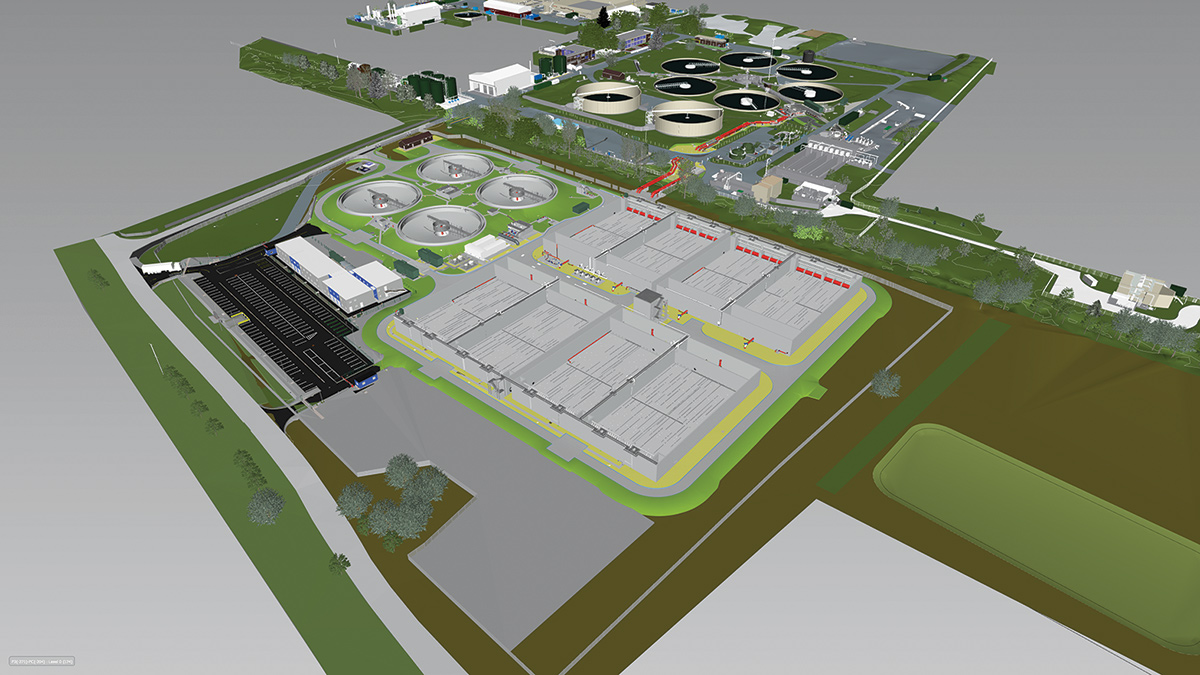
3D BIM model of existing and new works – Courtesy of YTL Construction UK
Design approach
The design process started in 2019 with the application for planning permission for the expansion submitted in the spring of 2023, following lengthy public and stakeholder consultation.
The design included a review of the existing process at the Optioneering Stage which identified the opportunity to optimise the existing SBR process, thus allowing the removal of old processes on site, freeing up space for future upgrades. The layout of the new works was developed to allow for future expansion as well as accommodating site constraints including maintenance access for wind turbines and ecological constraints.
The full design was modelled in REVIT and Civils 3D and this was useful in communicating the design with Wessex Water Operations at multiple stages throughout the design process.
Ground conditions
The ground conditions are poor and there is significant contamination present due to previous industrial processes in the Avonmouth area. Earthworks and landscaping was developed on the basis of minimising the amount of material that needs to be removed from site and recycled. This included building up ground levels around the PSTs, which also removed the need for extensive steelwork access platforms. This design approach saved significant vehicle movements and costs associated with contaminated material removal as well as the associated carbon savings for vehicle movements and steelwork. This piece of work has been nominated for the Best Sustainable Reuse of Materials Category at the Brownfield Briefing Awards.
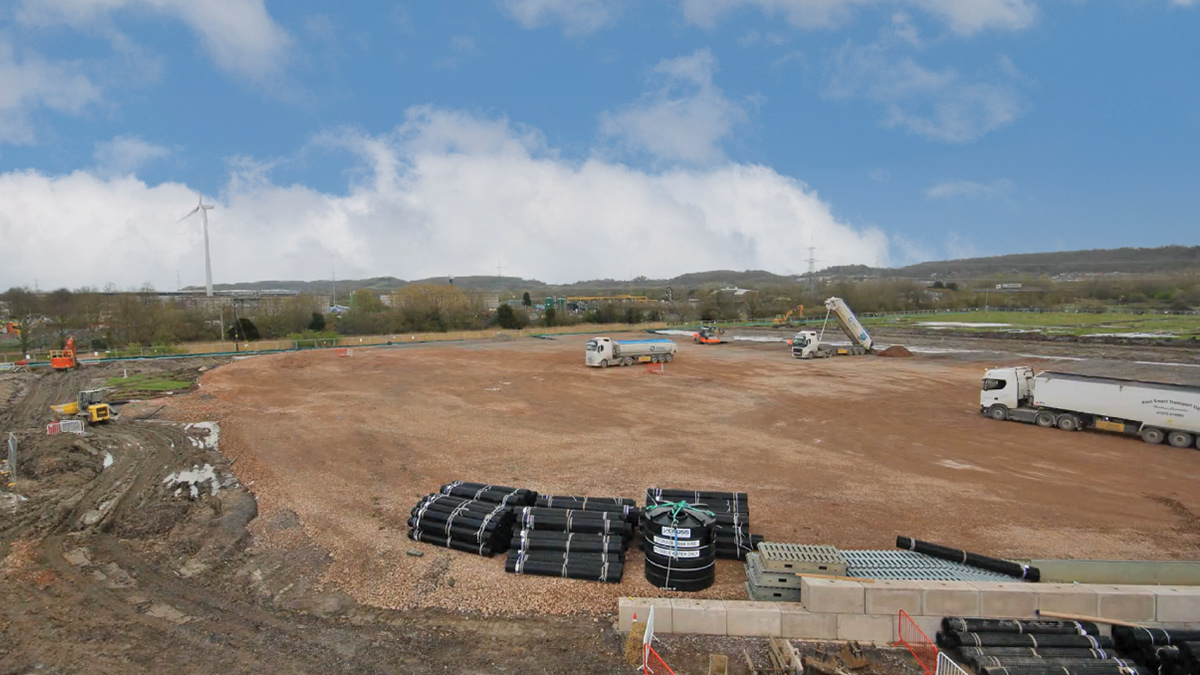
Commencement of the 90,000 tonne working platform – Courtesy of YTL Construction UK
Additionally, there has been significant settlement modelling done at interfaces between structures and infrastructure. Nearly 4000 precast concrete piles of around 20m long have been used for the majority of the large structures.
Computational fluid dynamics (CFD) confirmed that the load split between the new and existing process streams matched the 60:40 flow split. This was done by adding solids to represent the incoming sewage and also return liquor flows as part of the CFD analysis and the results were then analysed in a mass balance approach to confirm the load split across the full range of flows to the WRC.
The new works
Inlet pumping station (screened sewage pumping station)
A new transfer pumping station of concrete construction, consisting of six submersible pumps which transfer 2,400 l/s from the existing works inlet to the new process stream on the new site. Connections and alterations to the existing assists have been a significant design and construction challenge for the project to overcome.
Primary settlement tanks
The primary settlement tanks are 39m in diameter, with a working settlement volume of 3,917m3 each, with three-quarter bridge scrapers forming the first part of the treatment process once the incoming flow has been screened and pumped across to the new site.
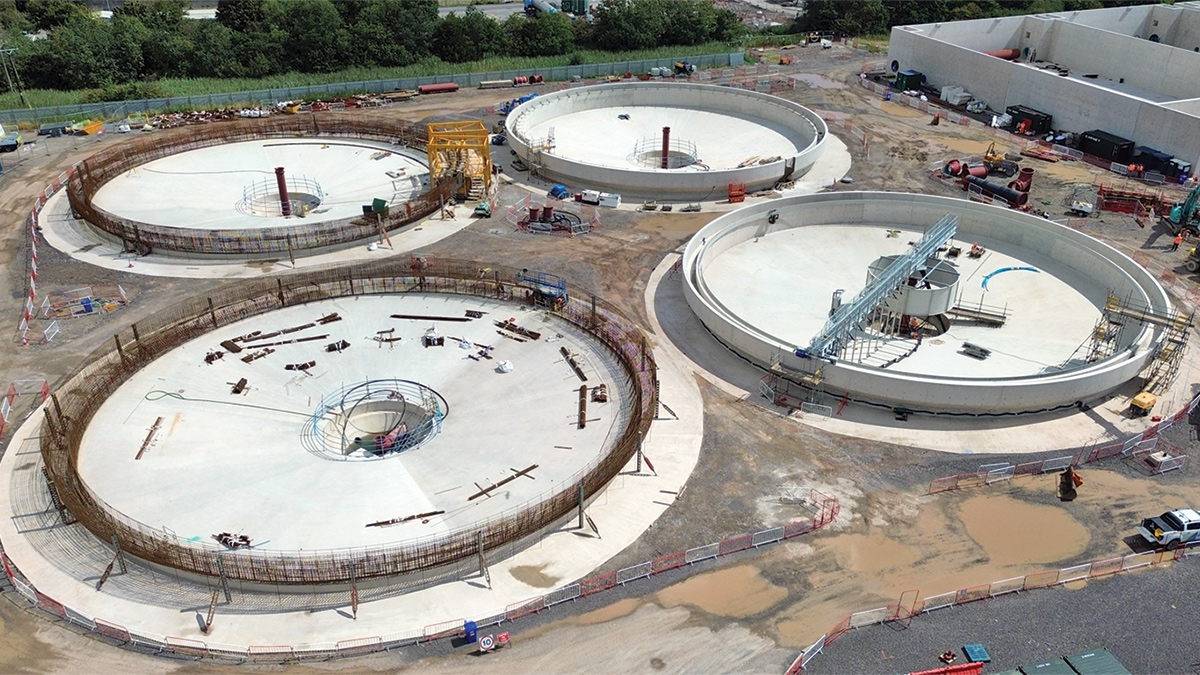
Construction progress of the PSTs – Courtesy of YTL Construction
Settled sewage pumping station
A new settled sewage pumping station, comprising four submersible pumps is being construction, which will lift 2,400 l/s of sewage to the SBR distribution chamber and distribute the flows to the new sequencing batch reactors.
Sequencing Batch Reactors (SBR)
Eight new SBR basins are required, each 30m wide x 60m long 7m high, with a capacity of more than 12,500m3 each.
The existing works process uses a sequenced basin batched fill method, including aeration, settlement and decant. This technology uses aeration blowers with jet air introduction into the basins.
The technology selected for the new site works follows the process principles of aeration and settlement, with the Sanitaire ICEAS Advanced SBR system from Xylem Water Solutions selected for the project. This process differs from the existing process, with a continuous fill of all basins, including aeration, settlement and decant.
Xylem’s ICEAS Advanced SBR system uses more efficient aeration blowers and fine bubble diffused air (FBDA) configuration within each basin, while also removing the number of large automated valves required for isolation in batching.
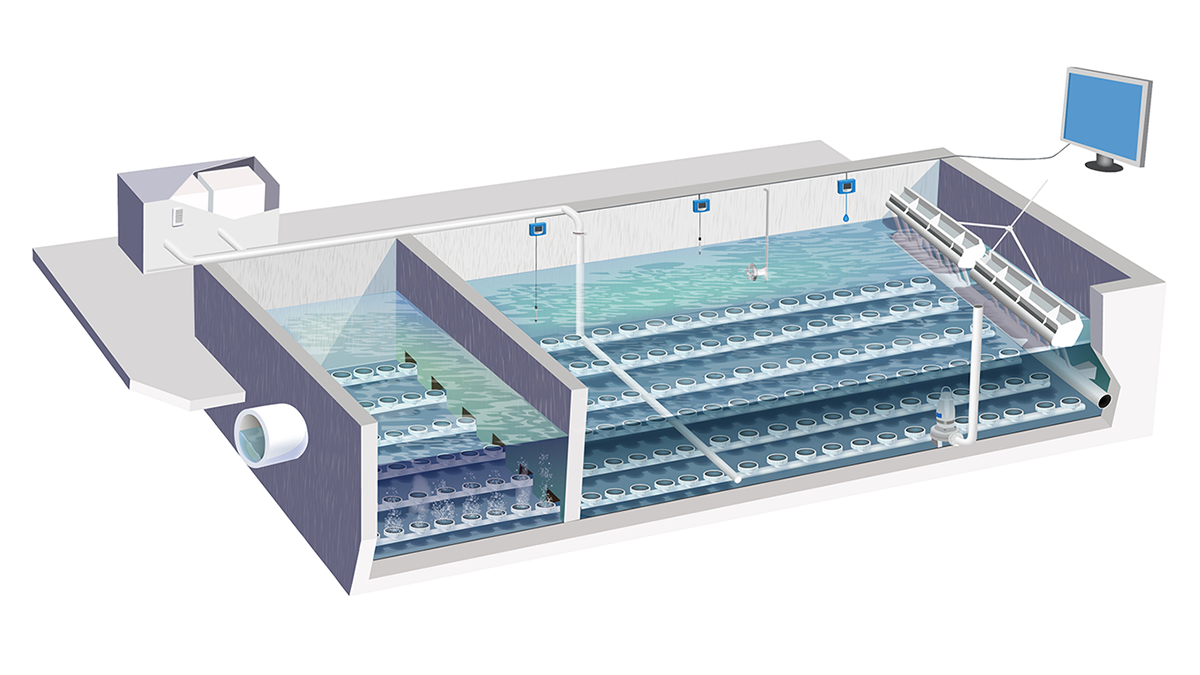
Sanitaire ICEAS Advanced SBR system – single basin segment – Courtesy of Xylem Water Solutions UK Ltd
Power & automation
The volumes being treated are reflected with the scale of the power and control equipment on the new project. New 11kV supplies are being brought on to site, with new substations for the new and existing sites, supported with generator backup for resilience. Two large motor control centres (MCC) and kiosks have been designed and manufactured off-site using Design For Manufacture and Assembly (DfMA) to simplify and reduce on site installation work.
BIM modelling/Synchro
4D modelling was used in the early part of the design; utilising BIM 3D and Synchro modelling software integrated with Primavera 6 planning software. This assisted understanding of construction sequencing for the various disciplines and contractors, regarding large structures and equipment in a relatively restricted site.
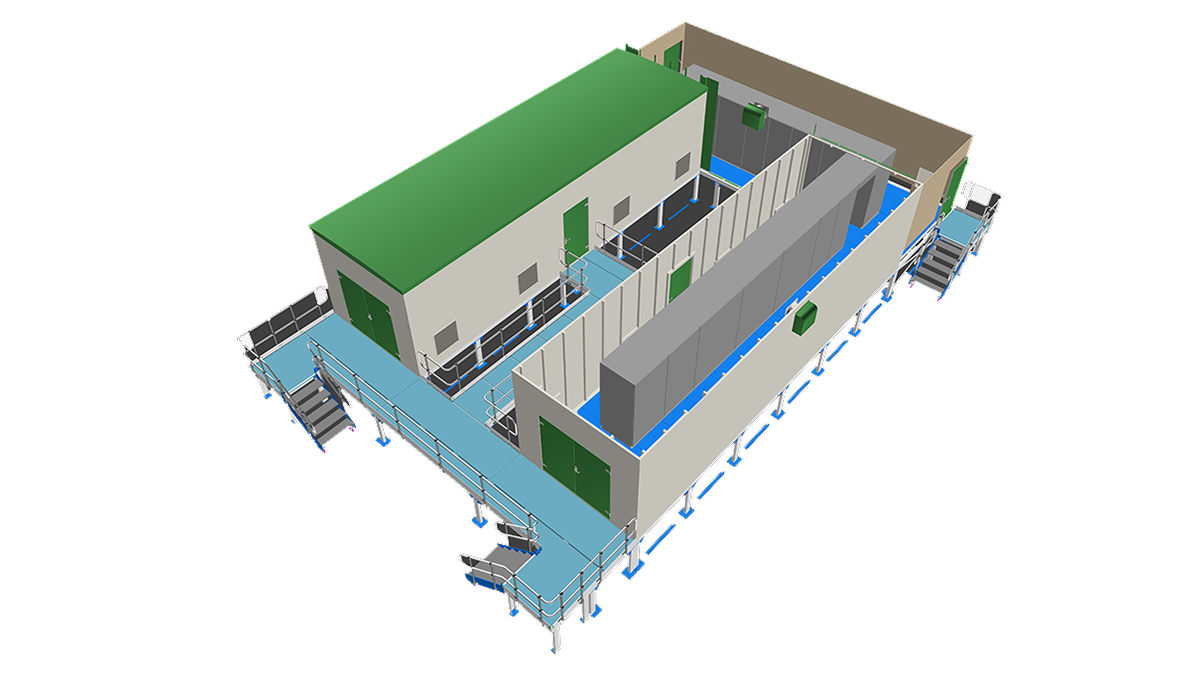
3D model of off-site build main MCC/kiosk & steelwork – Courtesy of RSE Control Systems (GPS)
Avonmouth WRC Expansion Project: Supply chain – key participants
- Client: Wessex Water
- Principal designer & contractor: YTL Construction UK
- Designer for main works: AECOM Ltd
- Compound design: BIMTek Ltd
- Document management support: Project Support Systems
- Enabling works/welfare: Envolve Infrastructure
- Piling contractor: Aarsleff Ground Engineering
- Electrical installation enabling works: OCU Group
- Office & welfare buildings: Wernick Group
- Formwork reinforcement & concrete: J Carney Construction Ltd
- Over pumping: Pump Supplies Ltd
- SBR process: Xylem Water Solutions
- PST scraper bridges: Jacopa Ltd
- Submersible pumps: Xylem Water Solutions
- Submersible pumps: Grundfos Pumps Ltd
- SAS pumps: Vogelsang Ltd
- Washwater: KGN Pillinger
- Valve & penstock package: Cotswold Valves Ltd
- MCCs: RSE Control Systems (GPS)
- Flow controls: AFFCO Flow Control (UK) Ltd
- Flow meters: Siemens
- Ductile iron pipework: Saint Gobain PAM UK
- Access steelwork: GT Fabrications
- HV network & transformers: LC Power Ltd
- Generators: Addicott Electrics Ltd
- Concrete: Wright Readymix
- Specialist PST formwork: Special Formwork
- Reinforcement: Hy-Ten Ltd
- FRP bridge over Rhine Crossing: Janson Bridging
- Cranes: Select Plant Hire
Progress to date (September 2025)
Enabling works
Due to the site’s geographical location, extensive unexploded ordinance surveys were carried out before clearing the site.
The enabling works package began in January 2024, delivered by framework partner Envolve Infrastructure under the management of YTL Construction, the principal contractor delivering Wessex Water’s largest treatment project. This included earthworks preparation and installation of a 90,000-tonne working platform.
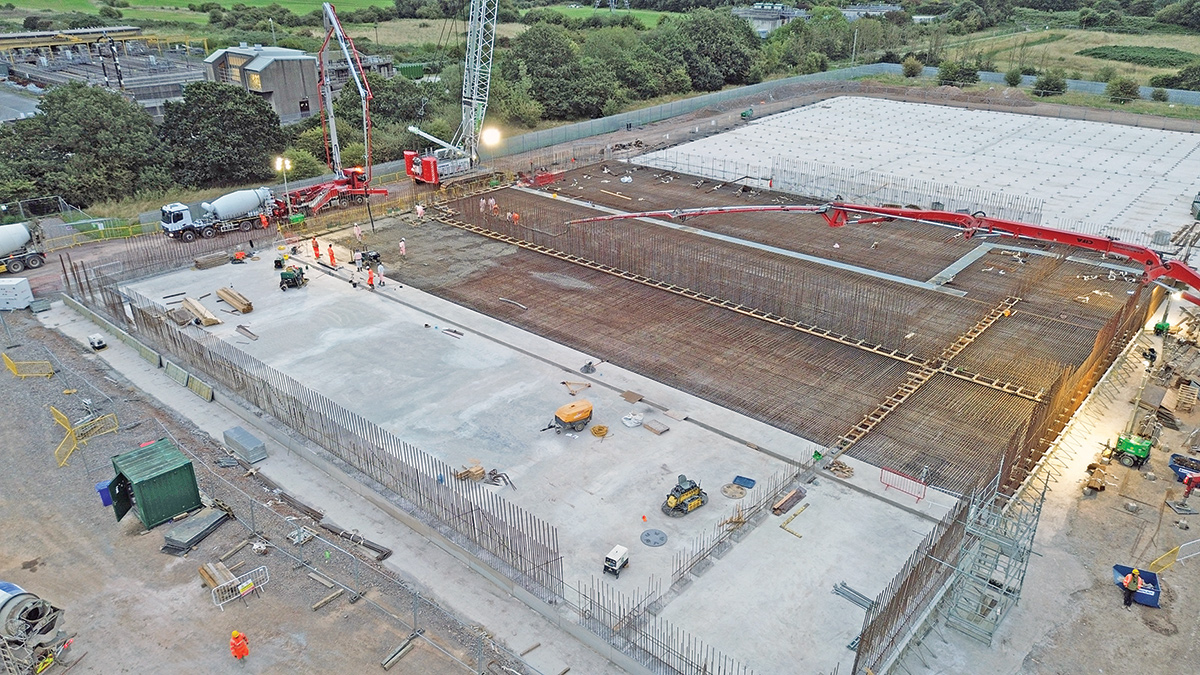
YTL Construction’s record single concrete pour – Courtesy of YTL Construction
The working platform was quickly followed by the precast pile installation where up to five separate rigs were used to install almost 4,000 precast concrete piles to depths of up to 20m. The piling operation was undertaken by Aarsleff Ground Engineering.
The inlet represented one of the most complex areas to date. The existing structures date back to the 1960s and require modifications to facilitate diversion of flows to the new works.
To guarantee that the enabling works did not affect the inlet channel, comprehensive design, structural, and vibration assessments were conducted. This process also involved on-site testing of various technologies and methods for both sheet and precast piling to identify the most suitable solutions. Piling near the existing assets has been carried out without any problems.
The enabling works package also included the construction of a 2000m2 welfare and office building with carpark and associated services.
Major structures – PSTs & SBRs
Construction of the eight sequencing batch reactors began in August 2024 and is due for completion early 2026. The construction of the four primary settlement tanks began in September 2024 and is due for completion this year.
For the concrete bases, a 1500m3 pour was delivered in a continuous 16 hours – a new record for YTL Construction. This was only possible due to meticulous planning and collaboration with the supply chain.
Completion of the major structures will provide access to the remaining significant work areas, which will take a further 24-months of planning, resourcing and delivery.
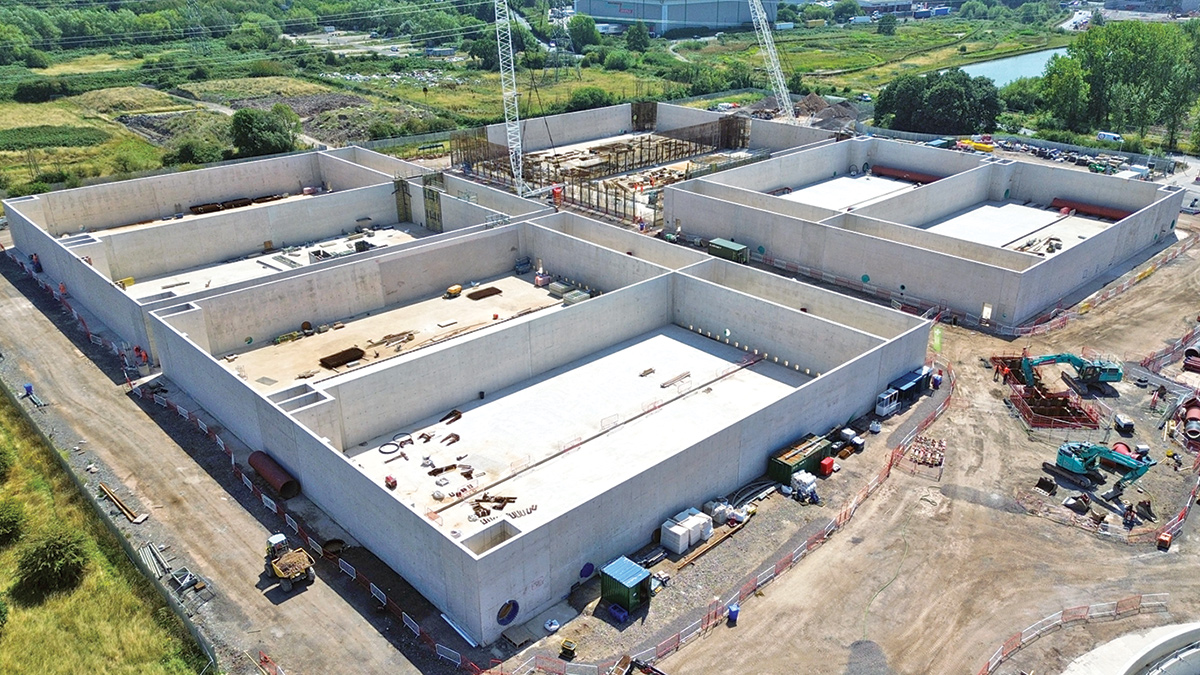
Construction progress of the SBRs – Courtesy of YTL Construction
Carbon savings
YTL Construction has been committed to reducing carbon from the concept of the scheme. A sustainability plan developed objectives and targeted areas that would drive this ambition. A detailed carbon calculation model baselined the design at feasibility and has been re-run throughout the period of design.
At completion of the detailed design and construction strategy stages, modelling confirmed that there would be carbon savings of 23% measured against the feasibility baseline thanks to a number of good initiatives that were being utilised on this project. A number of examples include:
- Design optimisation (e.g. tapered concrete SBR walls).
- Selection of efficient plant (ie. pump selections and Xylem Water Solutions blower and FBDA technology).
- Design of aggregates and mixes (ie lower carbon concrete optimised mix design).
- Procurement selections (eg. lower carbon reinforcement steel).
- The offices and welfare buildings are a modular system which was purchased and refurbished, saving 40% on carbon, and 50% on manufacture lead time.
- The project selected a 22m long fibre reinforced plastic foot/pipe bridge against a more traditional carbon steel bridge, realising a 20% carbon reduction.
Stakeholder engagement
Throughout the public and stakeholder consultation process, the project team spoke directly with the local community about the proposals at a series of drop-in sessions in Lawrence Weston, Shirehampton and Avonmouth.
More than 60 people attended across the three days, taking the opportunity to find out more about the plans, ask questions about the proposed expansion, as well as leaving their own comments and feedback. A virtual public consultation feedback form was also made available for comments.
The project team also visited local business events and extensively gauged the views of a wide range of organisations about the plans, including planning groups in Avonmouth, Lawrence Weston and Shirehampton to help shape the proposals. These were reported in a Statement of Community Involvement as part of the planning process, with conditional approval given by Bristol City Council planners in November 2023.
As a result of this extensive consultation process, and in tandem with the expansion, progress has been made on historical, environmental and biodiversity enhancements in and around the water recycling centre. These include measures to protect the Mere Bank Rhine, the Historic Scheduled Monument that runs between the existing site and the proposed development. Additionally, scrub clearance, planting of new habitats, and rerouting and revitalising existing public rights of way is being undertaken.
The project team has also completed volunteering days to help engage with the local community, including volunteering at the Avonmouth Food Bank to provide food parcels for families at Christmas, and community garden vegetation clearance in preparation for a well-being project.
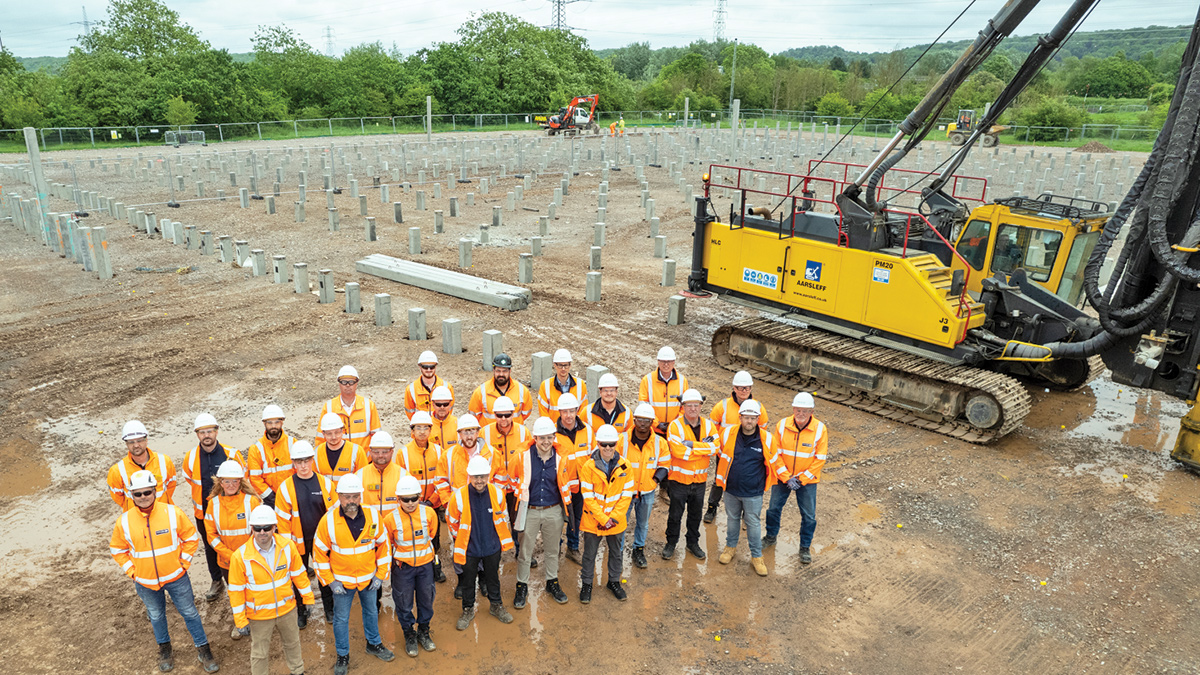
YTL project team at project commencement – Courtesy of YTL Construction
Conclusion
Eddie Rant, Director of Engineering & Asset Management with Wessex Water, commented:
“We’re incredibly pleased with how the project is progressing. To date, the YTL Construction team has demonstrated exceptional coordination, craftsmanship, and adherence to timelines. Communication has been clear and proactive and the quality of work so far gives us full confidence in a successful outcome. We’re excited to see the next phases unfold and grateful for the dedication shown by the team involved.’’
YTL Construction hope to provide an update to this article as construction nears completion, and again as commissioning concludes.
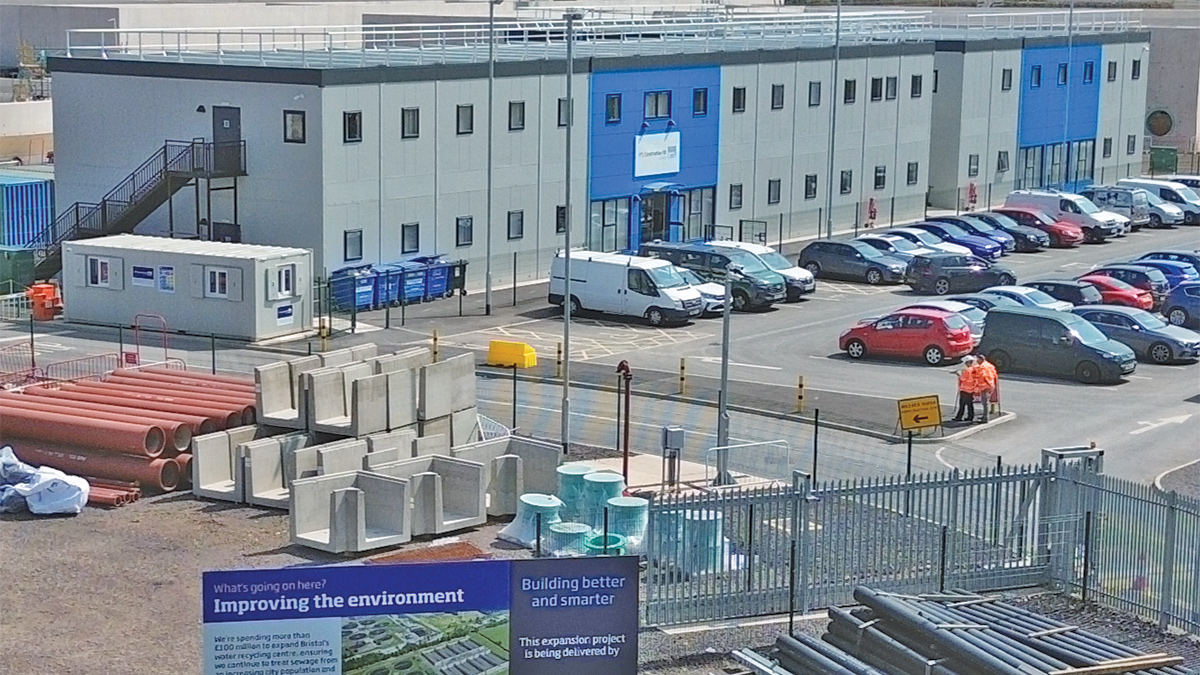
Site offices and welfare units - Courtesy of YTL Construction

 Download PDF