

Culmore Trunk Sewer Rehabilitation Project (2026)
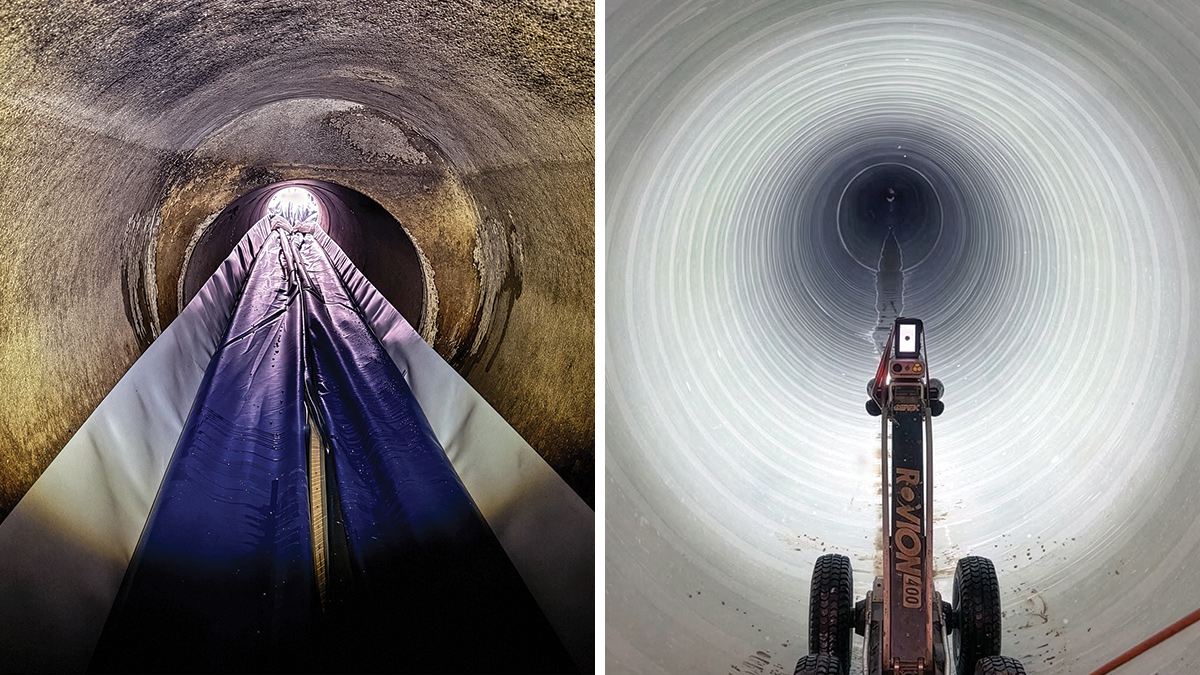
(left) CIPP liner installed within pipe, prior to inflation and curing and (right) CCTV survey of installed CIPP liner - Courtesy of GRAHAM
The Culmore Trunk Sewer Project is a major wastewater network rehabilitation scheme being delivered in Derry/Londonderry for NI Water. Extending from the Coshowen area to Culmore WwTW, the trunk sewer is a critical part of the city’s foul sewerage system, conveying flows from a substantial urban catchment for treatment prior to discharge. The challenge was to ensure an essential buried structure continued to provide reliable service, support future growth, and reduce the risk of environmental incidents. Condition investigations identified defects along significant lengths of the Culmore Trunk Sewer, with around 4,000m requiring rehabilitation. The deterioration increased the risk of structural failure, infiltration, blockage formation, and out-of-sewer flooding. To date, the works delivered, including the current phase, represent an investment of approximately £9m.
Project background
The Culmore Trunk Sewer is one of the principal wastewater transfer assets serving Derry/Londonderry, carrying foul flows from a substantial urban catchment to Culmore Wastewater Treatment Works (NI Water’s second largest works). Its strategic importance means that any loss of structural integrity or hydraulic performance has consequences well beyond the pipe itself, affecting service resilience, pollution risk and the capacity of the wider network to accommodate future development.
As part of an Early Contractor Involvement (ECI) Contract commencing in Spring 2023, CCTV surveys were carried out on the full 10.5km of the Culmore Trunk Sewer, as well as a further 1.5km of key contributory feeder pipes.
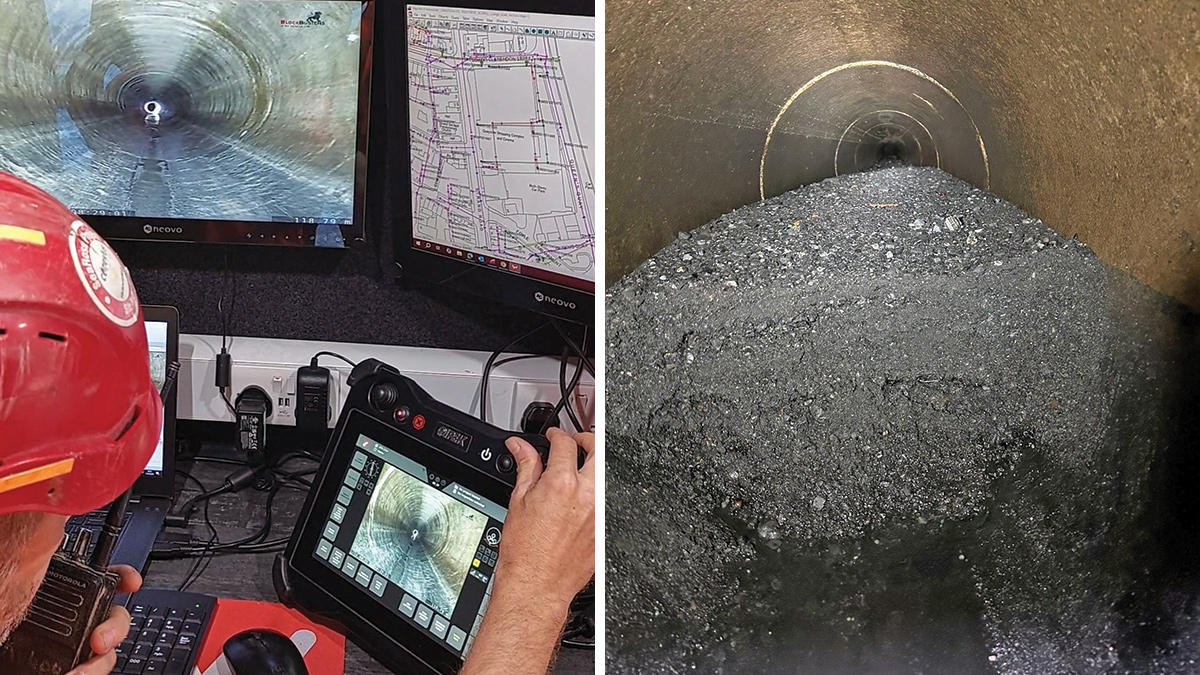
(left) CCTV survey of Culmore Trunk Sewer and (right) significant silt accumulated in Culmore Trunk Sewer requiring jetting and disposal – Courtesy of GRAHAM
On review of the collected data, it was established that approximately 4,000m of pipe, ranging in diameter from 300mm to 1,400mm, required rehabilitation. Additional associated works were also identified as being required, including installation of non-return valves to prevent backflow from the adjacent River Foyle during high tide. Defects reported on the concrete trunk sewer pipe included degraded joints, structural cracks, spalling, root penetration and poorly jointed incoming sewers, highlighting a growing risk of collapse, infiltration, blockage and flooding if no action was taken.
The project drivers were therefore clear:
- Extend the life of a critical buried asset.
- Improve network resilience.
- Reduce salinity at Culmore WwTW.
- Undertake the works in a manner that avoids disruption associated with extensive open-cut replacement through a heavily trafficked city environment.
This last point was particularly significant. The sewer alignment passes through busy city centre carriageways and public municipal parks, including Foyle Road, Foyle Embankment, Queens Quay, Strand Road and Bay Road Park. Any conventional replacement solution would have involved prolonged excavation, extensive traffic management, greater reinstatement requirements and substantially more disruption to businesses, residents and road users. These factors all shaped the subsequent optioneering exercise and led to a strong preference for trenchless rehabilitation.
GRAHAM was appointed Principal Contractor for the scheme, with Arup delivering design and NEC contract management roles.
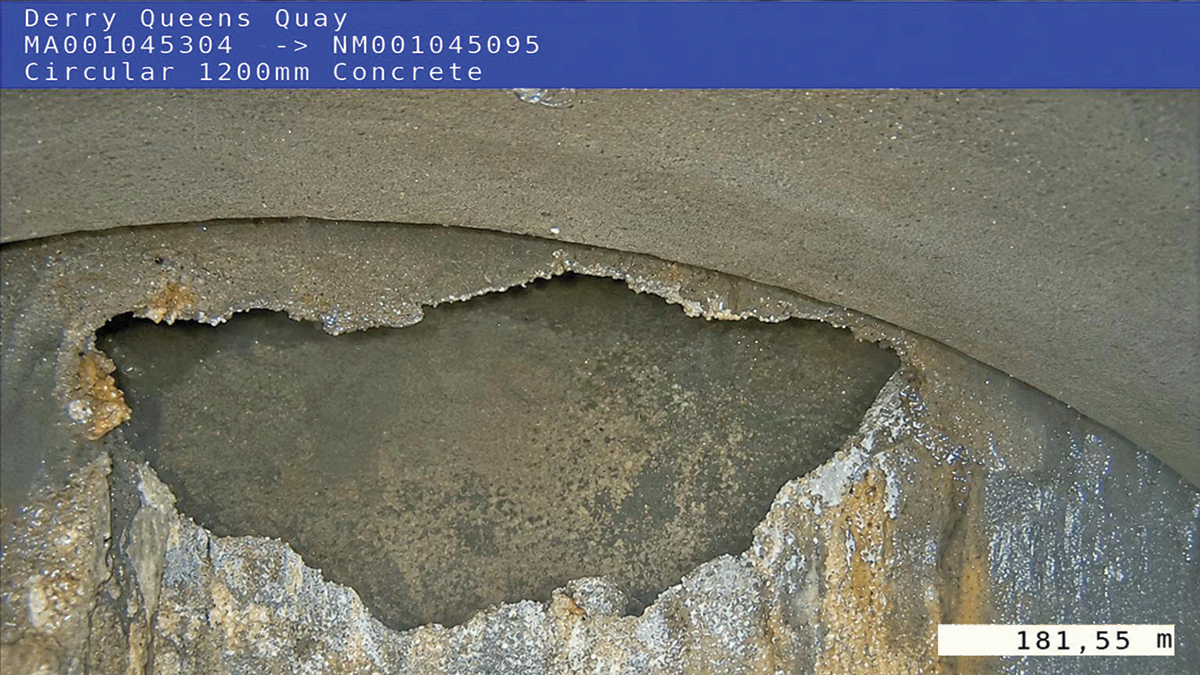
CCTV survey of Culmore Trunk Sewer – Courtesy of GRAHAM
Optioneering & selection of the rehabilitation solution
The principal options available to the project team were open-cut replacement, localised patch repair, or rehabilitation using a structural liner. Open-cut replacement would have provided direct access to the defective sections, but the approach was difficult to justify in a live urban setting where the sewer is located beneath heavily used roads and public spaces. Localised repairs offered a less intrusive alternative, but they would not have delivered the same level of long-term confidence where deterioration had been identified over extended lengths of trunk sewer.
A trenchless rehabilitation strategy therefore emerged as the preferred solution. The selected method was CIPP lining, effectively creating a new structural pipe within the host sewer. From both a technical and practical standpoint, the method was well suited to the Culmore scheme: it could be deployed from existing manholes, reduced the need for excavation, shortened intervention durations and offered a durable rehabilitation solution for long sections of pipeline. It also aligned closely with the project objectives of minimising disruption while restoring structural performance and reducing infiltration as well as the likelihood of future failure.
The selected trenchless relining solution successfully balanced long-term performance, constructability, stakeholder impact and urban logistics.
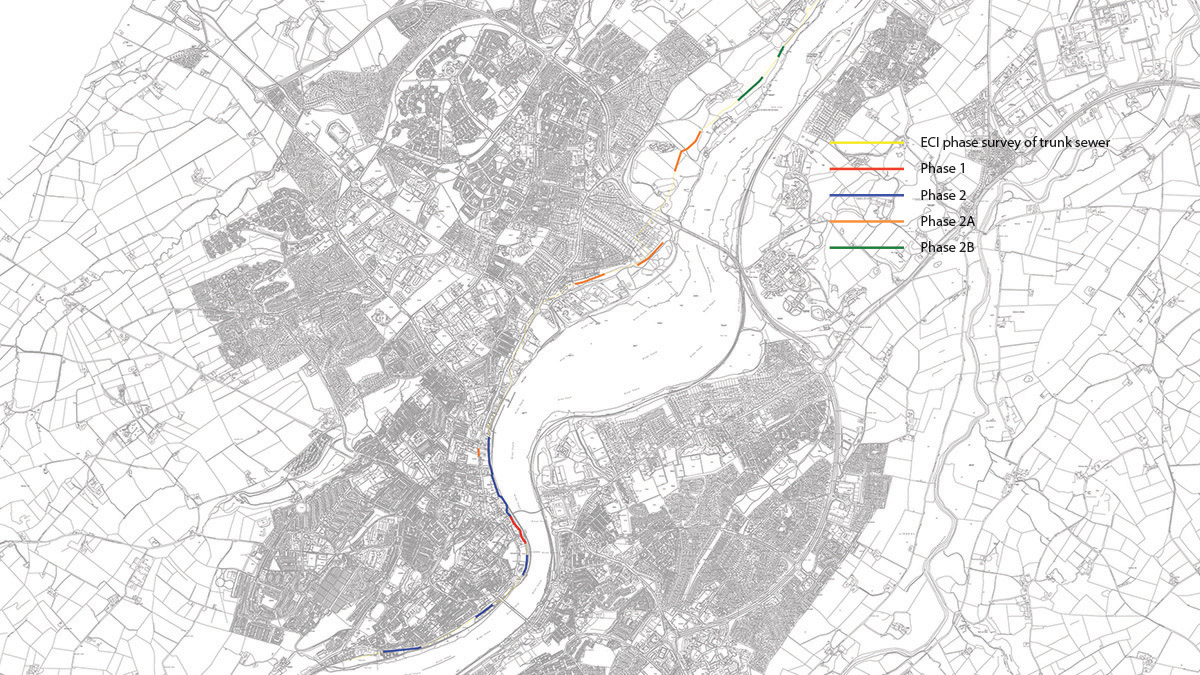
Illustration showing the phases of the Culmore Trunk Sewer Rehabilitation Project – Courtesy of Arup
Design development & lining methodology
Design development focused on defining the priority lengths for intervention, understanding access and site constraints and specifying a lining system capable of restoring structural integrity while maintaining the sewer as a live operational asset. This integration of design and construction methodology was central to the project from the outset; installation constraints, flow management, temporary works and access arrangements all formed part of the technical solution.
The adopted rehabilitation method involved inserting a resin-impregnated liner into the host pipe before expanding and curing it using ultraviolet light. Once cured, the liner forms a continuous internal structural layer, effectively creating a pipe-within-a-pipe arrangement. In practical terms, this restores structural integrity without disturbing the existing alignment, while also reducing pathways for infiltration or exfiltration.
GRAHAM, along with their supply chain partner, Blockbusters Environmental Services, procured the Alphaliner A1800H UV-CIPP liner from RELINE Europe. The product is a fully structural vinyl-ester composite designed to Class IV performance.
For trenchless rehabilitation, the condition of the host pipe remains a key determinant of lining quality. Preparatory works, including cleaning, silt removal, and modification of manhole accesses, were essential precursors to successful installation.
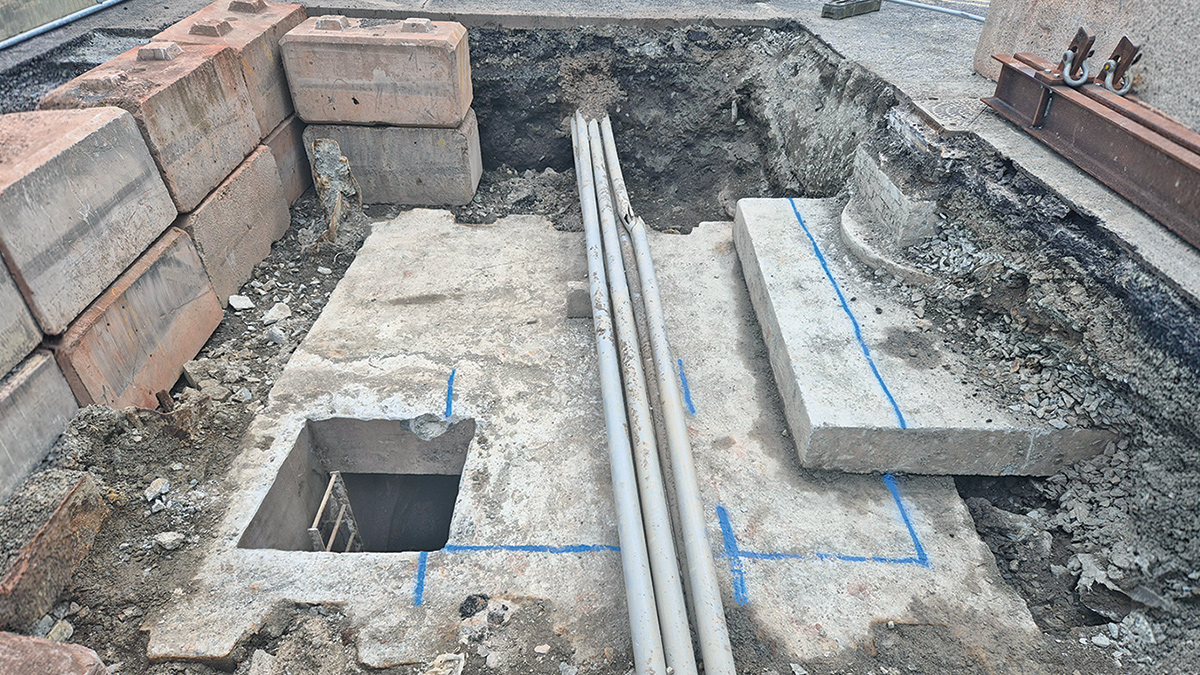
Complexities at manhole entry point, including utilities and adjacent chamber slab – Courtesy of ARUP
Construction in a live urban environment
Construction has been delivered in phases across multiple locations along the trunk sewer route, including to date: Foyle Road, Foyle Embankment, Queens Quay, Strand Road, Bay Road Park and Brook Hall Estate. This phased approach has allowed the team to target priority sections while managing the different constraints at each location. The first phase of relining works commenced in summer 2024, and subsequent phases have progressed continuously. To date, more than 2,000m of the sewer has been successfully relined without disrupting wastewater services.
One of the project’s strongest features is how construction planning has been integrated with the urban context. On major roads and waterfront corridors, the challenge has been to secure access for installation plant and specialist crews while limiting disruption to traffic and public movement.
Of particular note was the section completed in July/August 2025 on Queens Quay; a confined city centre carriageway carrying more than 30,000 vehicles and high pedestrian volumes daily. This liner was installed in a continuous 186m section, the longest single-lining length delivered in one activity across the NI Water project. At 1350mm in diameter, it is also believed to be the largest liner installed to date in Ireland. The curing process was digitally verified in real time, ensuring the liner met functional design requirements over its full length. Independent validation through CCTV survey, laser profiling and third-party testing confirmed 100% compliance with NI Water’s rehabilitation standards.
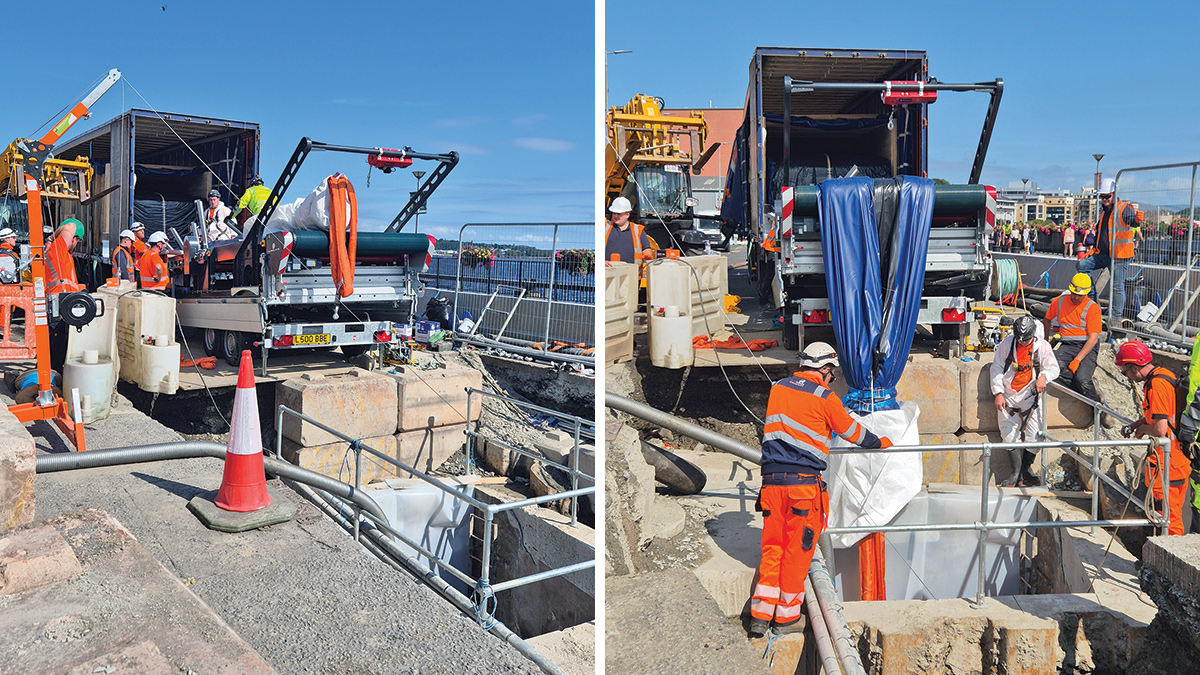
(left) Use of a folding table to effectively condense the liner to navigate it through the manhole opening without damage and (right) 1,350mm liner being inserted into the manhole access point – Courtesy of Arup
Delivery of the works required coordination with the NI roads authority to secure a lane closure during the summer holiday period. Installing the liner in a single length avoided the need to construct intermediate access chambers using open-cut methodology within the main carriageway, reducing the overall duration and minimising disruption to the travelling public.
In other locations, work was restricted to nighttime hours to mitigate the impact on busy city centre streets. At Bay Road Park, the emphasis shifted from traffic management to maintaining public amenity, with the park remaining open while diversions were introduced around work areas. Derry City & Strabane District Council was another key stakeholder, and their cooperation was an important part of the successful delivery of the works.
As with any live trunk sewer rehabilitation, the works also required careful control of operational and safety risks. Live flows, exceeding 1,100 litres per second, were managed using a telemetry-controlled over-pumping system that was engineered to adjust pump speed automatically based on live flow readings. Confined space procedures, lifting operations, liner handling, curing activities and quality assurance all formed part of the construction methodology, along with planning working areas and deliveries to avoid congestion or risk to the public.
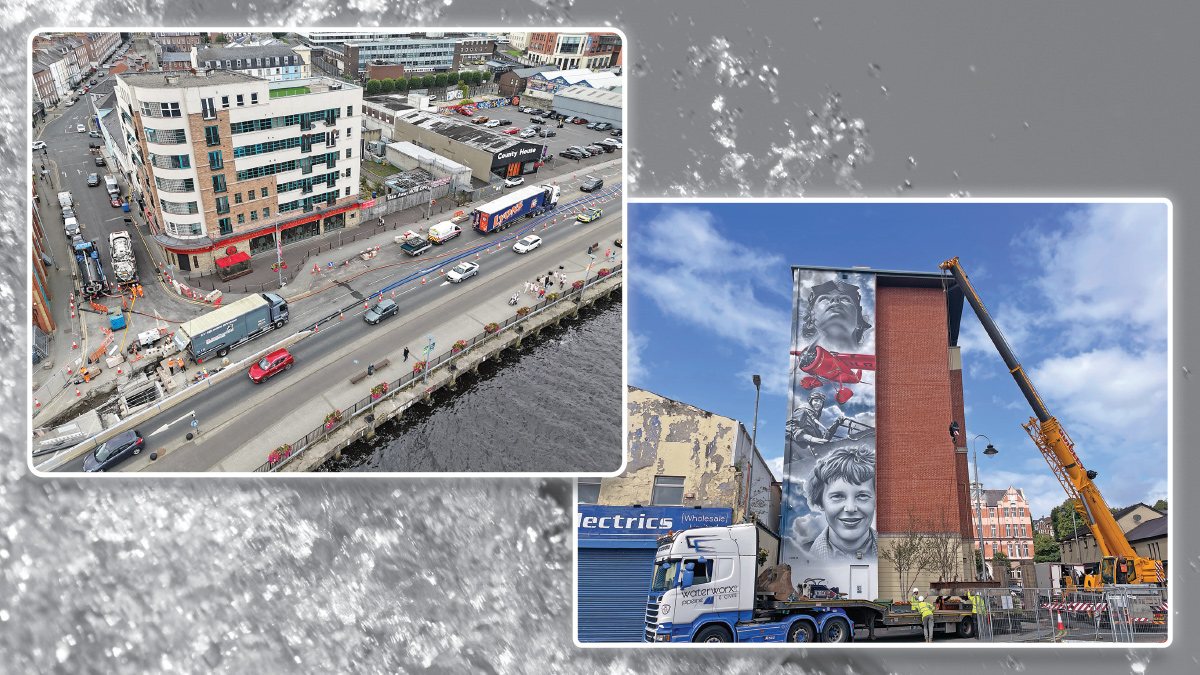
(left) Aerial view of working area at Queens Quay/Lower Clarendon Street, Londonderry, and (right) lifting operations, Queens Quay – Courtesy of GRAHAM
Culmore Trunk Sewer: Supply chain – key participants
The project relied on specialist trenchless delivery capability and close coordination between client, designer, contractor and supply chain, demonstrating integrated delivery on a live strategic wastewater asset.
As a result of this collaborative approach and proactive risk management, the scheme was delivered without any pollution incidents, service interruptions or environmental non-conformances. The project team comprised:
- Client: NI Water
- Designer: ARUP
- Main contractor: GRAHAM
- CCTV, JetVac works & relining works: Blockbusters Environmental Services
- Sewer relining, associated civils, sewer surveying & cleaning activities: WaterWorx Pipeline & Civils Ltd
- UV light cured Alphaliner: Reline Europe
Key stakeholders have included the roads authority, local council, businesses and private landowners, whose cooperation has been important in coordinating access, traffic management and interfaces with public space and third-party land throughout delivery.
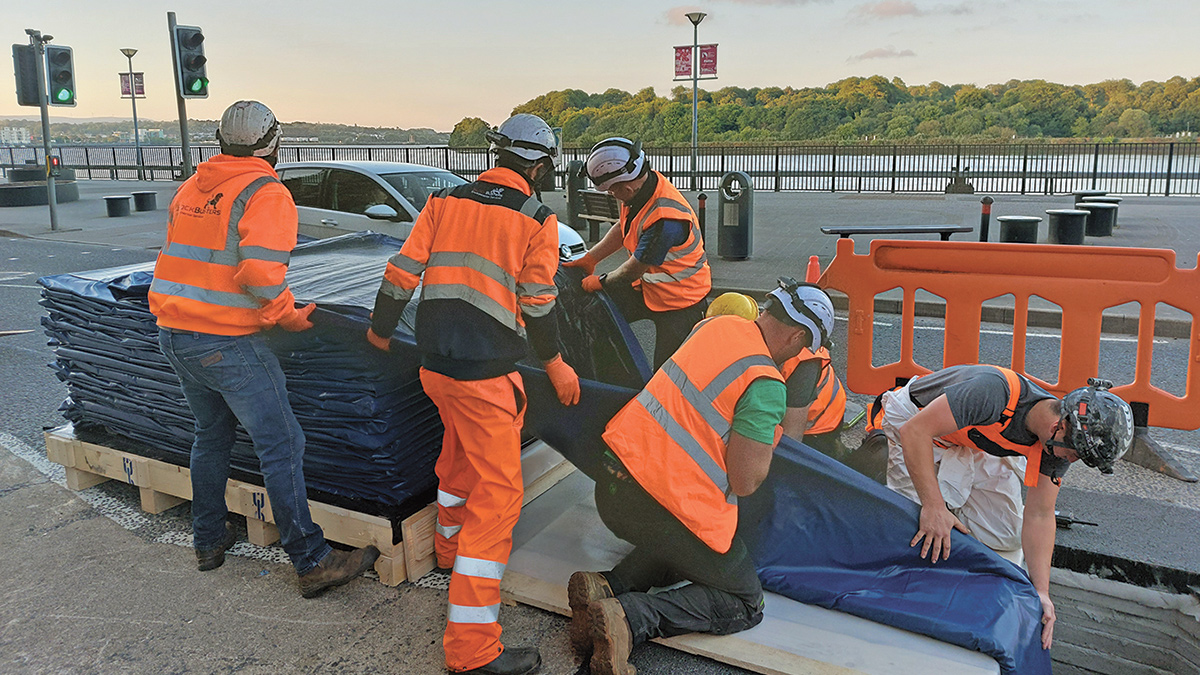
Folding of the CIPP liner to feed into manhole access – Courtesy of GRAHAM
Innovation & delivery outcomes
The project has combined engineering design, trenchless technology and stakeholder management into a single coherent approach and has successfully rehabilitated a large-diameter strategic sewer in a constrained city environment. By avoiding extensive open-cut replacement, excavation, spoil handling, reinstatement, and traffic occupation have been reduced, delivering programme, community, and carbon benefits.
At the time of writing (August 2026), the outcome is notable: more than 2,000m of trunk sewer has been relined, with a significant reduction in infiltration, resulting in reduced flow and salinity at the receiving Culmore WwTW.
Extensive flow and load surveys undertaken before, during and after rehabilitation works have confirmed that average flows to Culmore WwTW have reduced by 32%, excluding reductions in storm flows and storm overflow spills, which are likely to have further lowered network flows. The key infiltration markers, chloride and total dissolved solids, have reduced by approximately 90%.
As the remaining phases are completed, the project will continue to strengthen the resilience of a critical wastewater asset serving Derry/Londonderry.
Conclusion
The Culmore Trunk Sewer Project illustrates the increasing importance of targeted rehabilitation within ageing wastewater networks. In this case, the technical problem was clear: a strategically important sewer required intervention over substantial lengths to maintain performance and reduce failure risk.
The engineering response was equally clear and well aligned to context:
- Early investigation of the asset to define priority sections.
- Adopt trenchless UV-cured lining as the preferred rehabilitation method.
- Deliver the work in carefully planned phases from existing access points to minimise disruption to the public.
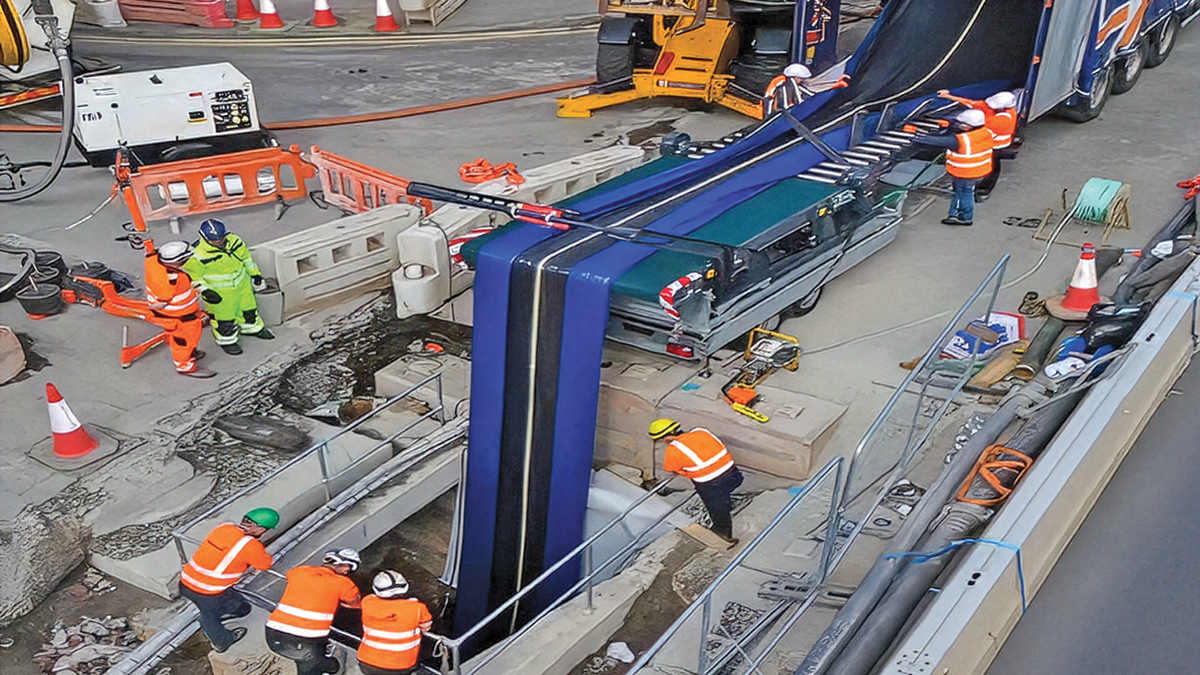
1,350mm liner being fed into manhole using folding table – Courtesy of GRAHAM
The result is a scheme that strengthens a critical wastewater asset to facilitate the development of new homes, protect the environment and support economic growth in the city.
From a wider industry perspective, the project is significant because it shows how design and construction can be integrated around operational resilience. Rather than treating the sewer as an isolated buried structure, the scheme recognises it as a live part of a larger wastewater process system serving the city and Culmore WwTW.
The project’s success therefore lies not only in the metres relined, but in maintaining service, reducing future risk, and supporting environmental protection and future growth.
As further phases are completed, the Culmore Trunk Sewer Project is expected to continue improving network resilience across Derry/Londonderry and provide a valuable benchmark for large diameter sewer rehabilitation in similarly constrained urban locations.