

Blackburn Meadows WwTW (2025)
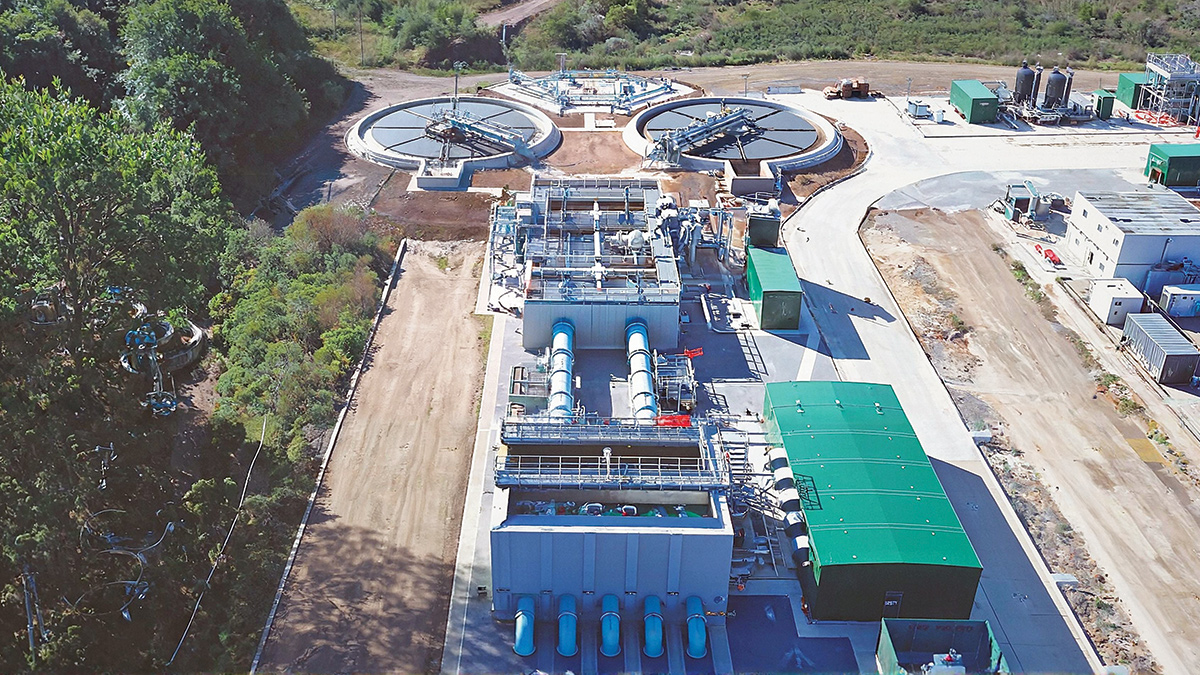
Completed works - Courtesy of Glanua
Situated adjacent to the M1 motorway, approximately 6km north-east of Sheffield, Blackburn Meadows Wastewater Treatment Works is one of Yorkshire Water’s critical assets, treating up to 4,000 l/s. The existing works comprised a raised inlet works including screens and grit removal, primary treatment via primary settlement tanks, activated sludge processes for biological treatment, and secondary treatment via final settlement tanks. Following notice of the introduction of tighter phosphorus and iron discharge consents by the Environment Agency, Yorkshire Water commissioned Stantec UK to carry out investigation, optioneering and the outline design of the most appropriate long-term solution.
Project summary
In 2022, Glanua Group was awarded a contract under the AMP7 WINEP Programme to design and construct a tertiary solids removal (TSR) plant incorporating Evoqua’s CoMag® technology from Xylem Water Solutions.
At £36.5m, the project represents a significant CAPEX investment and a key advancement in wastewater treatment performance, delivering enhanced solids and phosphorus removal efficiency.
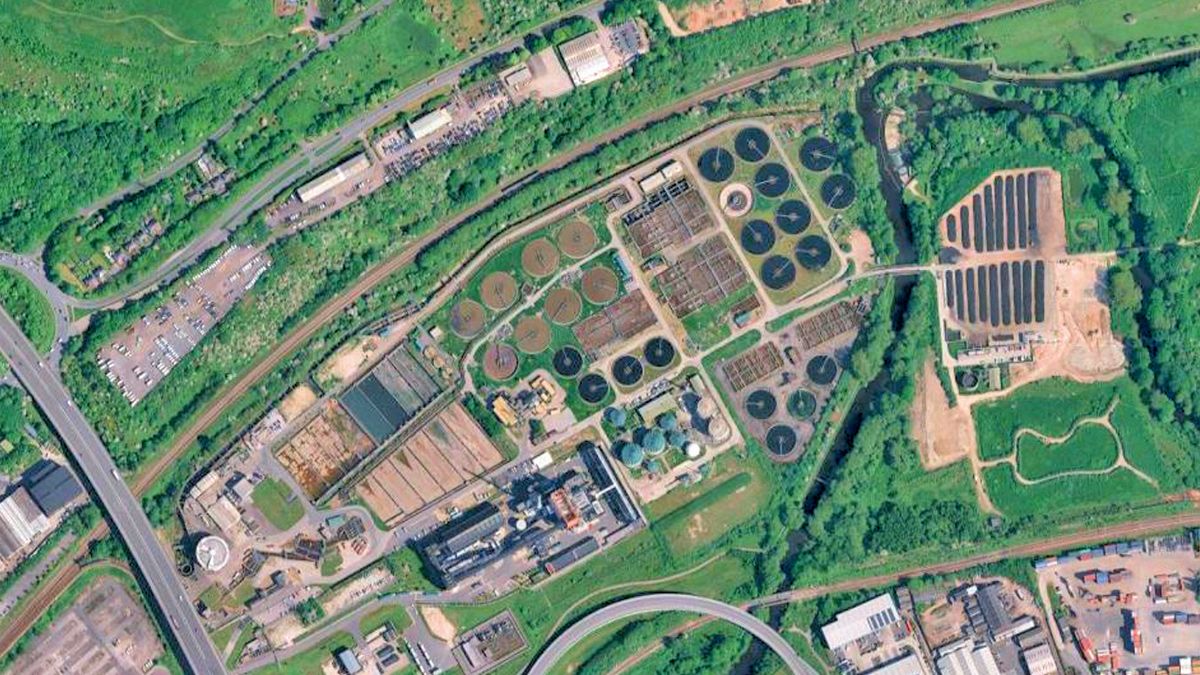
Overview of Blackburn Meadows STW – Google Maps
By integrating innovative and sustainable treatment processes, the scheme will comply with stringent environmental standards and contribute to improved effluent quality and environmental protection.
The construction and MEICA installation of the TSR plant have been completed, and the project commissioning team is now operating the system in preparation for reliability testing and handover. The CoMag® TSR process is consistently achieving phosphorus concentrations well below the consent limit of 0.3 mg/l, demonstrating robust process performance and operational reliability.
Scope of works
The upgrade works includes five Flygt channel impeller pumps from Xylem Water Solutions to lift current final effluent to the TSR plant, via a distribution chamber, where flow from five inlets splits evenly into two streams.
Ferric sulphate is dosed upstream of the CoMag® reactor and continuously mixed to encourage the formation of flocs. A magnetite slurry and a poly-acrylamide solution are also dosed and mixed to add weight to the flocs, enhancing their settlement in the two 23m diameter clarifiers.
The scheme also includes the provision of an upstream ‘primary’ ferric sulphate dosing system, which is integrated into the existing treatment process. This adjusts the pH and phosphorous levels upstream of the TSR plant, allowing optimisation of the CoMag® system.
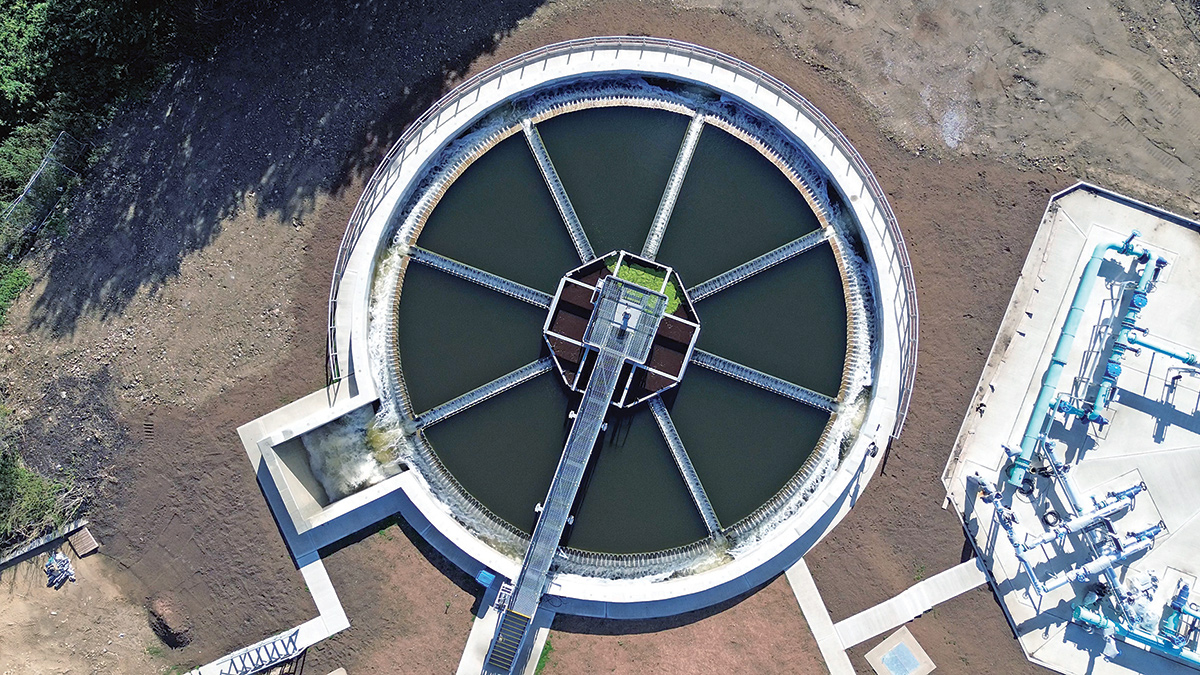
One of the completed clarifiers – Courtesy of Glanua
Blackburn Meadows STW: Supply chain – key participants (part 1)
- Client: Yorkshire Water
- Principal designer/contractor: Glanua Group
- Outline design: Stantec UK
- Civils design: AtkinsRéalis
- Design assistance & hazard studies: MEP Projects (UK) Ltd
- DfMA solutions: Glanua Industrial
- Evoqua CoMag® technology: Xylem Water Solutions
- Over pumping temporary works: Selwood
- Piling: Aarsleff Ground Engineering
- Civils contractor: Indepth Civil Engineering Services Ltd
- Civils contractor, temporary works & shoring: Hernons ME
- Temporary works, manholes & trench boxes: MGF Ltd
- Mechanical installation: Powerrun Pipe-Mech Ltd
- Mechanical installation: Fluid Sealing & Engineering (FSE)
- Electrical installation: MEICA Technical Services (MTS)
- Electrical installation: PLR Building Services Ltd
- Precast concrete tanks: FLI Precast Solutions
- MCCs & systems integration: CEMA Group
Blackburn Meadows STW: Supply chain – key participants (part 2)
- Transformers & HV works: Integrated Utility Services
- MCC kiosks: Quinshield Ltd
- Heating & ventilation: Air Technology Systems (ATS Climate)
- Pipework: Scott Parnell Ltd
- Pipework: Electrosteel Castings (UK) Ltd
- Pipework: Freeflow Pipesystems
- Pipework: Franklyn Yates Engineering Ltd
- Chemical dosing: NPS Engineering Group
- Pumps: Xylem Water Solutions
- GRP access: Relinea
- Valves: Cotswold Valves Ltd
- Penstocks: Glenfield Invicta
- Static mixers: Statiflo International
- Flow meters & instrumentation: ABB Group
- Instrumentation: Endress+Hauser
- Instrumentation: Hach Lange
- Instrumentation: Siemens
Tertiary solids removal (TSR) process
The CoMag® system is a ballasted separation and recovery process. It utilises magnetite alongside coagulants to create a ballasted flocculation system, thus enhancing settling rates and increasing the performance of the wastewater treatment plant. The high-density, magnetite ballasted floc flows into a compact high-rate clarifier. The clarifier includes baffle plates to dissipate the velocity of the inflow, encouraging optimal settling, and a rotating rake directs sludge into the hopper.
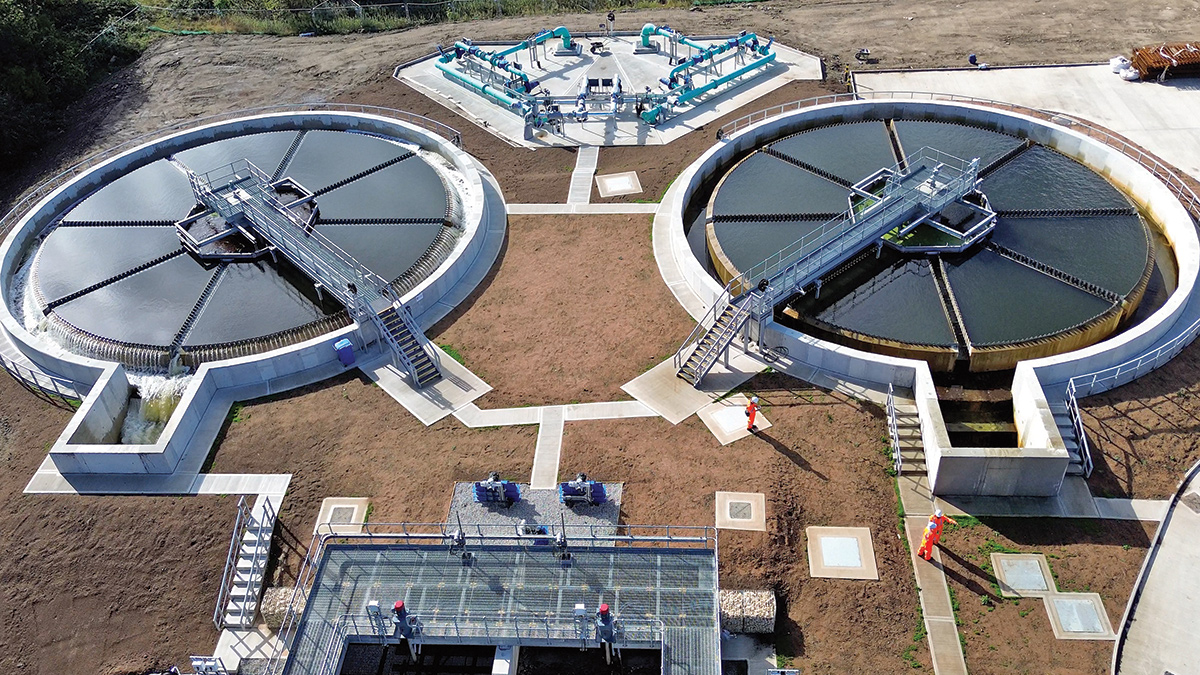
The completed clarifiers – Courtesy of Glanua
The CoMag® system employs both a sludge and magnetite recycle function, to increase the system performance and the clarity of its effluent. Approximately 70% of the clarifier’s settled sludge is recirculated back into the system’s reactor tanks.
The remaining 30% of the sludge is processed through magnetite recovery system, which includes an inline, high-speed shear mixer where the magnetite is separated from the floc. The resulting two-part slurry is then passed through a magnetite recovery drum.
The permanent and stationary magnets inside the drum help to capture and reuse more than 99% of the magnetite, meaning that once primed, the CoMag® operates with very low magnetite consumption and low OPEX.
The sheared sludge, minus the magnetite, flows into the wastewater pumping station, where it is returned to the main WwTW via a new rising main, discharging immediately upstream of the primary settlement tanks.
TSR feed pumping station: Construction & temporary works
Originally, the WwTW’s final effluent discharged to the River Don via twin 1400mm brick-built culverts, buried at 6m cover to crown, which are believed to have been constructed in the Victorian era. A crucial and complex part of the scope was to excavate around and break into the culverts to enable flow diversion to the TSR. This required significant temporary works in the form of over pumping the final effluent and allow the culverts to be drained and isolated.
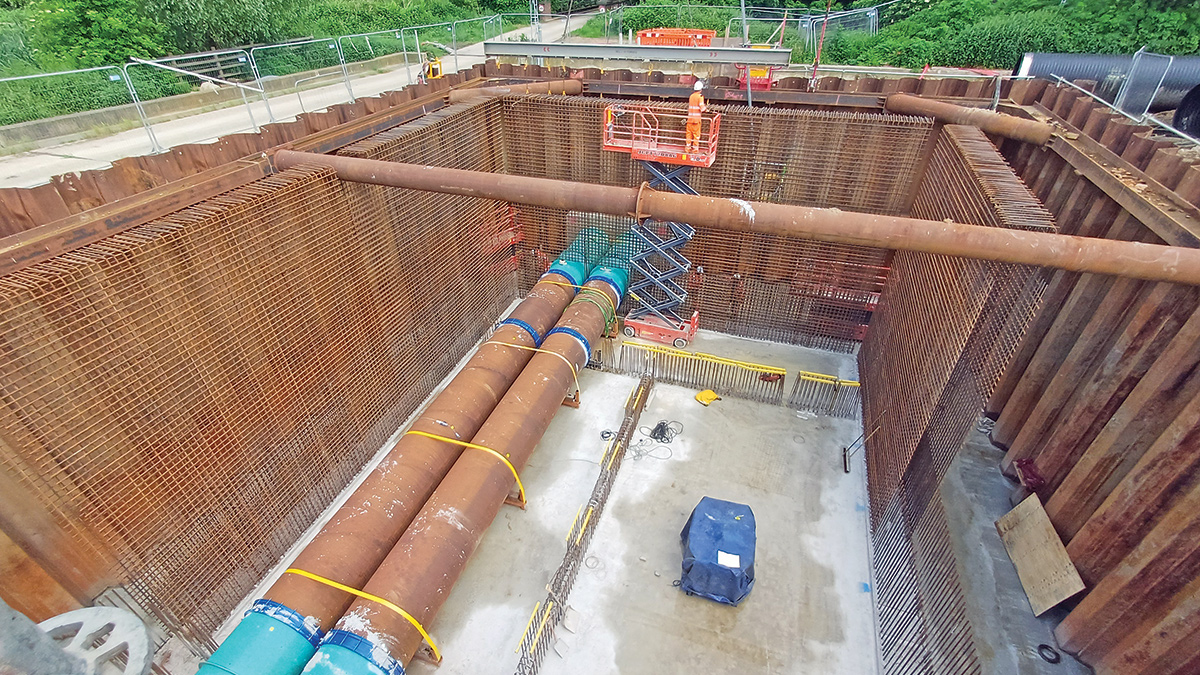
TSR pumping station rebar structure and flume pipe tie-in – Courtesy of Glanua
The number of shutdowns and over-pumping operations were minimised due to refinement of the construction sequencing and programme, reducing environmental risk exposure associated with temporary over-pumping installations. This accomplishment followed a huge effort by Glanua Group, Selwood and Yorkshire Water, and was completed under the guidance of, and in liaison with, the Environment Agency.
The condition of the culverts was largely unknown prior to excavation, with limited information available from trial holes. There were concerns about how the vibration from the sheet piling works would affect the culverts, during the installation of the cofferdam. As such, the temporary works design specified the use of silent piling technology with pre-augering to loosen the dense granular strata identified in the ground investigation.
Once excavated and broken out, temporary steel supports were affixed to the structural blinding, and mild steel pipework was installed to reintroduce flows, and decommission the over-pumping.
The TSR feed pumping station, utilising a cast in situ design, was constructed by Hernon ME around the temporary pipework, reducing the reliance on over-pumping from approximately six months to six weeks.
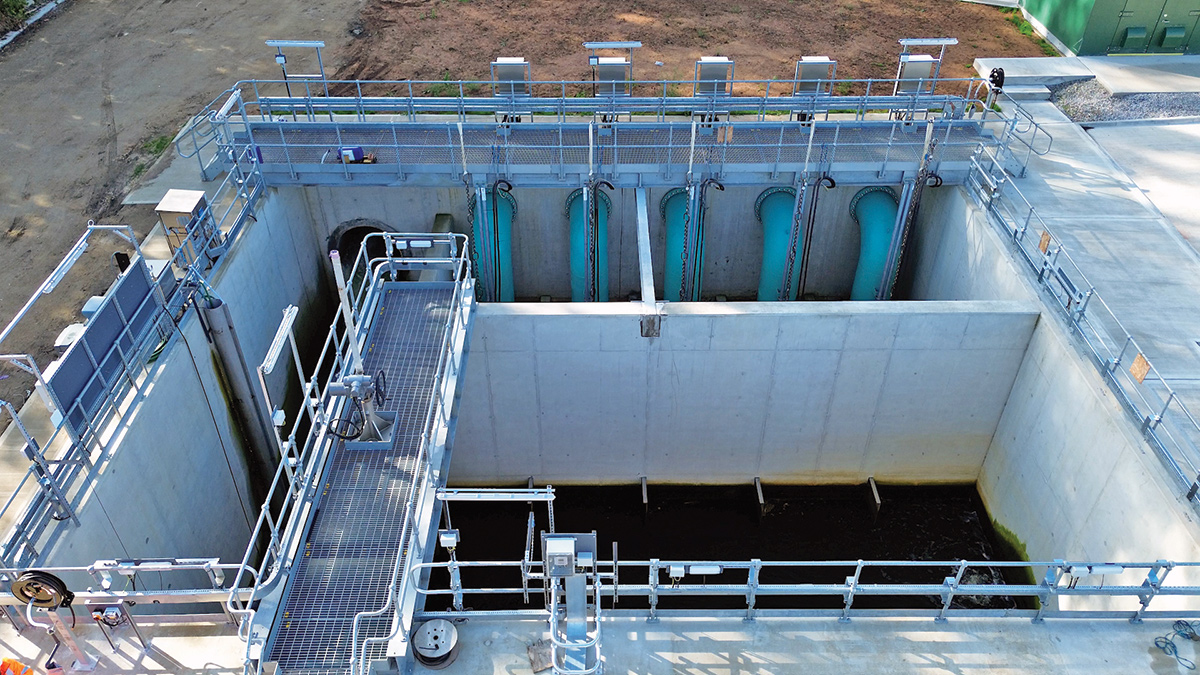
TSR feed pumping station – Courtesy of Glanua
Digital delivery & common data environment
The Blackburn Meadows project was delivered through BIM 360, was Glanua Group’s Common Data Environment (CDE) and Information Delivery platform. This ensured that all project information was structured, reviewed, and approved within a controlled digital environment aligned with Glanua’s ISO 9001 Quality Management System and industry best practice for Digital Project Delivery.
Effective digital processes were central to how the project was delivered. By using the CDE, the flow of information was structured, auditable, and transparent across all design and delivery teams. This enabled consistent adherence to Glanua’s BIM and information management principles, ensuring the right information reached the right people at the right time.
Autodesk Revit was used for 3D modelling and drawing production across all disciplines (civil, structural, mechanical and electrical), which enabled integrated and coordinated design deliverables. The built-in review and approval workflows within Autodesk BIM 360 supported rigorous checking, digital mark-ups, and traceable approvals throughout design and construction.
The model coordination module was used by the entire project team and central at key design and construction milestones. Digital coordination reviews, HAZOPs, and ALM reviews were all conducted within the model environment to provide clear visual context. This approach improved decision-making, enhanced safety in design, and identified construction efficiencies, directly supporting programme delivery and quality outcomes.
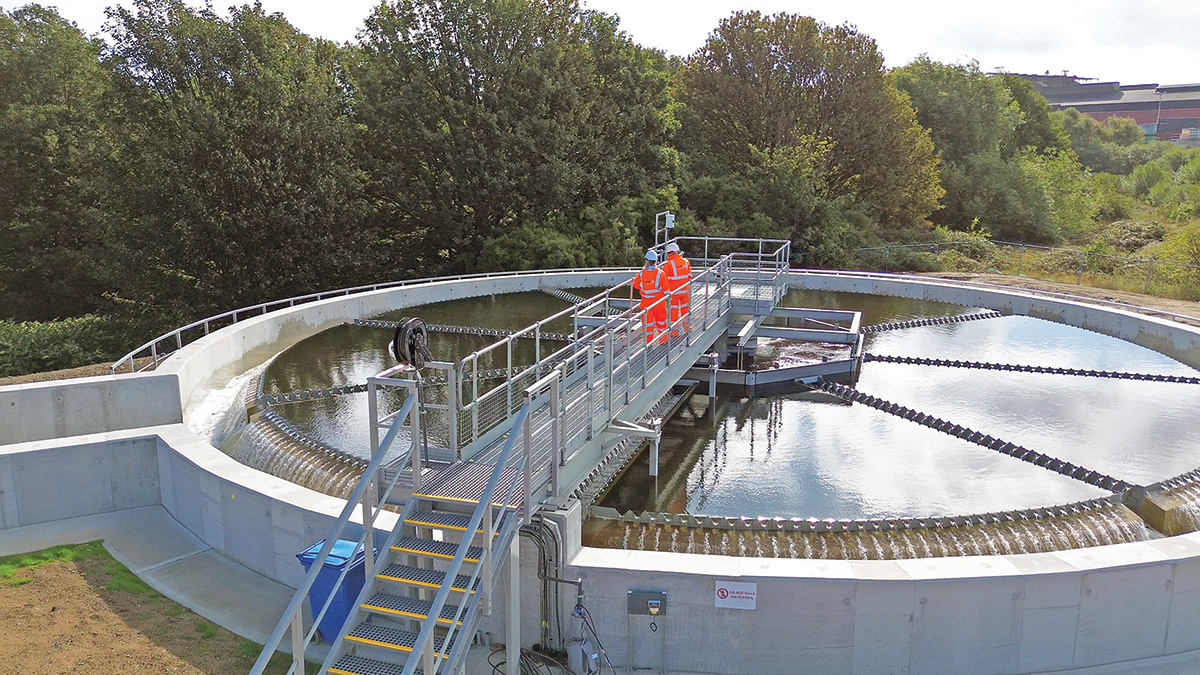
One of the clarifiers – Courtesy of Glanua
Through the asset module in BIM 360, critical asset information was digitally captured and managed to support data-driven decision-making throughout the project. Each asset’s installation, commissioning and testing status was tracked and updated with specific information required to meet the client’s asset data handover.
By analysing this data, the project team was able to identify the most efficient point in the delivery process to input the information required on the client’s platform, ensuring accuracy and consistency were married with efficiency.
By beginning with the end in mind, operation, maintenance, and handover information was accurately collated throughout delivery.
Relevant commissioning checklists were also linked to these assets, allowing the commissioning team to directly access and complete commissioning data within Glanua Group’s Common Data Environment.
Designing for sustainability: Concrete & materials reuse
A total of 187 precast panels were manufactured, shipped and placed during construction of four of the five main structures which has shown a significant carbon saving, compared to the use of an in situ concrete solution.
A calculation from FLI Precast Solutions demonstrated that the cement content, reduced by 50% and replaced with ground granulated blast furnace slag (GGBS) in the design mix for the precast panels, would provide a total CO2e saving of 137.2 tonnes. By comparison, this saving is shown as the equivalent of not driving for over 1.1 million kilometres, or the carbon absorbed by 3430 trees growing for 10 years.
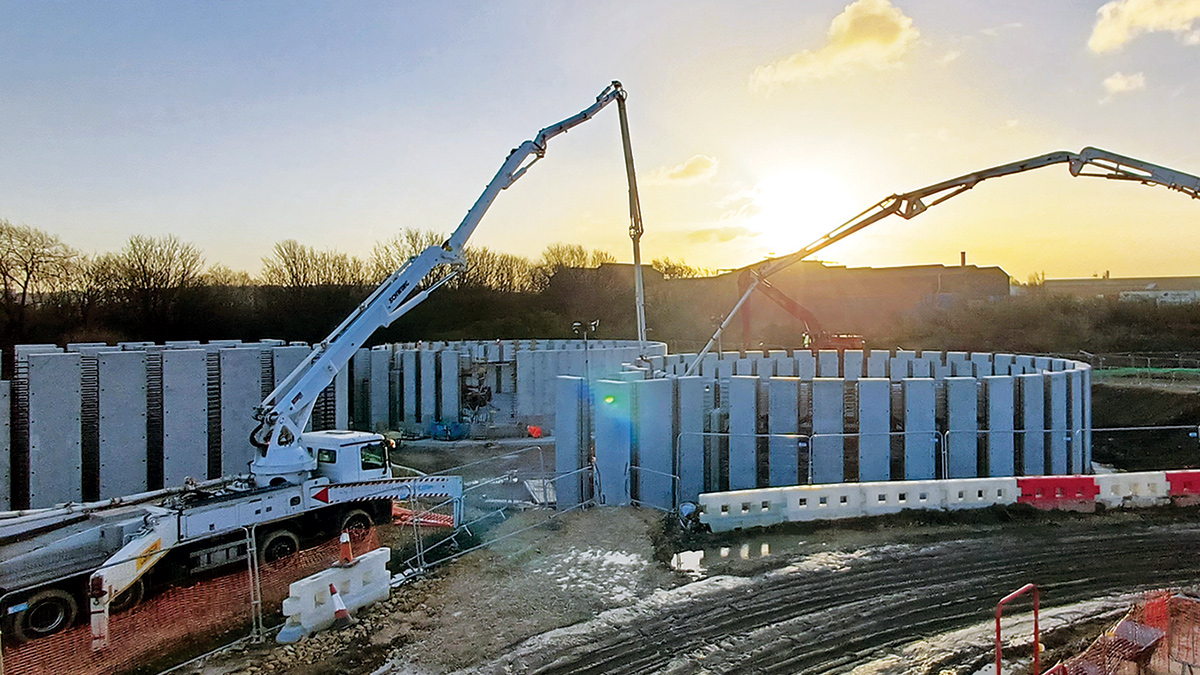
Clarifier and CoMag® tank precast installation – Courtesy of Glanua
For the remaining in situ slabs and structures, the concrete volumes have been reviewed and rationalised where possible. For example, the proposed perimeter wall was changed from a design containing 0.80m3 of concrete per linear metre to an equally effective design containing just 0.16m3 per linear metre, an 80% saving of concrete on this item of scope, demonstrating that a critical review in a small area can yield a significant impact.
Designing for sustainability: Energy
The five TSR feed pumps are controlled from large variable speed drives (VSDs), which are housed in individual sections of the main site MCC. Whenever a pump is running, an extractor fan pulls 3,760m3/hr of air though each VSD section, expelling it directly to the atmosphere external to the kiosk.
Replacement air is drawn into the kiosk through 30 vents in the kiosk wall. Whilst this is fine in summer, during winter months, the kiosk would require significant heating to avoid condensation forming inside the panels. It was calculated that 90kW of electric heaters were required in the kiosk to maintain an internal temperature of 10°C, when the ambient external temperature was -5°C.
It was considered too wasteful to provide so much heat, just for it to be exhausted to the atmosphere, in addition to the OPEX associated with this level of heating. In conjunction with supply chain partner, Air Technology Systems (ATS Climate), the VSD exhaust system was redesigned to include an air diversion and recirculation option, which automatically changes over based on temperature set points within the kiosk.
During a recirculation scenario, air is not extracted from the kiosk, meaning there is no low pressure causing cold air to be drawn in to the kiosk, eliminating the requirement for specialist heating of the kiosk beyond standard building services.
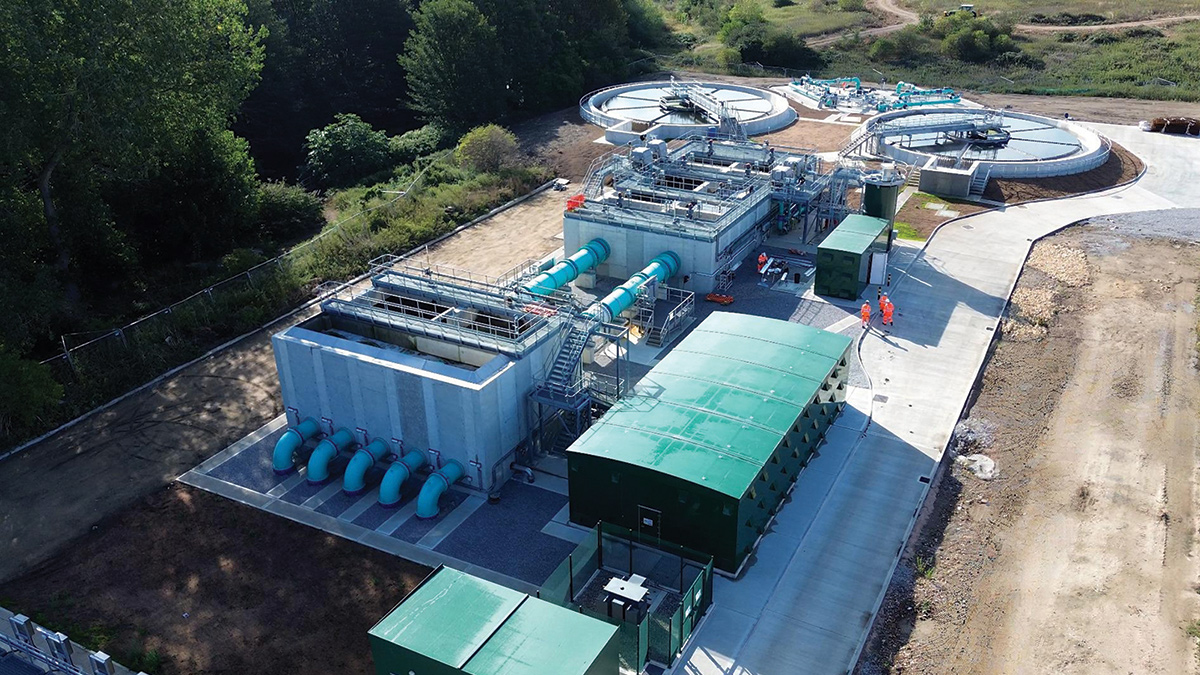
The completed works – Courtesy of Glanua
Summary
The introduction of the TSR plant at Blackburn Meadows is a significant investment by Yorkshire Water in the environmental protection of the River Don and the surrounding area. By embracing the new CoMag® technology, Yorkshire Water have signalled their intent to support innovative solutions when complying with tighter water quality consents to protect the environment.
Glanua Group would like to thank Yorkshire Water and all delivery partners involved who have collaborated to bring project together through proactive and solution-orientated design and build engineering.

 Download PDF