

Garnswllt WwTW (2026)
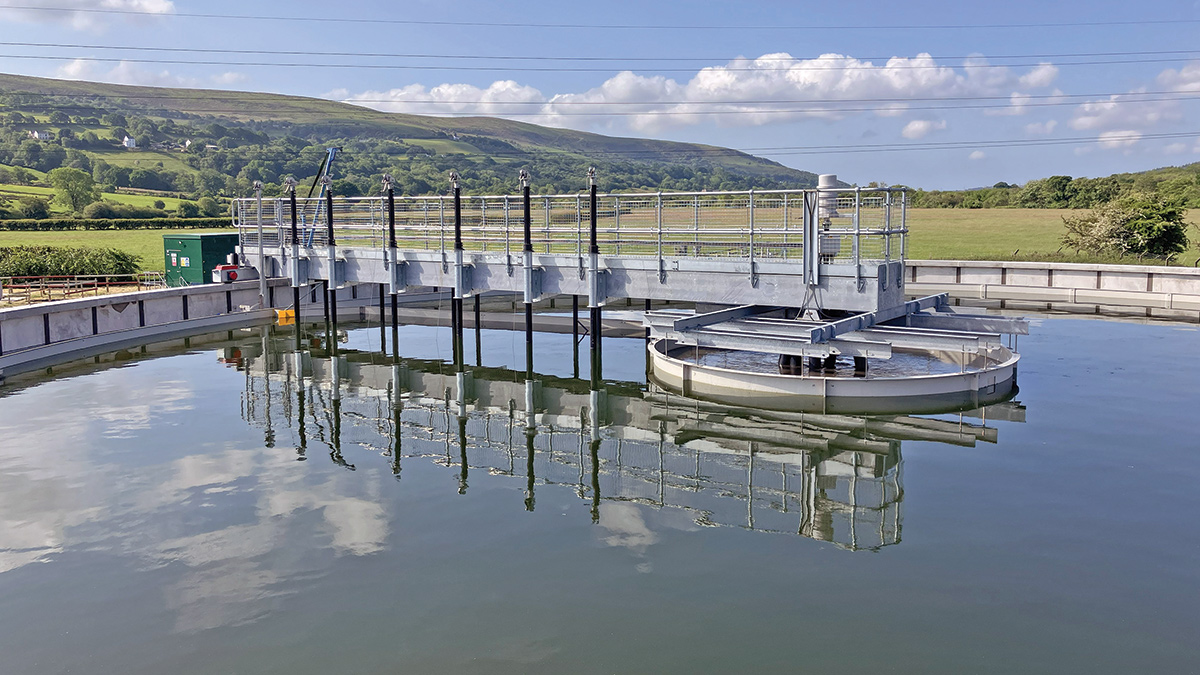
New primary settlement tank in operation - Courtesy of Mott MacDonald Bentley
Garnswllt Wastewater Treatment Works (WwTW) serves a predominantly domestic catchment south of Ammanford, receiving flows from Ammanford, Llandybie, Glanaman, Brynamman, Capel Hendre, Saron, Tycroes and Pen-y-Groes, with a total population equivalent of approximately 30,000. To meet the requirements of the Water Framework Directive (WFD) and reduce phosphorus concentrations within the final effluent discharged to the Afon Llwchwr, a capital investment project was necessary to enhance both the treatment performance and hydraulic capacity of the works.
Existing works
Garnswllt WwTW is an activated sludge plant providing carbonaceous treatment, nitrification and phosphorus removal. Incoming flows gravitate to the inlet works, where flows above the existing 360 l/s pass-forward flow (PFF) are diverted to storm treatment.
Primary treatment is provided via two primary settlement tanks (PSTs), followed by a three-lane activated sludge process and four final settlement tanks, with final effluent discharged to the River Loughor.
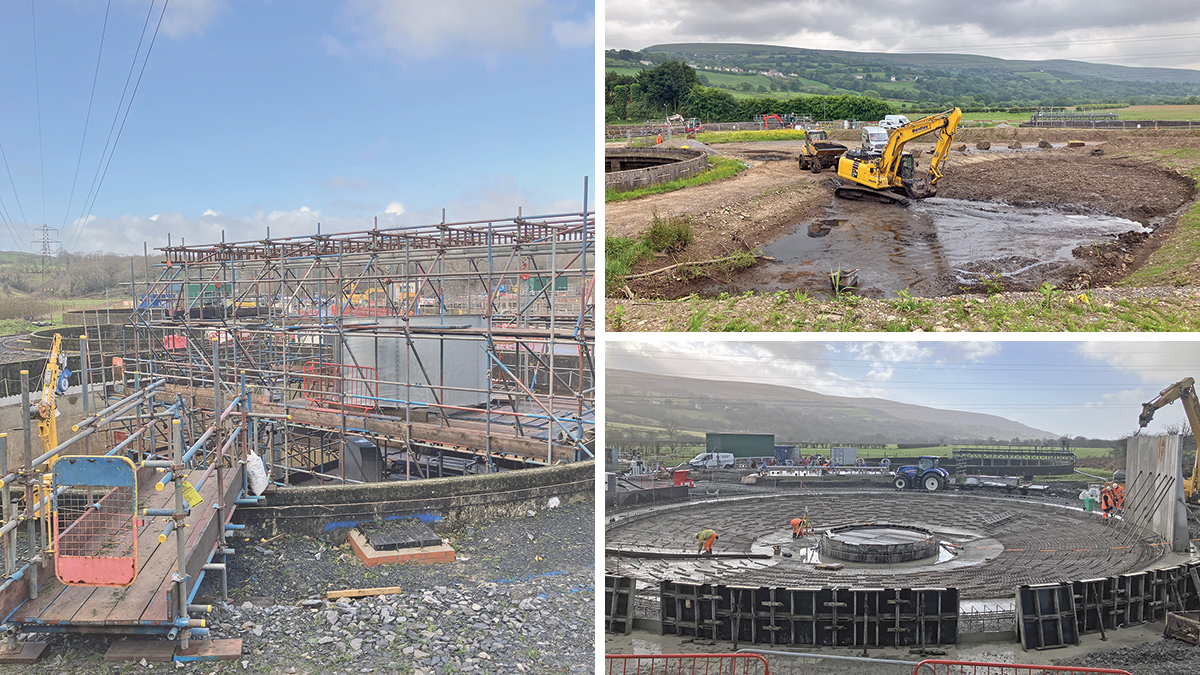
(left) Temporary scaffold under 132kV HV line for the FST works, (top right) existing ecological pond drained to allow the construction of the new PST and (bottom right) start of the installation of the PST precast panels – Courtesy of Mott MacDonald Bentley
Project summary
Mott MacDonald Bentley (MMB) was commissioned by Dŵr Cymru Welsh Water (DCWW) to deliver an improvement scheme at Garnswllt WwTW.
The improvement works will deliver both environmental and operational benefits by increasing the site’s ability to manage higher flows associated with future population growth by increasing treatment capacity from 360 l/s to 431 l/s. The improvements will also reduce the frequency of spills to storm storage and minimise environmental impacts.
Scope of works
To address the new regulatory drivers, Dŵr Cymru Welsh Water and Mott MacDonald Bentley jointly developed a single, cost-effective solution to ensure compliance and improve the resilience of the treatment process.
The following main elements at the WwTW were delivered by MMB:
- Modification of inlet works to allow an increase in pass-forward flow (PFF).
- Construction of a new 25m primary settlement tank (PST) to meet the gap in hydraulic retention at the existing PSTs, which would otherwise have worsened with the increase in PFF.
- Construction of a 5m diameter x 5m deep PST feed pumping station.
- New return activated sludge (RAS) and surplus activated sludge (SAS) pumping for existing Final Settlement Tanks 3 & 4 to improve performance and provide future resilience.
- Replacement of siphon scraper bridges on Final Settlement Tanks 1 & 2 (FST1 & FST2) to improve performance and reliability.
- Power upgrades, including new motor control centres, kiosks and new emergency generator.
- New access road to the PST and feed pumping station.
- New ecological pond for improvement of habitat quality.
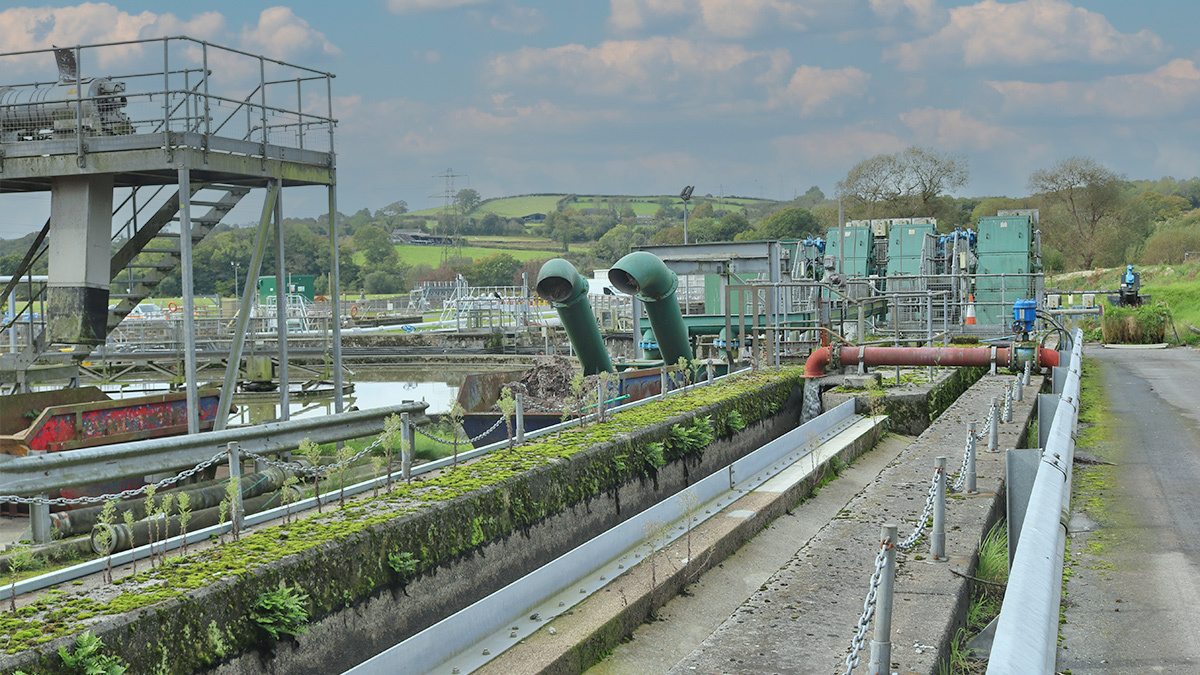
Garnswllt WwTW inlet works channel – Courtesy of Mott MacDonald Bentley
Garnswllt WwTW: Supply chain – key participants
A strong collaboration between the client, Dŵr Cymru Welsh Water, the project delivery partner, Mott MacDonald Bentley, and its supply chain was required to ensure a successful project:
- Main designer & main process/M&E contractor: Mott MacDonald Bentley
- Civils contractor: JN Bentley
- Ground investigation: Spencer Quantum
- Electrical installation: Zone Electrical Ltd
- Mechanical installation: Whitland Engineering
- MCC & switchgear: RSE Control Systems (GPS)
- Main distribution board kiosk: Industrial GRP
- Emergency generator: A&M Generators Ltd
- Concrete installation: Concrete Structures & Floors Ltd
- PST scraper bridge: DD Engineering Ltd
- PST precast tank system: Naylor Concrete Products Ltd
- PST feed pumping station precast panels: FP McCann
- PST feed pumping station submersible pumps: Xylem Water Solutions
- IQM actuators: Rotork
- FST siphon bridges: Colloide
- PST desludge, FST RAS & SAS PC pumps: SEEPEX UK Ltd
- Dewatering wells: Stuart Wells Ltd
- Manual valves: AVK UK Ltd
- Actuated eccentric plug valve: MJ Wilson Group Ltd
- Trace heating & lagging: Waste Water Manufacturing
- Level transmitters: Siemens
- Temporary treatment units: Siltbuster Group
- Grass cell paving: Groundtrax Systems Ltd
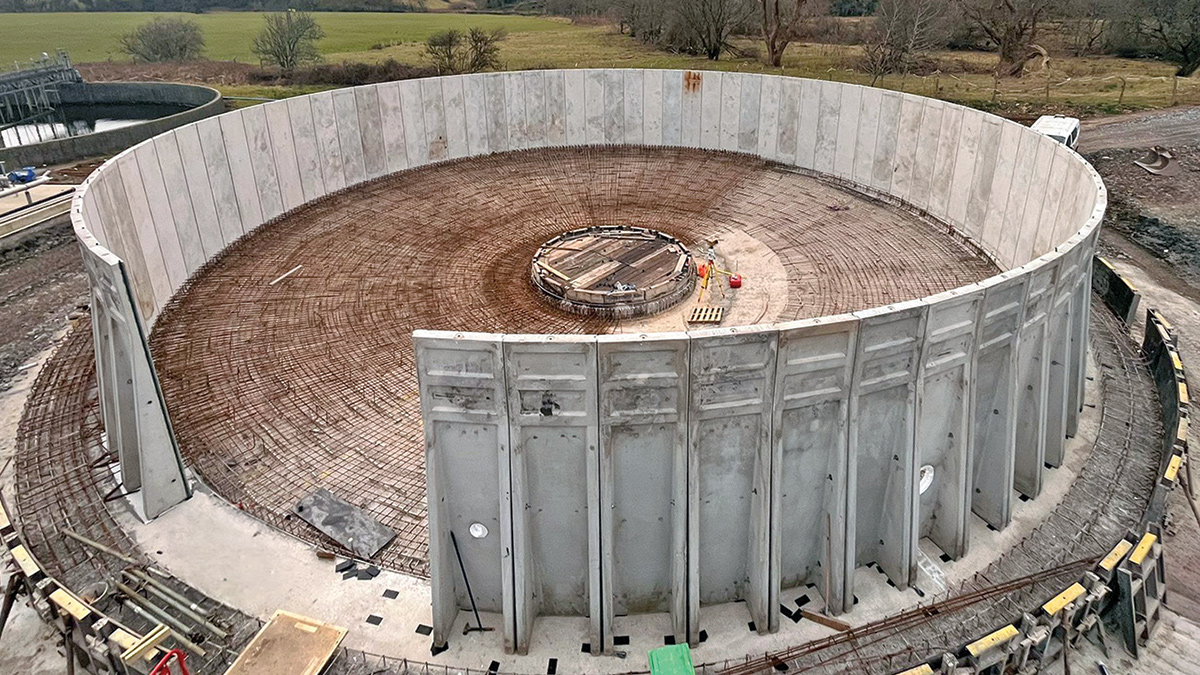
Construction of the new PST- Courtesy of Mott MacDonald Bentley
Primary settlement tank
The Mott MacDonald Bentley project team utilised the precast concrete system from Naylor Concrete Products Ltd for the 25m diameter PST. Through collaboration with other MMB framework teams working with Severn Trent and United Utilities, as well as the supplier, lessons learned were applied to deliver the 4m high tank ‘right first time’. The team more than doubled the anticipated installation rate per day, meeting the tight 5mm tolerance between the 75 precast units.
As a result of applying shared knowledge, the tank was designed with mitigations to support efficient installation and was constructed in record time. The tank passed all tests and commissioning first time, with the supplier adopting the Garnswllt team’s construction methods due to their efficiency and accuracy.
Following installation, MMB began developing internal standard design guidance and construction methodology using Garnswllt as a reference to drive efficiencies on future settlement tanks when using the Naylor Concrete system.
A half-bridge scraper system from DD Engineering Ltd was installed at the PST to allow sludge to be collected from the hopper. A duty/standby desludge progressive cavity pump set up was directly connected to the hopper, eliminating the need for an intermediate desludge chamber.
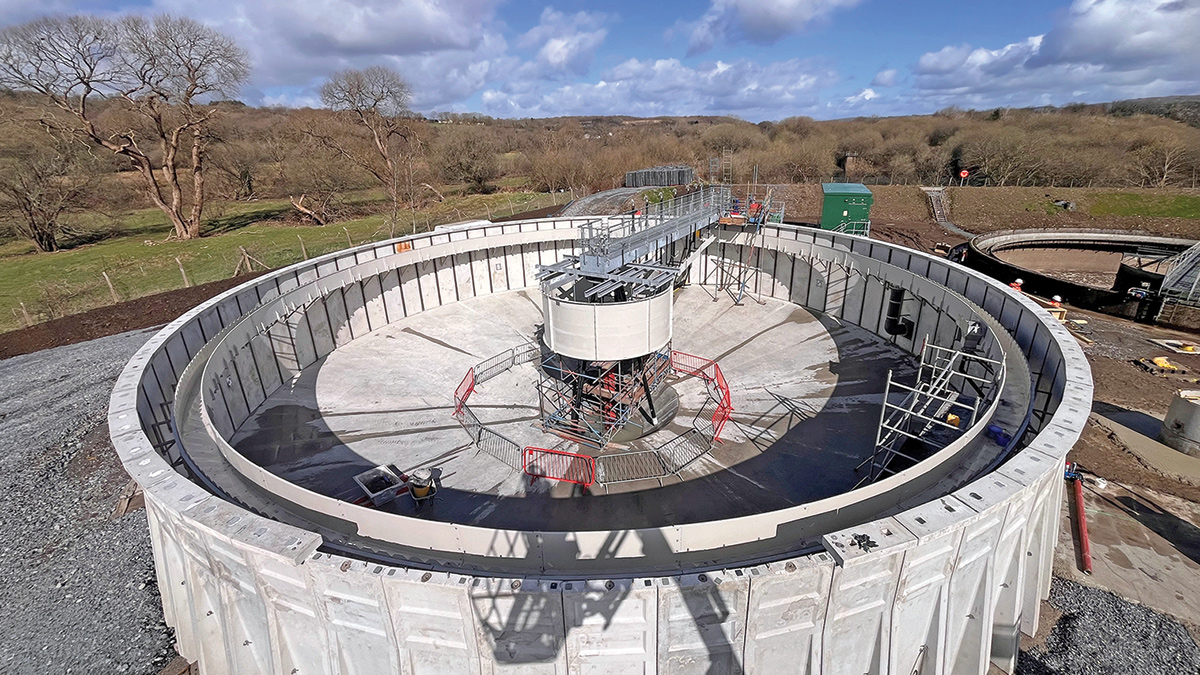
Construction progress of the PST – Courtesy of Mott MacDonald Bentley
Given the tank depth of approximately 5m from hopper to top water level, visual inspection of sludge would have been difficult. Instead, a sludge density monitor was installed at ground level next to the pump to provide operators with information on sludge composition.
Due to space constraints on site for construction, the new 25m diameter PST was located away from the existing PSTs, making gravity-only flow arrangements difficult to maintain. Early in the design, interstage pumping was identified as necessary. The proposed PST location also presented challenges due to existing alluvium and a high groundwater table associated with the adjacent river. To reduce dewatering and excavation requirements, the PST was partially raised above ground approximately 3m high.
PST feed pumping station
An interstage pumping station was designed with duty, assist and standby submersible pumps to accommodate flows ranging from approximately 80 l/s to 240 l/s.
Flows were fed by gravity from the downstream grit trap extension chamber and controlled via an actuated eccentric plug valve and flowmeter. This ensured that the 50%/25%/25% flow split between PST3 (the new PST), PST2 and PST1 remained accurate. The eccentric plug valve was selected to minimise solids build-up, as its geometry clears the flow path during operation.
A modulating Rotork IQM actuator was specified to provide high cycle capability and precise control, accommodating up to 1,200 starts per hour. This was selected to allow the control system to respond quickly to changes in upstream flow and maintain the required distribution across all PSTs.
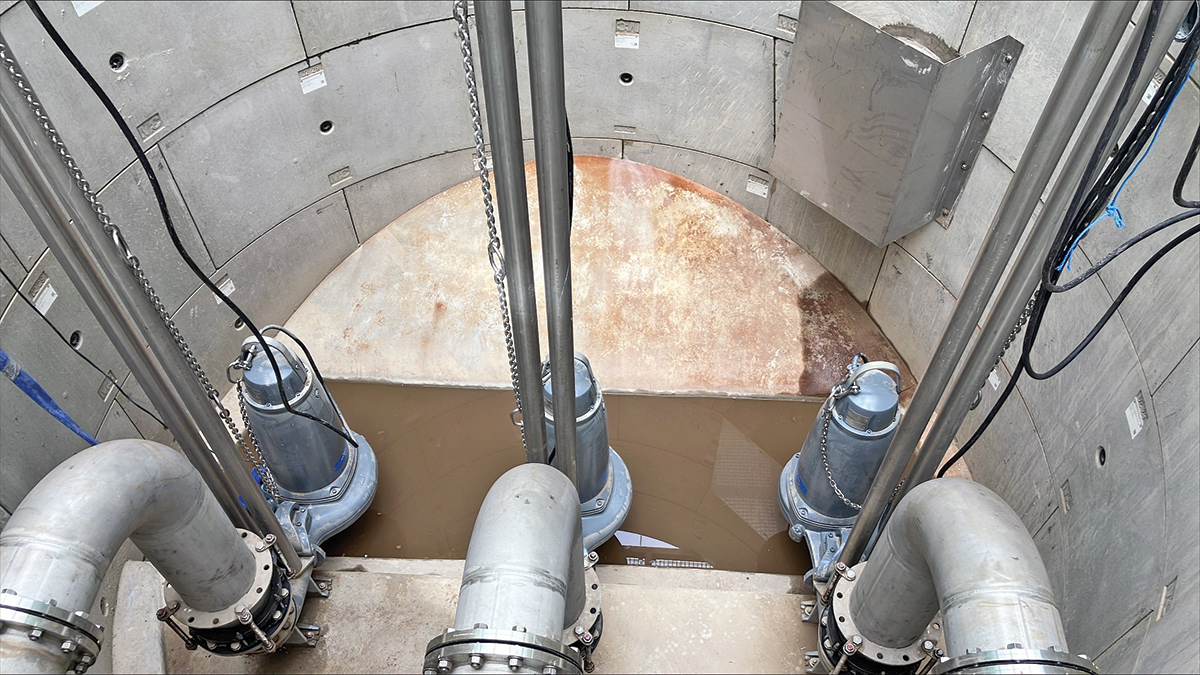
New PST feed pumping station – Courtesy of Mott MacDonald Bentley
FST siphon bridges
Another key element of the scope was the installation of new siphon bridges from Colloide, serving the two 22m diameter FST1 and FST2. These tanks are flat-bottomed rather than conical, requiring a different desludging approach.
The system uses a pump-primed siphon to initiate flow through the desludge pipe, after which gravity maintains continuous siphoning. Plunger valves regulate sludge withdrawal during startup, enabling operators to control draw-off rates and stabilise the process. Typically, outer valves provide lower draw-off rates, while the central valve accommodates higher sludge accumulation.
The existing systems had deteriorated over time, affecting operability and overall performance of the tanks, and were replaced following close collaboration between MMB, DCWW’s process, operations and asset teams, and the siphon bridge subcontractor.
Installation was complex due to 132 kV overhead power lines running directly above the tanks, preventing the use of mobile cranes. An engineered scaffold solution incorporating runway beams, a crash deck and lever hoists enabled safe and controlled installation without cranage.
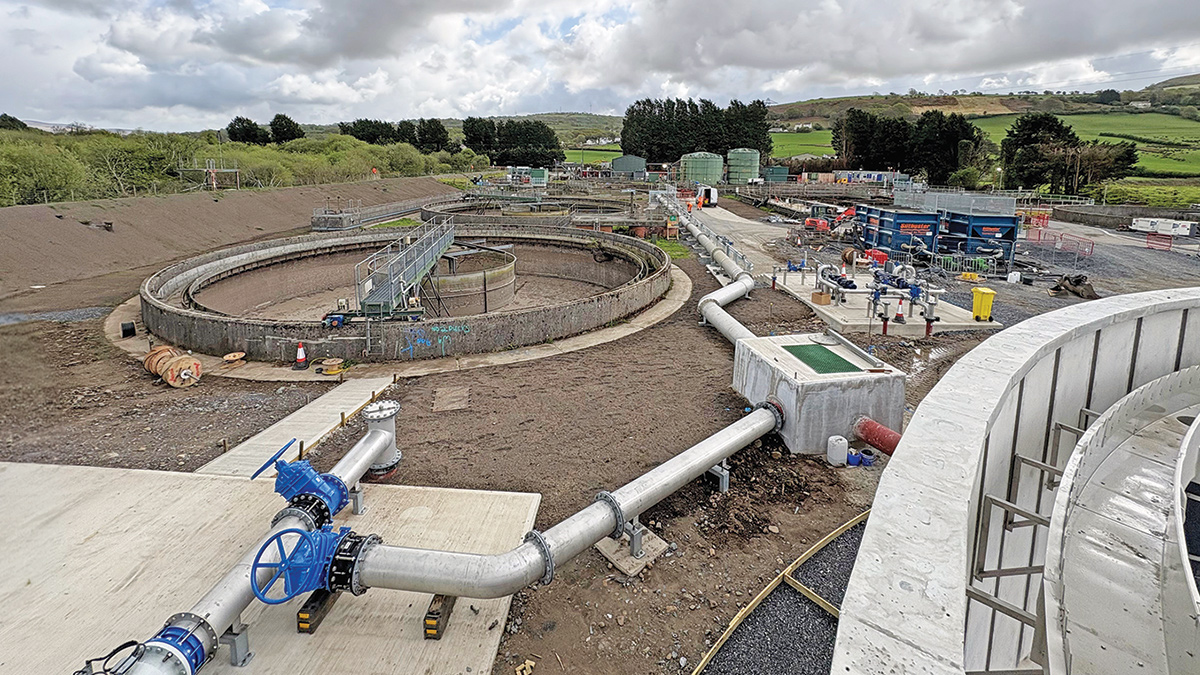
PST bypass & outlet pipework (foreground) and PST desludge PC pumps (background) – Courtesy of Mott MacDonald Bentley
Dewatering
Groundwater control was critical for both the new PST construction and the FSTs refurbishment due to the depth involved and the high groundwater table. The existing FSTs feature perimeter flotation valves, allowing groundwater to enter the tanks when empty and preventing structural uplift. MMB had to ensure groundwater levels remained below these valves before emptying the tanks and start the replacement of the bridges.
An initial dewatering design was completed to support a discharge and abstraction licence application to Natural Resources Wales. A series of dewatering wells were proposed around each existing FSTs and new PST excavation.
Further investigation on site identified an existing underdrain network beneath the existing tanks, which was refurbished and used successfully for dewatering around the FSTs. Testing confirmed effective groundwater drawdown while maintaining compliance with licence conditions (i.e., 122 l/s maximum abstraction flow rate), saving approximately £100,000 and four weeks compared to the initially proposed dewatering wells.
DfMA MCC
Two new motor control centres (MCC7 and MCC8) from RSE Control Systems (GPS) were installed on site. MCC7 served the PST scraper bridge, feed pumping and desludge pumping station, and MCC8 supplied the RAS/SAS pumping stations for FST3 and FST4.
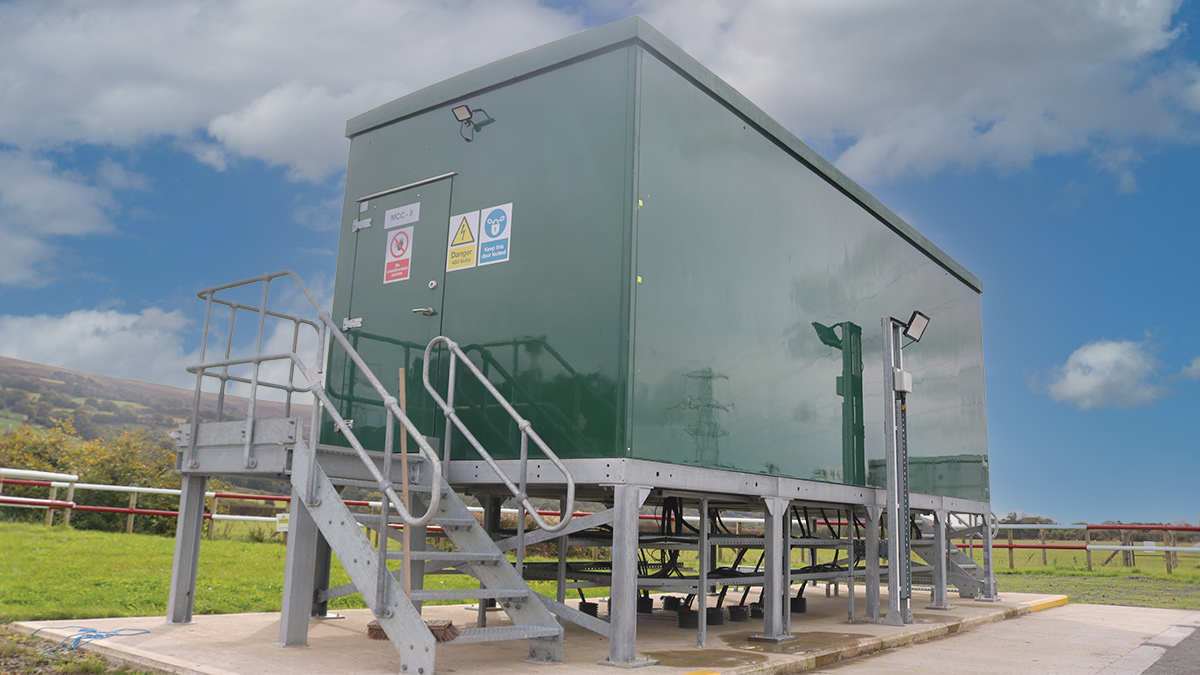
The new elevated DfMA MCC kiosk – Courtesy of Mott MacDonald Bentley
A design for manufacture and assembly (DfMA) approach was adopted with the supply chain, with kiosks, drives and steel platforms preassembled offsite in a factory-controlled environment.
This approach improved quality, reduced programme duration and enhanced health and safety performance by minimising onsite fabrication and installation activities.
Carbon reduction
Carbon reductions were achieved across the scheme. A 600m2 access road was constructed using a grass-cell system from Groundtrax Systems Ltd rather than reinforced concrete, reducing embodied carbon by approximately 80% (around 50 tCO2e) and saving approximately £40,000.
Approximately 6,000 tonnes of excavated material was reused to construct a replacement ecological pond, in accordance with a Materials Management Plan verified under the CL:AIRE Definition of Waste Code of Practice. This avoided off site disposal, saving approximately 20 tCO2e and £200,000. The existing ecological pond had to be drained and removed to allow the construction of the new PST.
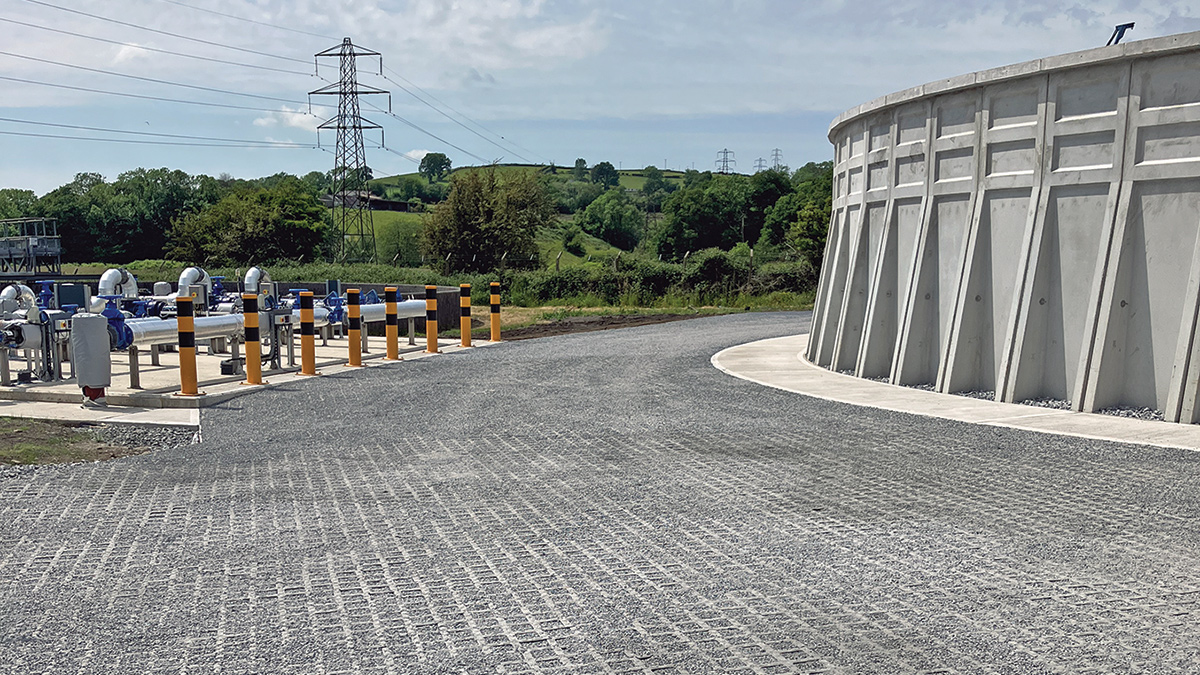
Grass-cell access road to PST – Courtesy of Mott MacDonald Bentley
Conclusion
Despite challenges including ground conditions, flooding, weather and operational constraints, the Garnswllt WwTW scheme was delivered on programme and within budget. The site can now treat a PFF of 431 l/s in line with WFD requirements.
The two existing final settlement tanks (FST1 & FST2) are now significantly easier to operate and maintain, with improved performance following desludging upgrades. They are now able to receive full flows, resolving previous operational issues.
Desludging performance and resilience at FST3 & FST4 have also been enhanced through the installation of new RAS and SAS pumping systems. The addition of the new primary settlement tank has significantly improved hydraulic performance across the primary treatment stage, reducing previous overloading.
Finally, the electrical distribution system was simplified with a new main distribution board, and overall resilience was enhanced through the addition of an emergency generator.
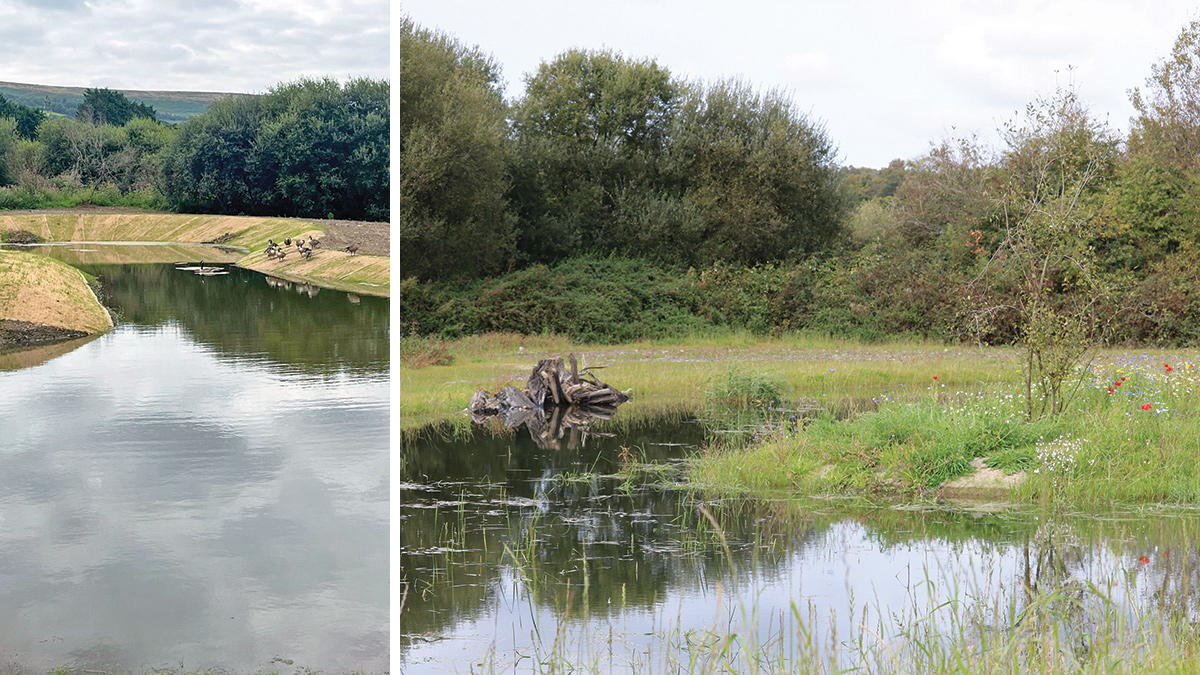
New ecological pond: (left) following completion and (right) in Spring 2026 - Courtesy of Mott MacDonald Bentley