
Knapp Mill WTW (2026)
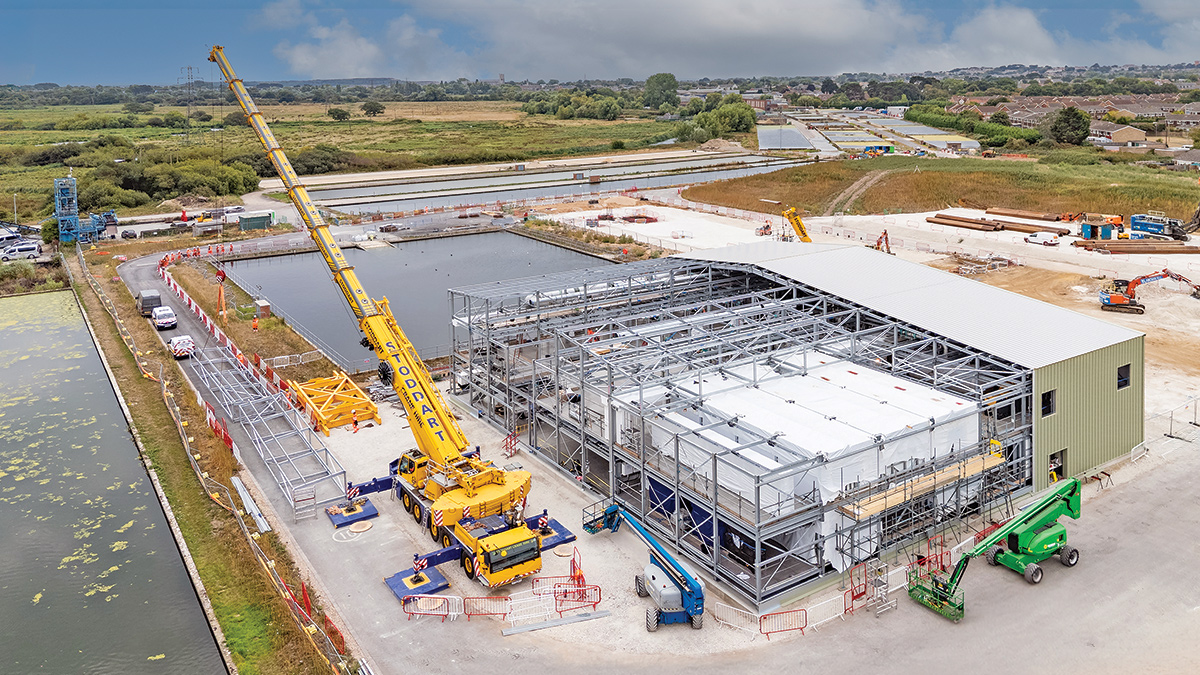
70 modular treatment units installed on site at Knapp Mill WTW - Courtesy of RSE
Located in Christchurch, Dorset, Knapp Mill Water Treatment Works (WTW) is one of Bournemouth Water’s two principal treatment facilities, supplying drinking water to customers across Christchurch and parts of the New Forest. The site has treated water since the early 1900s, with existing processes centred on slow sand filtration, ultraviolet disinfection and chlorination. As treatment standards, customer expectations and resilience requirements have evolved, Bournemouth Water identified the need to modernise the ageing facility through a major £85m investment programme. The upgrade is designed to improve drinking water quality, increase operational resilience, and secure long-term water supplies for a growing population.
Project background
The Knapp Mill WTW Upgrade Project is a key part of Bournemouth Water’s wider £200m investment programme, which will provide cleaner, better-tasting and more reliable drinking water to the population across Christchurch, Ringwood, New Milton, Lymington and Beaulieu, while improving sustainability and energy efficiency.
RSE is delivering a major £85m upgrade project at Knapp Mill, helping Bournemouth Water and South West Water enhance drinking water quality, capacity and resilience for customers across the region.
At the heart of the upgrade is RSE’s innovative m-CTU® (membrane Ceramic Treatment Unit) solution, integrating advanced ceramic membrane technology with off-site modular construction to deliver significant programme, safety and sustainability benefits.
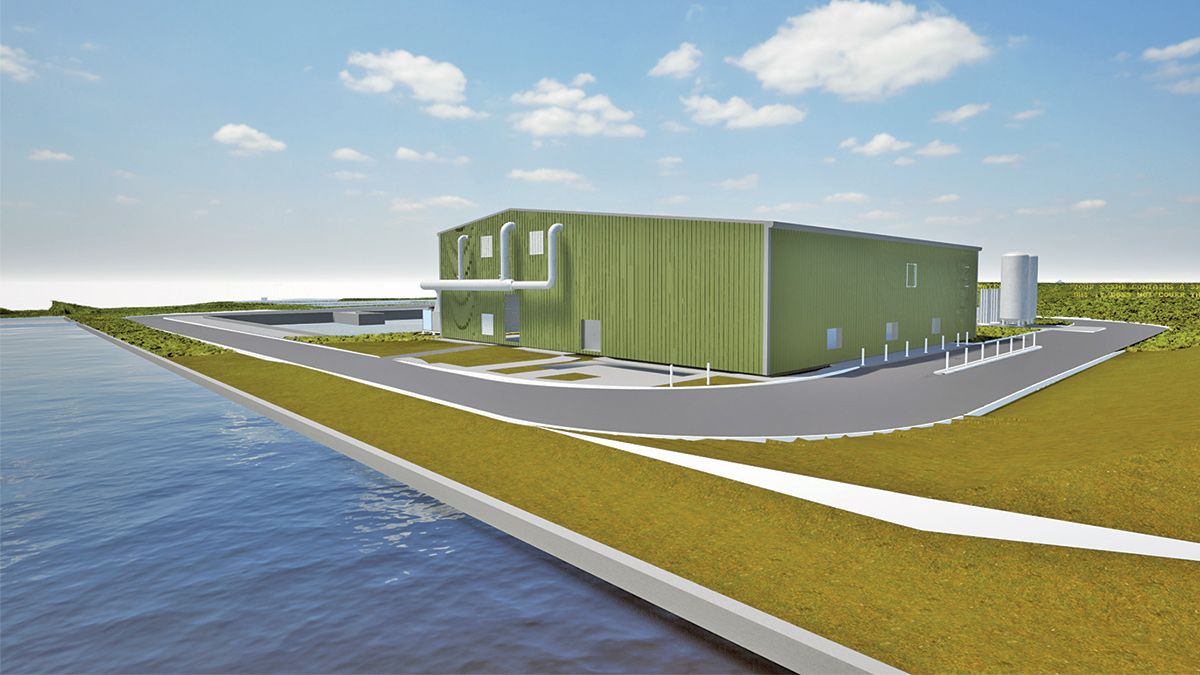
CAD model render of complete Knapp Mill WTW building – Courtesy of RSE
The project has been designed to increase treatment capacity and operational resilience, enhance water quality and sustainability performance, reduce construction activities on-site, and improve both programme certainty and safety outcomes. Additionally, the upgraded infrastructure will be future-proofed to serve customers reliably for decades to come. A major advantage of the modular approach is scalability. m-CTU® units can be installed as demand increases, allowing treatment capacity to expand without extensive redevelopment of the site. This flexibility ensures that the facility can adapt efficiently to future water demand.
The scheme required efficient coordination of a complex logistics programme involving multiple stakeholders, authorities and subcontractors, alongside the rapid deployment and installation of more than 70 modular treatment units.
The project is being delivered while the treatment works remains operational, ensuring continuity of supply throughout construction.
Standardised ceramic membrane treatment solution
Knapp Mill WTW represents the second Design for Manufacture and Assembly (DfMA) ceramic membrane treatment plant delivered by RSE for Bournemouth Water and South West Water, building on the successful delivery of the 84 MLD Alderney WTW scheme. Developed as a like-for-like treatment solution, the project leverages a proven design philosophy and established delivery model, reducing engineering risk while increasing programme certainty and delivery efficiency.
Central to the scheme is RSE’s standardised modular m-CTU® solution. Rather than simply repeating individual products, the project demonstrates the scalability of a fully standardised ceramic membrane treatment plant at a significantly larger capacity. By replicating proven design, manufacture, assembly and testing processes, the project benefits from enhanced quality assurance, streamlined delivery and reduced whole-life risk.
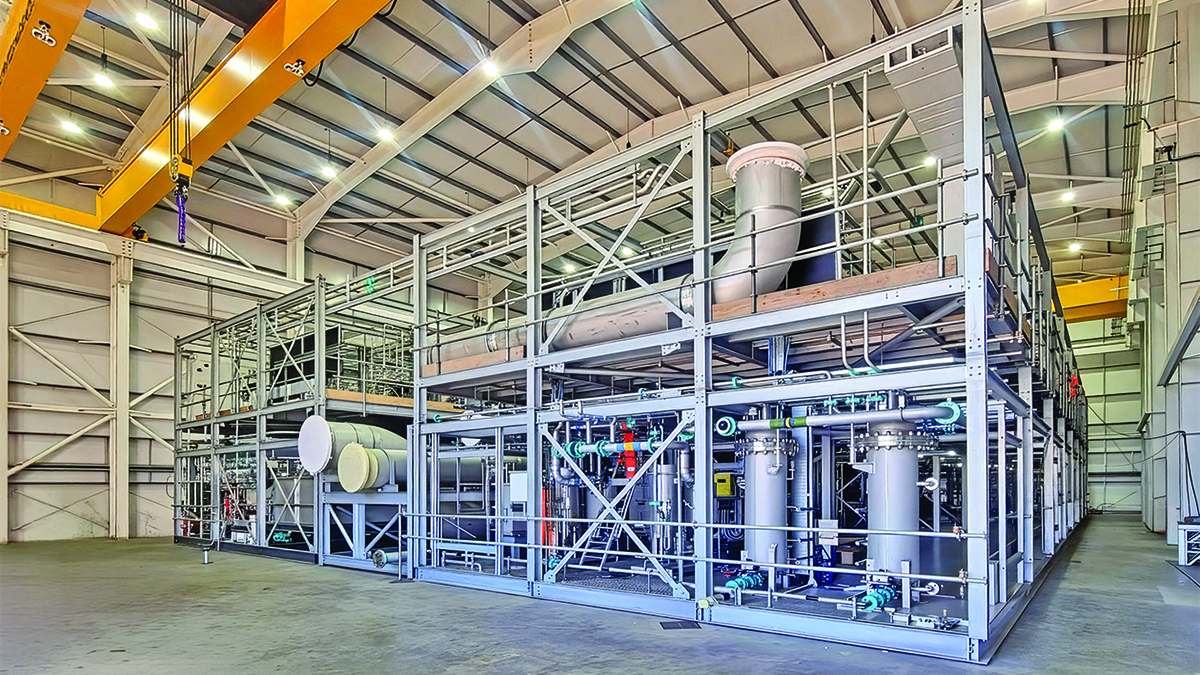
Modular ceramic membrane plant fabricated in workshop conditions in Muir of Ord – Courtesy of RSE
The treatment facility incorporates advanced ceramic membrane filtration technology supported by high-velocity backwash systems for effective membrane cleaning, cleaning-in-place (CIP) facilities for operational reliability, and fully integrated process control systems to support safe and efficient operation. The modular design also provides inherent flexibility, enabling future capacity increases by adding further treatment units without major site redevelopment.
Collectively, these features deliver a resilient, sustainable and future-ready treatment solution capable of meeting Bournemouth Water’s long-term water quality, capacity and operational requirements.
Developed through targeted research and development and in collaboration with forward-thinking utility clients, RSE’s m-CTU® technology has been designed to address key challenges facing the UK water sector, including water quality, resilience, programme certainty and whole-life cost. By integrating advanced ceramic membrane filtration within a highly standardised modular platform, the system provides an efficient and scalable alternative to conventional water treatment solutions.
At Knapp Mill WTW, the m-CTU® solution combines ceramic membrane technology with a range of complementary treatment and process systems to enhance bacterial barrier performance, improve organics removal and consistently deliver high-quality drinking water. Ceramic membranes offer a robust and durable treatment barrier, providing longer asset life, lower maintenance requirements and reduced energy consumption when compared with traditional treatment processes, while supporting increasingly stringent water quality standards.
A key principle of the delivery strategy was maximising off-site manufacture to improve quality, safety and programme performance. As such, RSE manufactured, assembled, and fully factory-tested all process modules within its production facilities in Muir of Ord before transporting them to site. This approach significantly reduced site-based construction activities, minimised interfaces and commissioning risks, and enabled rapid installation within the live operational treatment works.
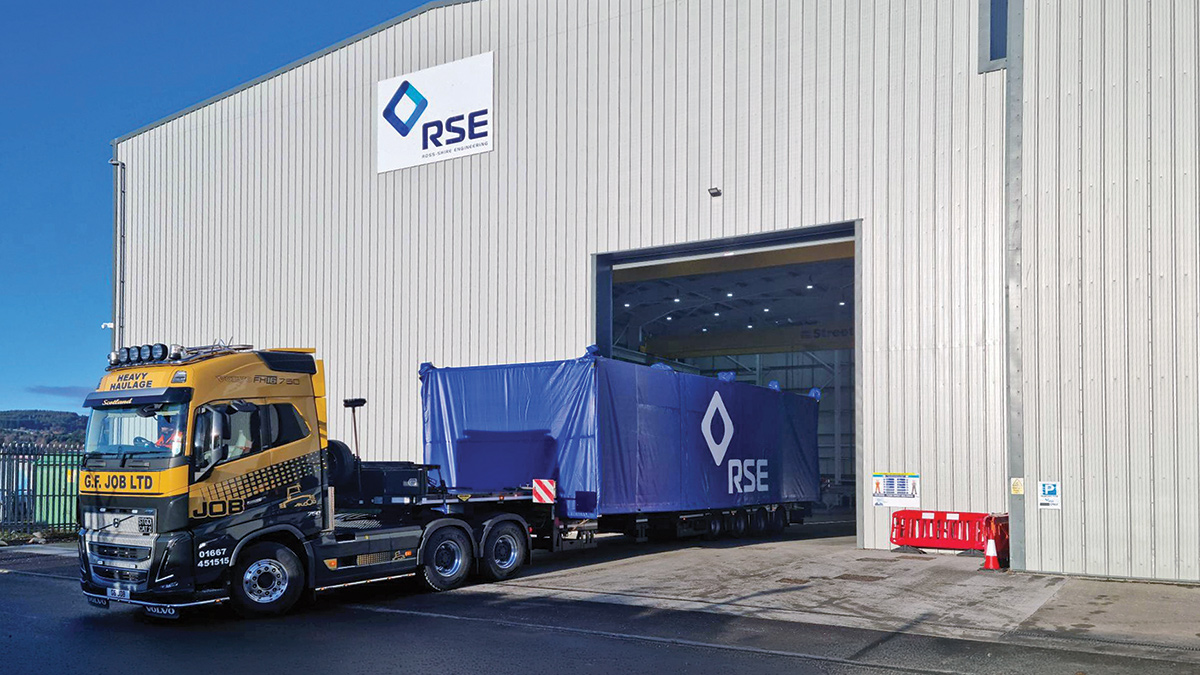
Modular units disassembled for load out and transportation to site – Courtesy of RSE
The resulting facility provides Bournemouth Water with a resilient, sustainable and future-ready treatment asset, demonstrating how standardised modular ceramic membrane technology can be deployed at scale to meet the long-term challenges facing the water industry.
Building on the successful delivery of Alderney WTW scheme, the Knapp Mill project adopted an established engineering, manufacturing and installation model to maximise efficiency and programme certainty. Utilising the same standardised treatment platform enabled the project team to reduce development effort, minimise engineering risk and focus resources on delivery optimisation and construction planning.
RSE’s manufacturing-led approach was central to the strategy. RSE fabricated, assembled and factory-tested more than 70 modular Transportable Treatment Units (TTUs) within its production facilities before transporting them to site for installation. By moving most construction activities into a controlled factory environment, the project achieved significantly improved quality assurance, reduced on-site risk, and faster programme delivery than conventional construction methods.
The project also demonstrated the repeatability and flexibility of RSE’s standardised modular delivery model. Following the success of Alderney WTW, the Knapp Mill facility was delivered at an increased pace despite being undertaken with a different Tier 1 contractor for the same end client. This highlighted the ability of a standardised DfMA approach to consistently deliver quality, safety and programme benefits across varying project environments and stakeholder teams.
Successful delivery of the modular solution depended upon meticulous planning and close collaboration between Bournemouth Water, the principal contractor, RSE and key supply chain partners. To manage the complex logistics associated with transporting and installing more than 70 modules, the team developed a detailed logistics strategy supported by a 4D construction and delivery simulation.
This provided complete visibility of each module throughout manufacture, transportation and installation, ensuring all stakeholders, site teams and relevant authorities had confidence in the status and location of every unit at each stage of the programme.
The result was a highly coordinated modular delivery operation that minimised disruption at the live treatment works, reduced construction risk and enabled the rapid deployment of a large-scale ceramic membrane treatment facility.
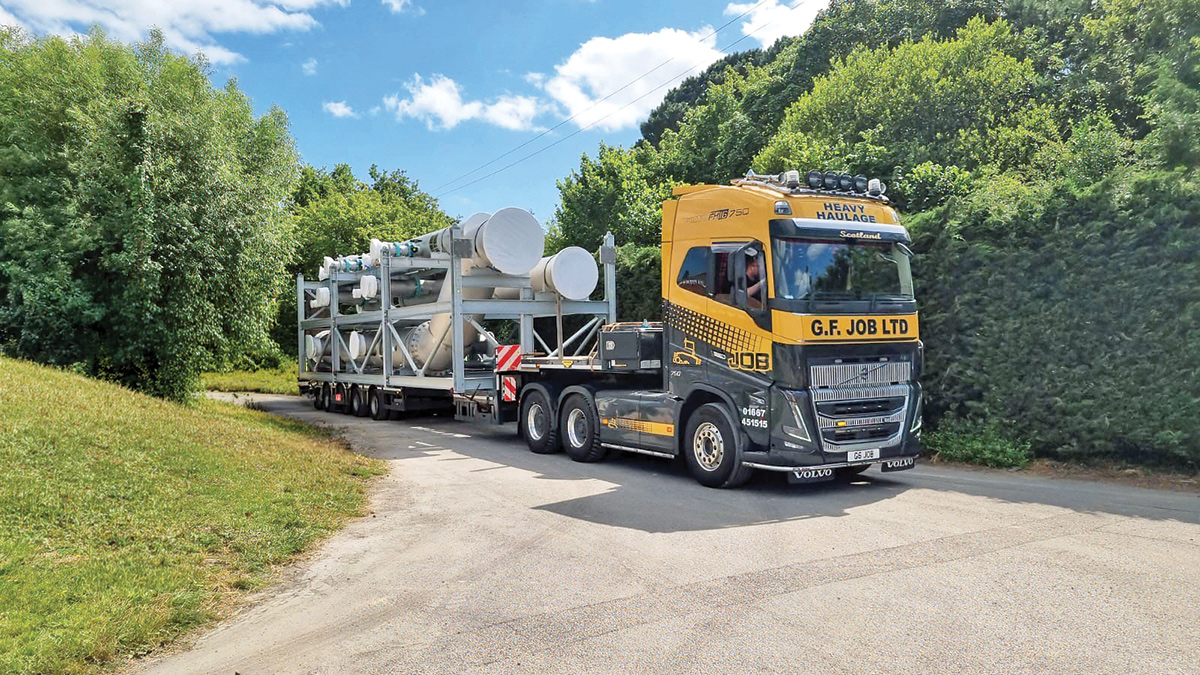
A manufacturing-led approach reduced site traffic and enabled delivery at nearly twice the speed of traditional methods – Courtesy of RSE
Treatment process
The upgraded Knapp Mill WTW incorporates a new 67 MLD ozonated ceramic membrane treatment plant, designed to provide enhanced water quality, operational resilience and long-term flexibility.
Upstream of the membrane process, slow sand-filtered water is collected and transferred via a new interstage pumping station to flow balancing tanks. These tanks provide stable hydraulic conditions, ensuring consistent operation of the downstream treatment processes. A sidestream is then diverted from the combined flow balance tank outlet to the ozone generation plant, before being reintroduced into the main process flow through a static mixer. This arrangement optimises oxidation performance, enhances organics removal and improves overall membrane treatment efficiency.
At the core of the facility is PWNT’s CeraMac® ceramic membrane system, which RSE has developed into a state-of-the-art modular solution that enhances water quality and operational resilience.
Each membrane vessel has a dedicated feed pump and backwash vessel, providing operational flexibility and process reliability. The membrane systems are supported by centralised utility infrastructure, including compressed air systems, backwash water supplies and cleaning-in-place (CIP) facilities, enabling efficient operation, maintenance and asset management across the treatment plant.
Permeate from the membrane process is collected within a common header, where sodium bisulphite is dosed to neutralise residual ozone prior to downstream treatment. A proportion of the treated water is utilised within the backwash and CIP systems, with the remaining flow passing to granular activated carbon (GAC) filtration. The GAC stage provides an additional treatment barrier, further improving water quality before the treated water progresses through the final stages of the treatment process.
The combination of ozone treatment, ceramic membrane filtration and GAC adsorption delivers a robust multi-barrier treatment solution, providing Bournemouth Water with a resilient and future-proof asset capable of meeting increasingly stringent water quality requirements while maintaining reliable supplies for customers across the region.
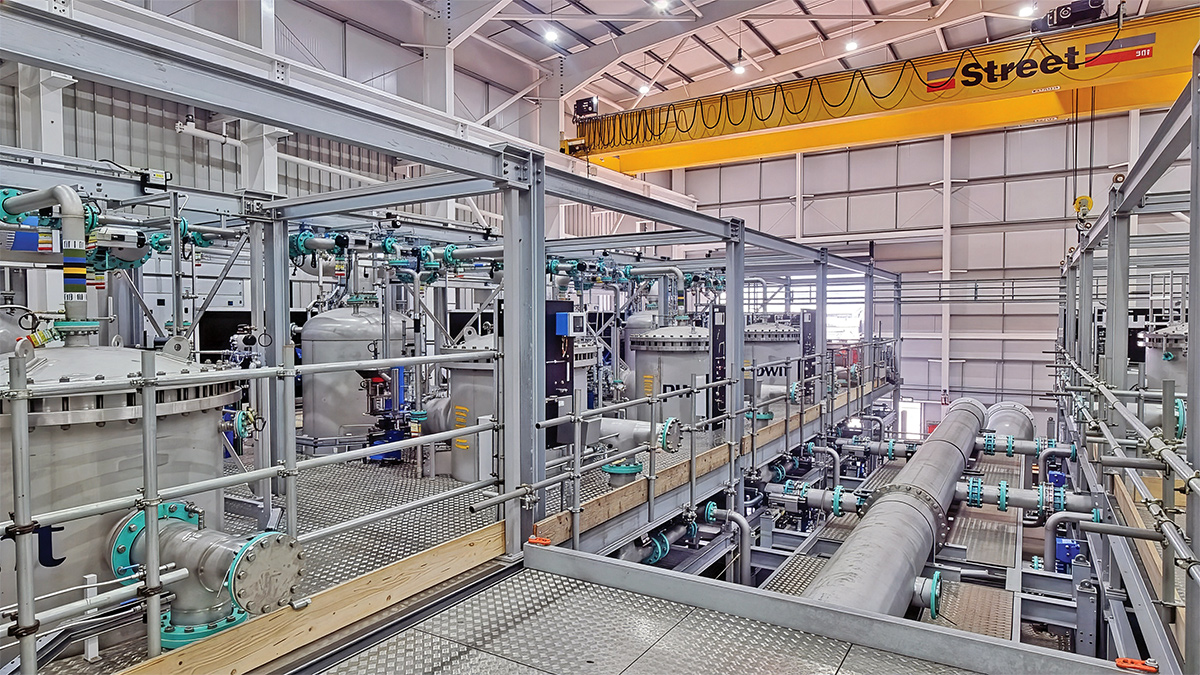
Integration of advanced ceramic membrane technology within the transportable treatment units – Courtesy of RSE
Knapp Mill WTW: Supply chain – key participants
- Principal contractor: MWH Treatment
- Principal designer (civils): AECOM
- Designer (MEICA): Arcadis
- MEICA & process designer & contractor: RSE
- Ceramic membrane package: PWNT
- Specialist transportation: GF Job
- Crane hire: Stoddart Crane Hire
- Ozone generation package: Nijhuis
- Ozone generators: Primozone
- Ozone destructors: De Nora Water Technologies UK
- Chemical dosing: Prominent Fluid Controls (UK) Ltd
- Safety showers: Aqua Safety Showers International Ltd
- Chemical storage tanks: Chem Resist Group Ltd
- Chemical tanks: Forbes Technologies Limited
- MCC & systems integration: RSE Control Systems (GPS)
- Liquid oxygen vessels design: BOC
- Feed pumps: Sulzer Pumps Wastewater Ltd
- Overhead cranes: Street Crane Co.
- Static mixers: Statiflo International Ltd
- Pumps: Grundfos Pumps Ltd
- Compressors: Kerr Compressors
- Stainless pipework & fittings: DH Stainless
- Instrument pipework: Geberit Mapress | Hylok
- Chemical pipework & fittings: Georg Fischer
- Bellows: FlexEJ
- Electrical cabling & containment: Anixter-Wesco
- Valves & actuators: TTV Valvulas
- Analytical instrumentation: SWAN Analytical UK Ltd
- Instrumentation: IFM Electronics
- Quality instruments: Process Measurement & Analysis Ltd (PMA UK) | Process Instruments (PI) | Endress+Hauser |
- Process flow meters: Siemens
- Pneumatic controls: Burkert Fluid Control Systems
- HV switches: Schneider Electric Ltd
- Gas detection: Drager Safety UK
- Scaffolding: High-Tek Scaffolding
- Crane hire: Ainscough Crane Hire
- HVAC: Air Technology Systems
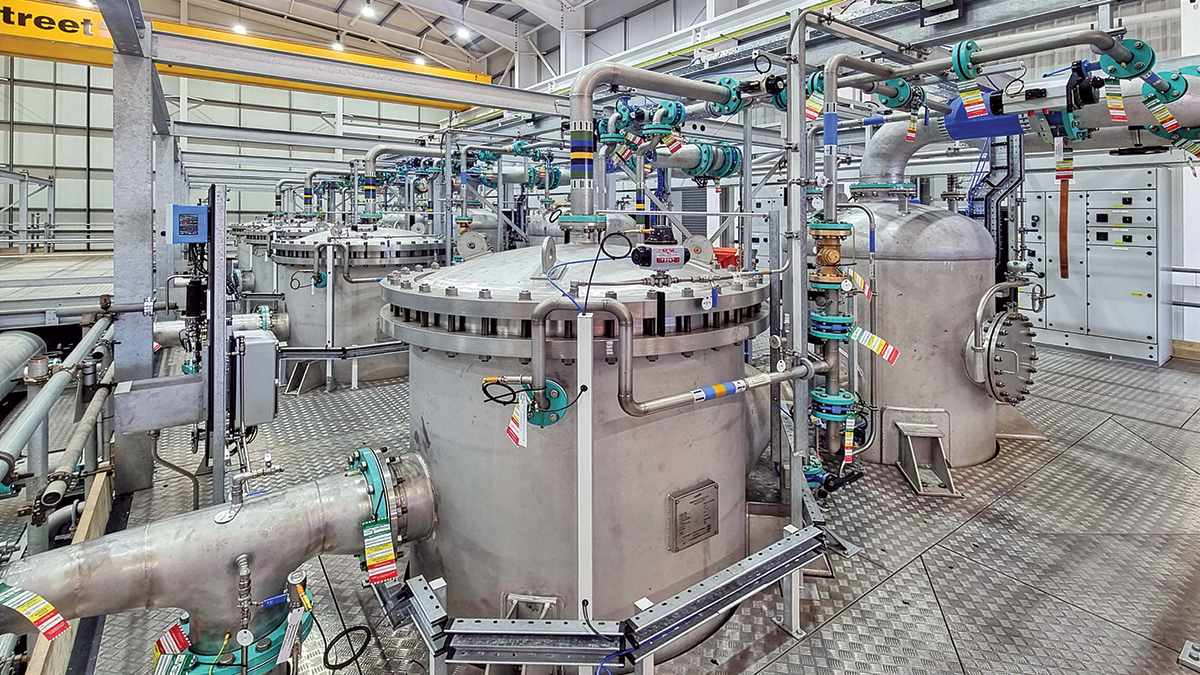
PWNT’s ceramic membrane plant featured in RSE’s m-CTU37® technology with ozone dosing – Courtesy of RSE
Innovations
The Knapp Mill WTW upgrade benchmarks modular delivery in the water industry. It demonstrates how innovative thinking and modern construction methods can tackle challenges facing water networks, while also laying the foundation for more sustainable future infrastructure. It shows what can be achieved in partnership with innovative clients committed to high levels of engagement and collaboration.
The project upgrade exemplifies the benefits of embracing innovation and a modular, factory-built approach. Integrating advanced treatment processes into standardised units allowed the project to deliver significant gains in efficiency, quality, and sustainability. The delivery of Knapp Mill WTW also created opportunities to further refine processes and introduce additional innovations.
These improvements informed best practices, enhancing consistency, operational performance and long-term value for the client. Through close collaboration and continuous improvement, the project not only met its objectives but also strengthened the standardisation of ceramic membrane treatment infrastructure across Bournemouth Water’s network.
By adopting a modular delivery model, RSE significantly improved safety performance while reducing the environmental impact associated with traditional construction activities. The m-CTU® solution delivered substantial benefits throughout the project lifecycle, including up to a 20% reduction in design and installation costs, carbon savings of more than 30% through the use of low-carbon and recycled materials, and construction programme reductions of up to 50% when compared with conventionally delivered membrane treatment plants. The off-site manufacturing approach also minimised disruption to site operations and the surrounding community while enhancing quality control through factory-based assembly and testing.
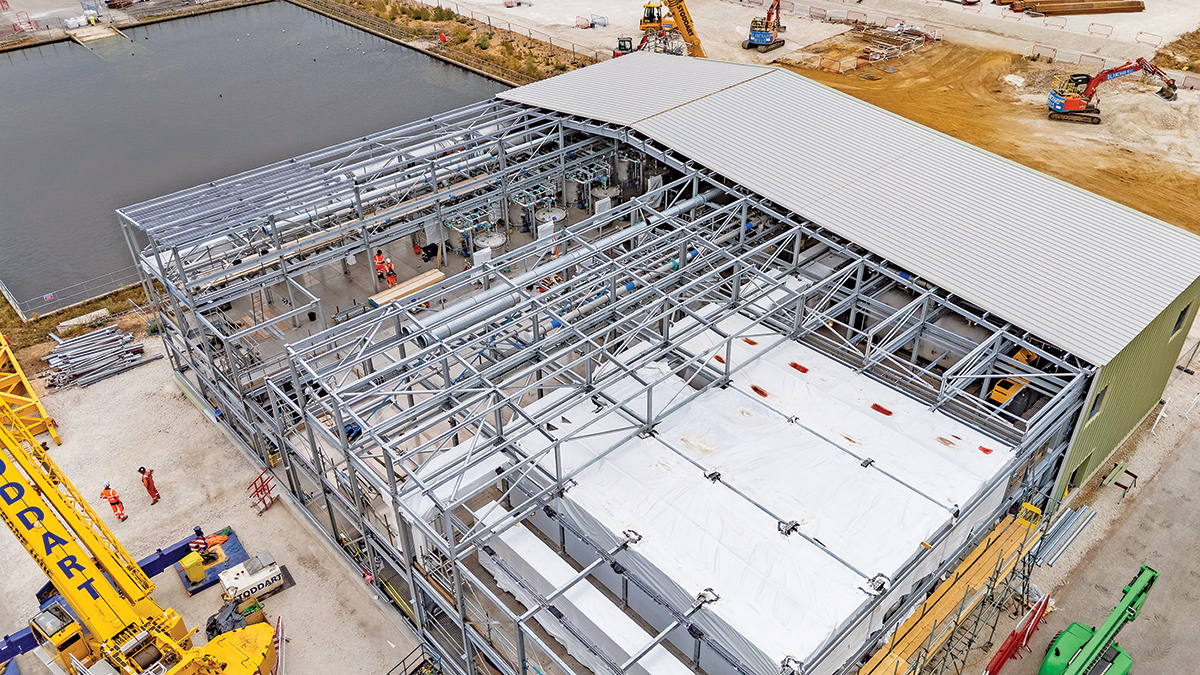
Installation phase of process units, delivering the major modular project upgrade – Courtesy of RSE
The modular ‘Lego® block’ philosophy further supports long-term flexibility, enabling additional treatment capacity to be incorporated efficiently as future demand increases. This scalable approach gives Bournemouth Water a resilient solution that can adapt to changing operational requirements over time.
Alongside the treatment process upgrades, a number of site enhancement works were undertaken to improve the surrounding environment and deliver lasting benefits for the local community.
These included constructing a landscaped earth mound to reduce noise levels and enhance the site’s visual appearance, installing new tree planting and green infrastructure to support biodiversity, and creating a new pedestrian crossing linking the Mill Road green space with the Avon Valley Footpath.
Once operational, the upgraded facility will strengthen water supply resilience across the region and deliver enhanced drinking water quality for Bournemouth Water customers. Combined with the environmental and community improvements delivered as part of the project, Knapp Mill WTW has been developed to provide sustainable benefits for both the local area and future generations of customers for decades to come.
Progress to date
Following the construction contract award in May 2024, RSE began early procurement activities and off-site fabrication of standard products in June 2024. Off-site assembly and testing began in January 2025 and was successfully completed by June 2025, with all modular units fully assembled, tested, and ready for shipment.
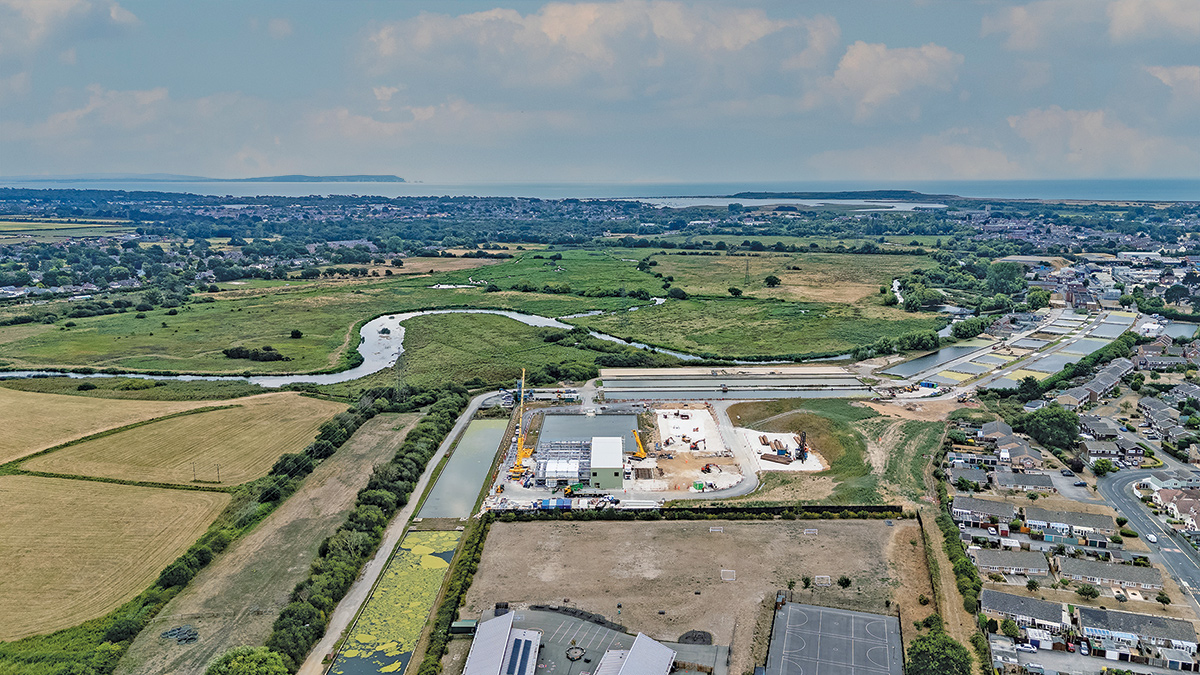
On-site construction and assembly of modular transportable treatment units – Courtesy of RSE
The first modular unit was delivered to site in July 2025, followed by the final unit in August 2025, demonstrating the efficiency of the modular delivery model. The project commenced energisation and commissioning in October 2025, pending the Client and Tier 1 contractor providing power in accordance with the overall project programme.
RSE has remained on programme throughout delivery, with the rapid execution of its scope enabling a phased installation approach that reduced disruption to both the operational site and the surrounding community, while minimising the duration and intensity of on-site activities. The Knapp Mill WTW upgrade demonstrates the advantages of combining advanced ceramic membrane technology with standardised modular delivery.
By replicating the successful Alderney WTW model, RSE has achieved significant programme savings, accelerated delivery and reduced project risk while continuing to drive innovation across both facilities. The project highlights how Design for Manufacture and Assembly (DfMA) principles can transform infrastructure delivery, providing clients with greater certainty, improved sustainability performance and faster access to critical water treatment capacity.
As the project progresses towards energisation and commissioning, Knapp Mill is set to become another landmark example of how modular water treatment solutions are shaping the future of the UK water sector.