
Leamington Spa Sewerage Scheme (2025)
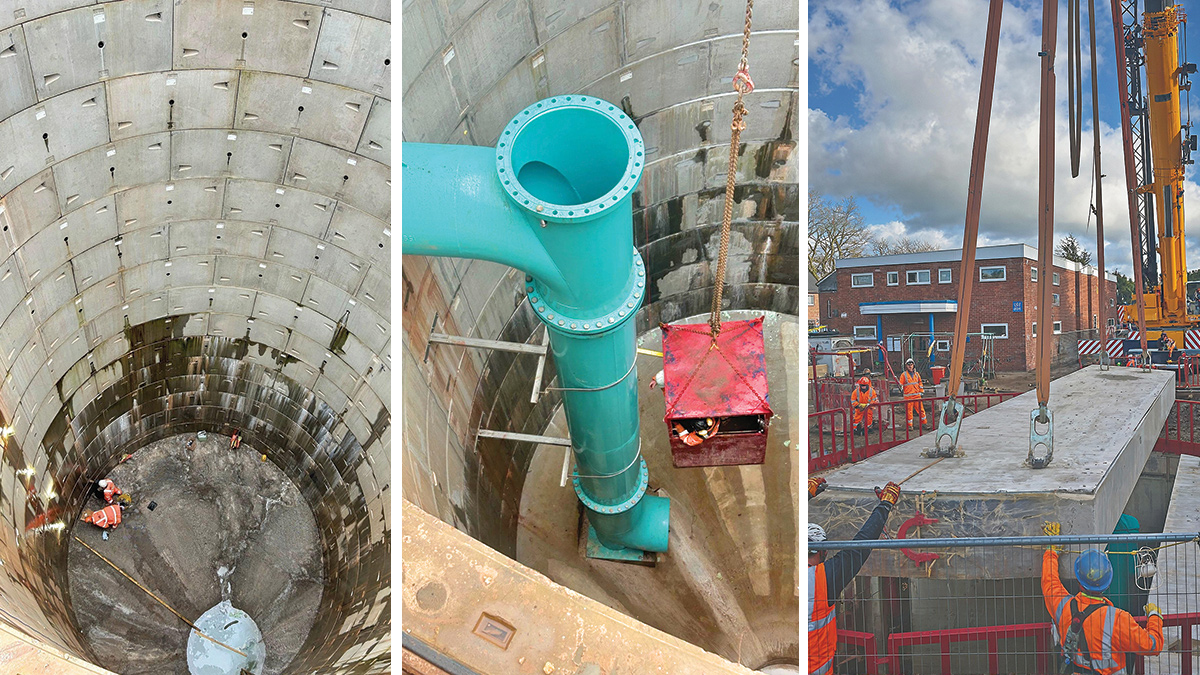
Station Approach shaft storm tank: (left) the completed shaft (middle) pipework installation, and (right) roof installation - Courtesy of Forkers Ltd
Leamington Spa is a historic spa town with a growing population and significant development pressures. The River Leam, which flows through the town centre, is a focal point for recreation, including wild swimming, boating, and public parks. The sewerage catchment includes Leamington, Warwick, and surrounding villages, all draining to Longbridge Sewage Treatment Works (STW). Six CSOs were identified for improvement. This requirement was designed to safeguard public health and ensure compliance with the Bathing Water Directive and related water quality with the aim to reduce spill volumes and spill frequency with a variety of interventions; to give an insight into the best approach for bathing waters. Endorsed by Ofwat in 2021, the scheme is part of a broader strategy to support post-pandemic economic recovery through environmental infrastructure investment. The Leamington scheme exemplifies innovation in hydraulic modelling, and collaborative delivery within tight regulatory timeframes.
Project overview
The Green Recovery Leamington Spa Sewerage Scheme is a flagship initiative under Severn Trent’s Green Recovery programme, aimed at moving a stretch of the River Leam towards bathing quality. This ambitious project addresses the performance of six critical Combined Sewer Overflows (CSOs) in Royal Leamington Spa, Warwickshire, through a suite of technically advanced designs that test a variety of complementary solutions.
Few projects manage to balance technical complexity with community benefit as seamlessly as the Leamington Spa Sewerage Scheme with live public functional spaces is technically complex but also requires attentive and agile stakeholder engagement, delivering large measurable environmental improvements.
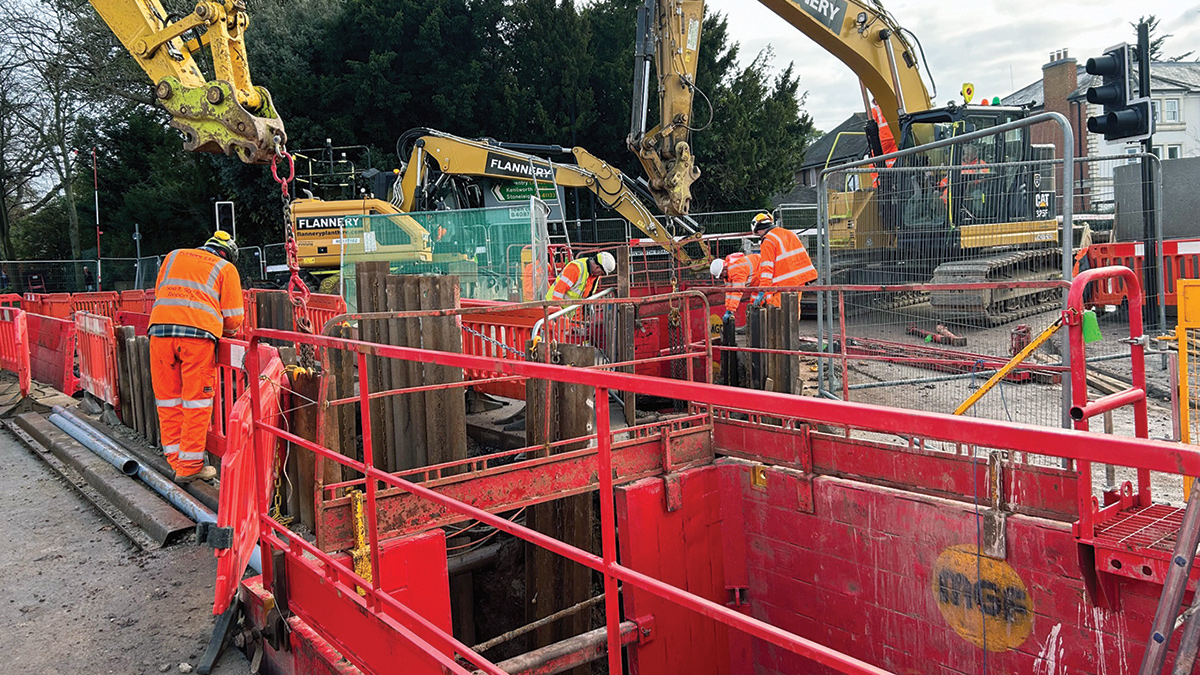
Surface water separation – Courtesy of Forkers Ltd
While early guidance targeted storm overflows with direct discharges into these areas, the programme has since expanded to include overflows that pose wider environmental and public amenity impacts. This includes high amenity areas such as recreational waters and areas of interest to businesses and other organisations, even if they are not formally designated as bathing waters.
The shift reflects a more holistic approach to water quality management, prioritising interventions based on environmental sensitivity, public usage, and the potential impact of overflows. This broader targeting ensures that improvements are aligned with community expectations and environmental stewardship goals.
Hydraulic modelling & option development
The project leveraged the Longbridge Strategic Sewerage Growth model, enhanced with updated flow monitoring and surface water network refinements. Hydraulic solutions were identified early through iterative hydraulic modelling and refined through feasibility and Early Contractor Involvement (ECI) with Forkers Ltd.
By integrating advanced hydraulic modelling and real-time control, the scheme exemplifies the kind of forward-thinking infrastructure needed to meet the challenges of climate resilience and urban growth.
Preferred interventions included surface water separation, pumped and gravity storage, and network optimisation.
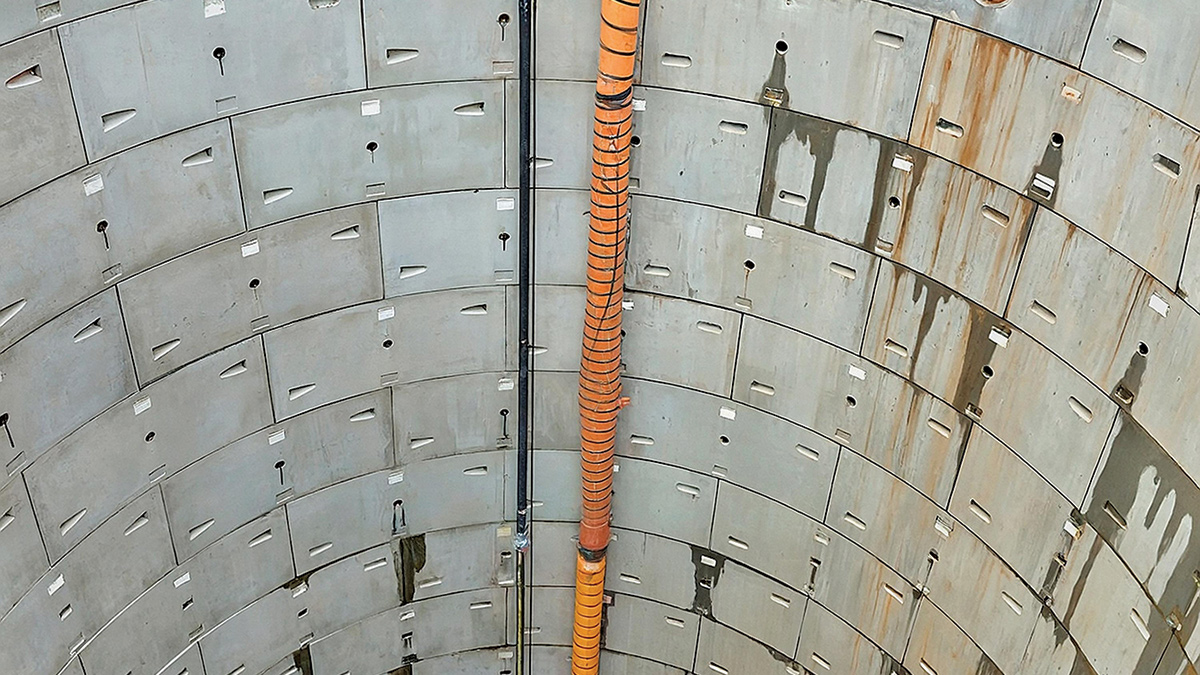
Shaft storm tank precast concrete segments – Courtesy of Forkers Ltd
Leamington Spa Sewerage Scheme: Supply chain – key participants
- Deliver contractor: Forkers Ltd
- Designer: WSP
- Tunnelling/shafts/timber headings: Active Tunnelling Ltd
- Electrical/mechanical: STAL (UK) Ltd
- Ground support & shoring: MGF Ltd
- Vacuum excavation: VAC UK (Kilkern Ltd)
- Drainage sub-contractor: Arthur Civil Engineering Ltd
- Emergency temporary pumping: Selwood
- Precast concrete pipe & rings: Marshalls Civils & Drainage
- Precast concrete rings: FP McCann Ltd
- Plastic storage pipes: Aquaspira Ltd
- GEOlight® storage tank: SDS Limited
- Concrete & aggregates: Aggregate Industries | Cemex
- Plant hire: Flannery Plant Hire (Oval) Ltd
- Traffic management: RouteOne Traffic Management Ltd
- Carriageway surfacing: JMC surfacing Ltd
Surface water separation (SWS)
A major surface water separation scheme was implemented between Campion Road and Milverton School, delivering significant benefits in surface water management. The project successfully disconnected impermeable areas from the combined sewer network, reducing the volume of stormwater entering the system. Additionally, it incorporated below-ground storage to help manage flood risk, enhancing the area’s resilience to heavy rainfall events and contributing to improved environmental outcomes.
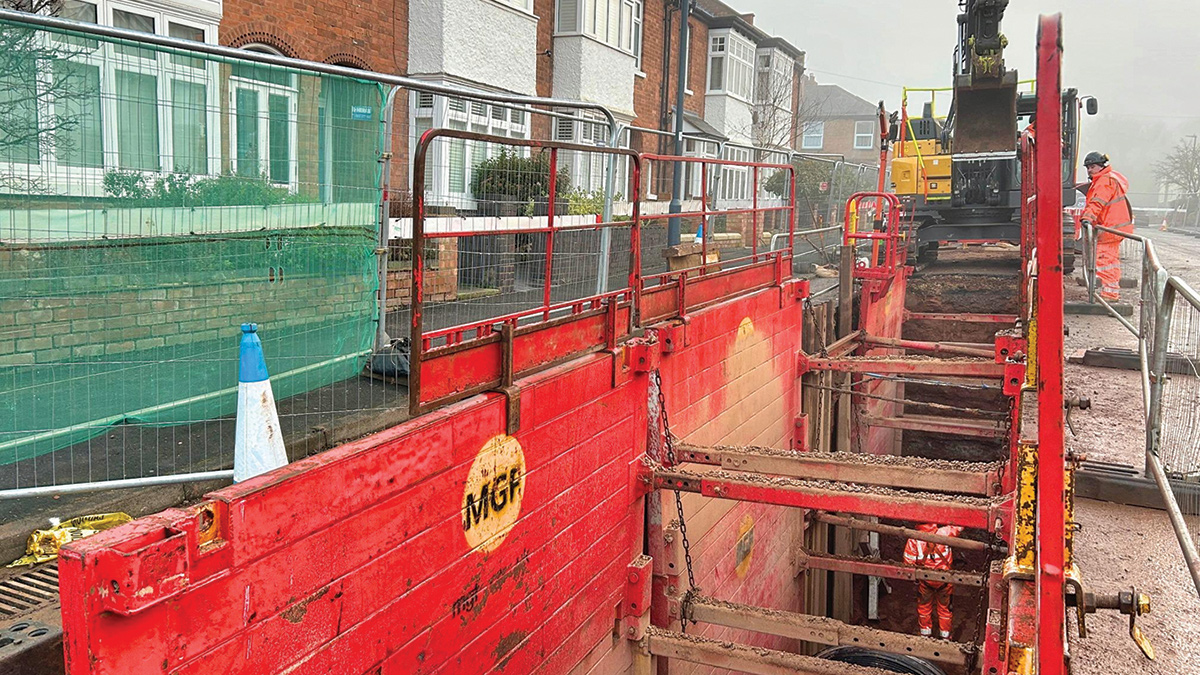
Surface water separation – Courtesy of Forkers Ltd
Pumped & gravity storage
The Lower Avenue Combined Sewer Overflow (CSO) scheme involved the installation of an 880m3 shaft tank with a return flow capacity of 30 l/s, located in the Station Approach car park. The shaft tank was designed and constructed by Active Tunnelling Ltd. At Princes Drive 19B, the scheme increased the flow into the existing storm tanks by an additional 75 l/s. Both storage systems were equipped with real-time control (RTC) logic to optimise return flows and minimise the risk of spills into the river, ensuring more efficient and environmentally responsible stormwater management.
Climate change & resilience
To ensure long-term resilience and performance under changing climate conditions, the design rainfall was uplifted by 15% to reflect projected 2050 scenarios. Spill frequency assessments were carried out using Severn Trent’s Technical Standard Rainfall Dataset, representing worst-case conditions to ensure robust system performance. All conveyance infrastructure was sized accordingly to accommodate future climate impacts, supporting sustainable and reliable operation over the asset’s lifetime.
Construction & delivery
The project was delivered under tight AMP7 deadlines, requiring early contractor involvement and agile design development. Forkers Ltd and WSP played key roles in feasibility, site investigation, and outline design.
Key construction innovations included the use of GEOlight® blocks from SDS Limited for modular storage. GEOlight® blocks offer a significant advantage in large-scale infrastructure projects due to their lightweight, corrosion-resistant design, which simplifies installation and reduces long-term maintenance costs compared to concrete or steel alternatives.
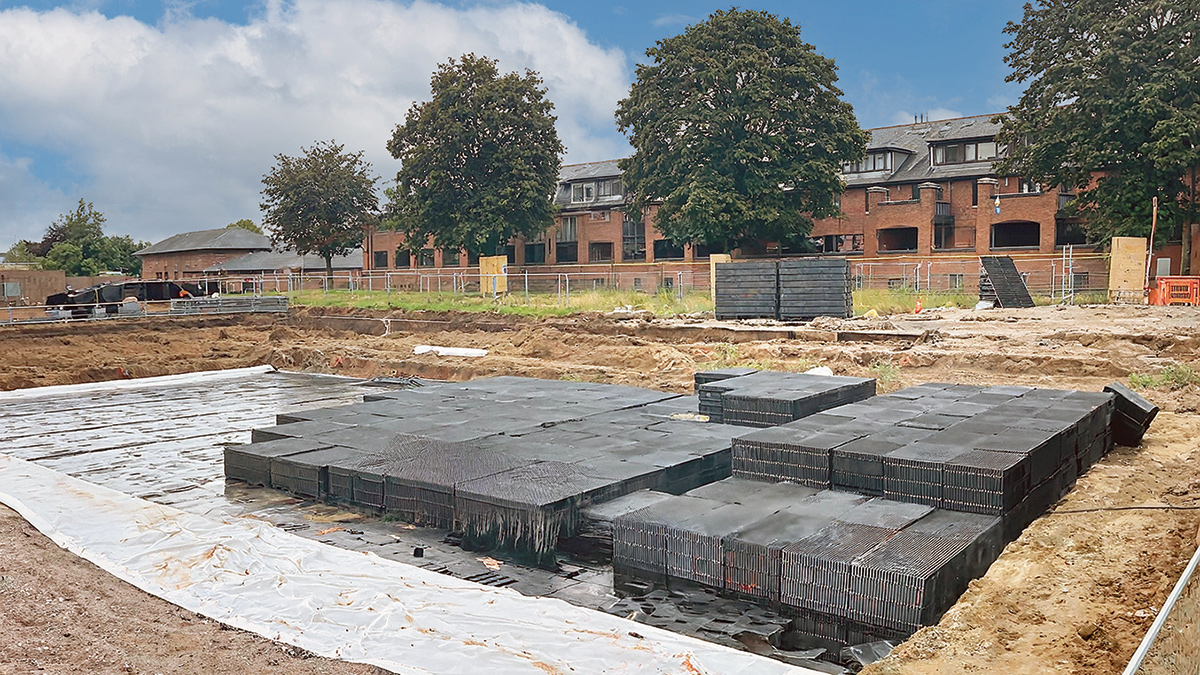
GEOlight® modular storage tank – Courtesy of Forkers Ltd
Environmental & community benefits
Reducing the impact from CSOs has had significant social implications. Access to clean and safe recreational waters promotes public health and well-being, encouraging outdoor activities and fostering a connection with nature. This initiative does not just solve a problem, it redefines what is possible in urban water management, setting a precedent for future projects across the UK and beyond.
- Spill reduction.
- Flood risk: No detriment demonstrated; some areas show betterment particularly through the implementation of surface water separation in the north-east, the construction of stormwater storage tanks in the south, and comprehensive improvements along the River Leam corridor aimed at enhancing water quality and resilience.
- Education: Engagement with Milverton School on drainage and sustainability.
Broader significance & replicability
The Green Recovery Leamington Spa Sewerage Scheme stands as a testament to the power of innovative engineering and sustainable practices in addressing modern environmental challenges. This project not only resolves immediate issues related to CSOs but also sets a benchmark for future initiatives aimed at enhancing urban wastewater management.
The Leamington Spa Surface Water Separation Scheme, delivered as part of Severn Trent’s Green Recovery Programme, exemplifies a forward-thinking approach to sustainable water management.
Central to the project was the installation of a two megalitre GEOlight® attenuation tank from SDS Limited beneath a playing field adjacent to Milverton Primary School. The tank, connected to newly laid surface water sewers across several roads in Leamington Spa, significantly increases stormwater storage capacity within the network. This enhancement plays a critical role in protecting downstream sewage treatment infrastructure from overload and reducing the frequency of combined sewer overflows into the River Leam.
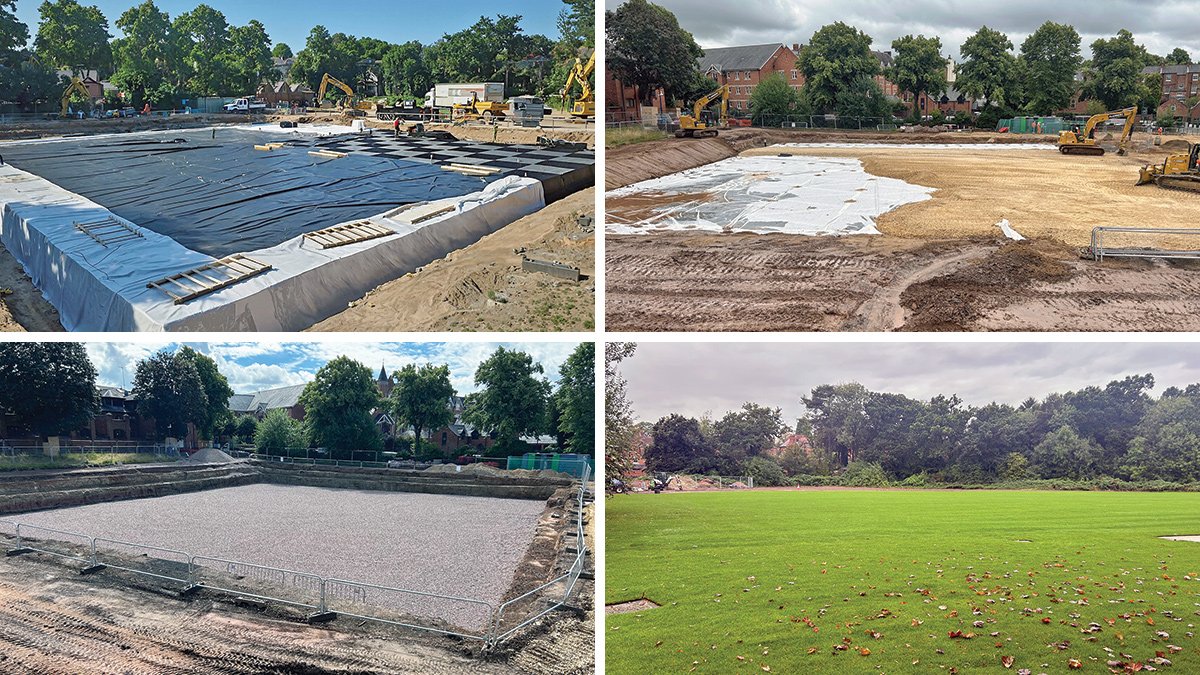
Construction of the 2 megalitre attenuation tank – Courtesy of Forkers Ltd
The project not only supports Severn Trent’s ‘Get River Positive’ commitments but also aligns with local and national planning policies. By integrating innovative technology with sustainable construction practices, the scheme delivers measurable environmental benefits. It demonstrates how targeted infrastructure investment can contribute to long-term river health, climate resilience, and community wellbeing; setting a precedent for future water management initiatives across the region.
Its success lies not only in the numbers (reduced spills, increased storage, improved water quality) but in the way it brings together engineering excellence, ecological sensitivity, and community engagement. The project’s legacy will be felt not just in the River Leam’s improved health, but in the model, it provides for sustainable, scalable, and socially conscious infrastructure.
Conclusion
The Green Recovery Leamington Spa Sewerage Scheme is a model of integrated water management, combining hydraulic engineering and community recreational benefit. It demonstrates how ambitious environmental goals can be achieved through technical excellence, collaboration, and innovation.
In a sector where impact is often measured in compliance, this scheme goes further; delivering outcomes that resonate with local communities, regulators, and the environment alike.
The project not only safeguards the River Leam for recreational use but also sets a precedent for inland bathing water schemes across the UK and beyond.

 Download PDF