
Corwen WwTW (2026)
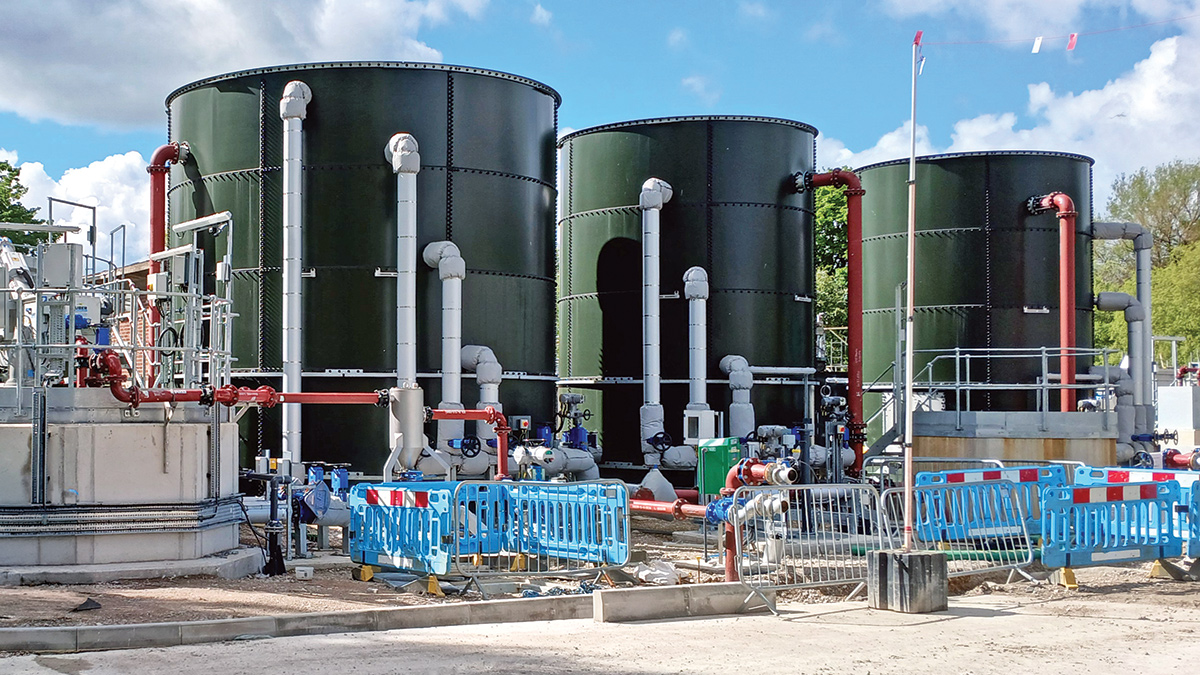
The new Stortec Engineeering stainless steel sludge tanks - Courtesy of Eric Wright Water Ltd
Owned and operated by Dŵr Cymru Welsh Water, Corwen Wastewater Treatment Works (WwTW) is located north of Corwen town centre in north Wales. The works serves a predominantly rural catchment with a current population equivalent (PE) of around 2000 and comprises inlet pumping (of both foul and storm flows), primary settlement, stone media trickling filters, and humus settlement, with final effluent discharge into the River Dee. The River Dee is of high environmental importance and includes designated sensitive areas, including Sites of Special Scientific Interest (SSSI).
Project background
Phosphorus in treated wastewater can lead to oxygen depletion, deterioration of habitat quality, and adverse impacts on sensitive aquatic ecosystems. As such, phosphorus control is a critical component in protecting the ecological status of receiving waterbodies, particularly those designated for environmental conservation.
With the River Dee designated as a Site of Special Scientific Interest, the regulatory direction set by Natural Resources Wales (NRW) is to progressively reduce permitted phosphorus discharges to support the achievement of ‘good ecological status’ under environmental water quality objectives. This has resulted in the introduction of tighter total phosphorus consents; in this case, a limit of 1.0 mg/l.
The introduction of the tightened total phosphorus consent required targeted upgrades to maintain compliance with the revised conditions. Dŵr Cymru Welsh Water undertook an assessment of the necessary modifications through its process design, defining the scope of works required to achieve compliance at Corwen while maximising the reuse of existing assets where practicable.
The scheme also presented an opportunity to address ageing infrastructure, improve hydraulic performance across the works, and enhance operational resilience within a site constrained by flood risk.
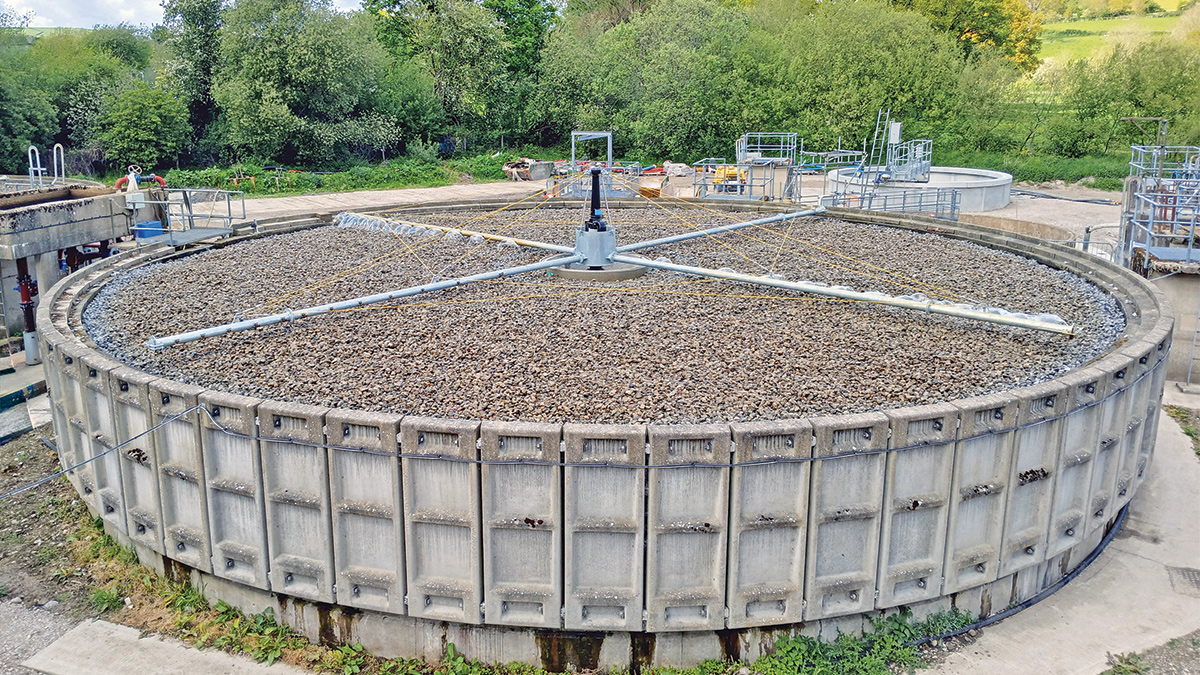
Biofilter distribution bed – Courtesy of Eric Wright Water Ltd
Existing works & drivers
The primary driver for the scheme was to maintain regulatory performance in line with revised consent conditions. To achieve this, chemical precipitation using ferric sulphate dosing was required, integrated into the new inlet pumping main. Additional drivers included:
- Ageing infrastructure, including inlet screening, the existing Dortmund-type primary settlement tank, the existing humus settlement tank, half-bridge scrapers and the biofilter distribution arms.
- Existing hydraulic constraints affecting distribution efficiency.
- Opportunities to improve operational flexibility within the inlet and settlement processes.
- Site flooding risk due to proximity to the River Dee.
Design & delivery approach
The scheme was delivered under a design and build contract, with Eric Wright Water Ltd acting as principal contractor. Waterco Datrys undertook the multidisciplinary design, encompassing civil, mechanical, and electrical disciplines, supported by FBW Engineering.
A collaborative delivery model was adopted, with weekly coordination meetings held between Dŵr Cymru Welsh Water Process, Operations, and the delivery team. This approach ensured that operability, maintainability, and commissioning requirements were fully embedded within the developing design.
Corwen WwTW: Supply chain – key participants
- Client: Dŵr Cymru Welsh Water
- Principal Designer & Contractor: Eric Wright Water Ltd
- Civil & MEICA design: Waterco Datrys
- Piling contractor: Van Elle
- EICA design: FBW Engineering Services Ltd
- EICA contractor: Lloyd Morris Electrical Ltd
- Mechanical contractor: Whitland Engineering Ltd
- Temporary treatment plant hire: Purestream Process Solutions
- Precast concrete: Shay Murtagh Precast Ltd
- Half-bridge scrapers: Eric Wright Water Ltd
- Inlet screen & screenings handling: Jacopa Limited
- Imports screen: Huber Technology
- Ferric dosing tank & associated equipment/kiosk: Colloide
- Safety shower & hose reels: Hughes Safety Showers Ltd
- Stainless steel sludge tanks: Stortec Engineering Ltd
- Sludge tank mixers: Xylem Water Solutions
- Pumps: Watson Marlow Ltd
- Pumps: Grundfos
- Pumps: KSB Ltd
- Pumps: Xylem Water Solutions
- Washwater booster pumpset: Dutypoint Ltd
- Static mixer: Statiflo International Ltd
- Access steelwork fabricator: Whitland Engineering Ltd
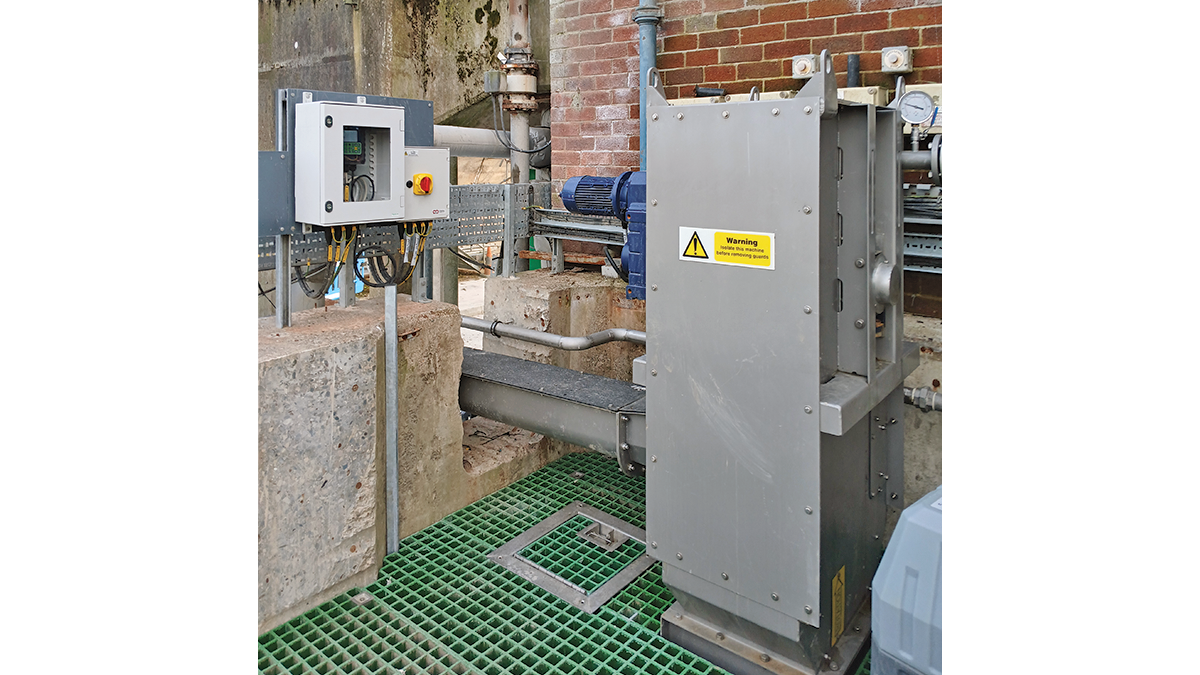
Jacopa inlet screen – Courtesy of Eric Wright Water Ltd
Inlet works & screening upgrade
Raw flow enters the works via a gravity sewer to the inlet pumping station wet well. The inlet works were upgraded to improve screening performance and operational resilience. A new 6 mm, 2D mesh Jacopa bandscreen was installed within the wet well, replacing the existing screening arrangements and maceration equipment. The new screen and screenings handling system provide enhanced removal of gross solids and rag material prior to pumping to downstream treatment processes and storm storage.
A high-level bypass arrangement, incorporating a manually raked screen, was also provided to ensure flow continuity in the event of mechanical failure. The bypass is set above known flood levels, maintaining operability during extreme events.
Inlet pumping main & ferric dosing
The pass-forward inlet pumping arrangement was reconfigured to discharge directly to full treatment, replacing the previous high-level channel. The new inlet main incorporates:
- An MCERTS-compliant flow meter.
- Connections for sludge supernatant and humus return flows.
- Valved rodding points for cleaning and inspection.
- Ferric sulphate dosing via a static mixing arrangement.
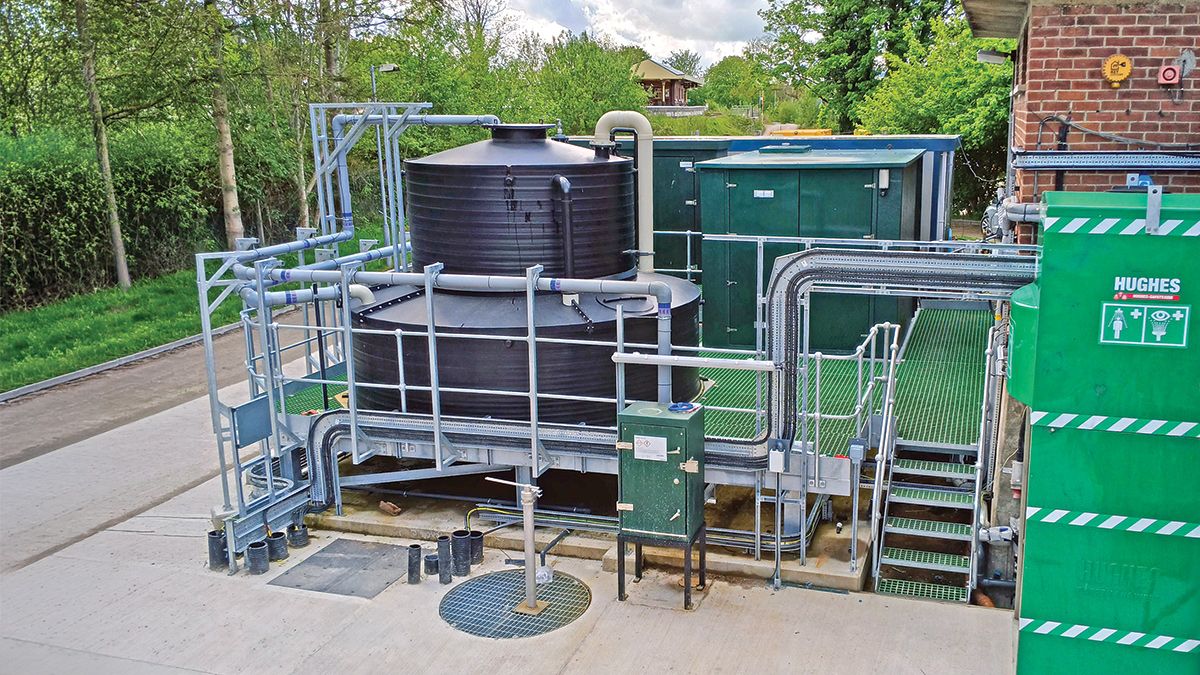
Colloide ferric dosing tank and access platform – Courtesy of Eric Wright Water Ltd
A 10m3 ferric sulphate storage tank has been installed, along with a dedicated dosing kiosk designed and supplied by Colloide. The dosing installation includes a bunded chemical delivery off-loading area with a contained drainage system, ensuring that any spills are safely managed in accordance with operational and environmental requirements.
The containment area is controlled via an actuated valve, configured to maintain functionality and resilience during flood events.
Primary settlement upgrades
A new radial primary settlement tank was constructed adjacent to the existing Dortmund-type tank. The new tank comprises a precast, above-ground circular structure and is fitted with a half-bridge scraper mechanism, an automated scum removal system, and a V-notch weir arrangement. Sludge draw-off is directed to the existing sludge handling infrastructure.
The existing primary settlement tank has been retained to provide operational flexibility and can be brought back into service during maintenance or outages of the new tank.
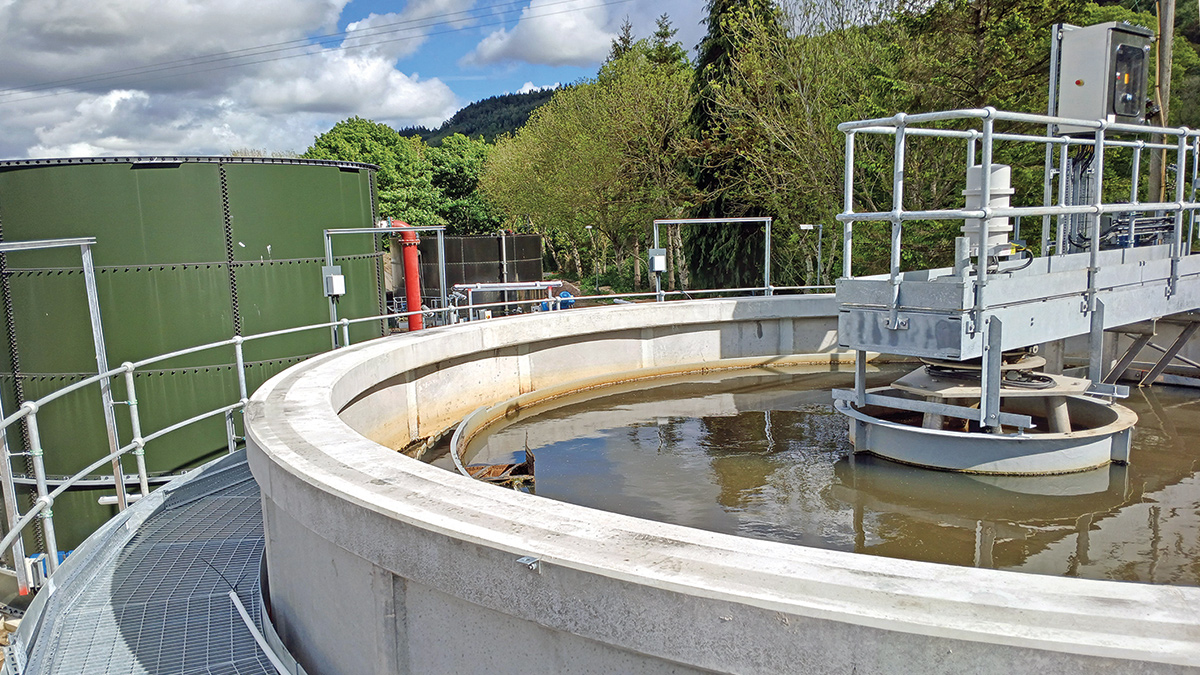
Primary settlement tank – Courtesy of Eric Wright Water Ltd
Biofilters & hydraulic improvements
Downstream biological treatment is provided by two existing stone media biofilters. Upgrades were undertaken to improve hydraulic distribution and optimise treatment consistency.
Initial investigations identified hydraulic surcharge as being associated with the existing dosing siphon arrangement. This was addressed through removal of the siphon and the installation of a new inlet pipework configuration.
The scope of works included increasing the media depth, replacing the distributor arms, modifying the inlet pipework arrangement, and investigating hydraulic back-up between the primary settlement tank and the biofilters.
Humus settlement
A new humus settlement tank was constructed adjacent to the existing unit to increase overall settlement capacity and provide operational flexibility. The new tank comprises a precast, above-ground structure fitted with a half-bridge scraper mechanism, an automated scum removal system, and a V-notch weir arrangement.
New peristaltic pumps were installed to serve both humus settlement tanks, returning humus sludge to the primary settlement tank for co-settlement.
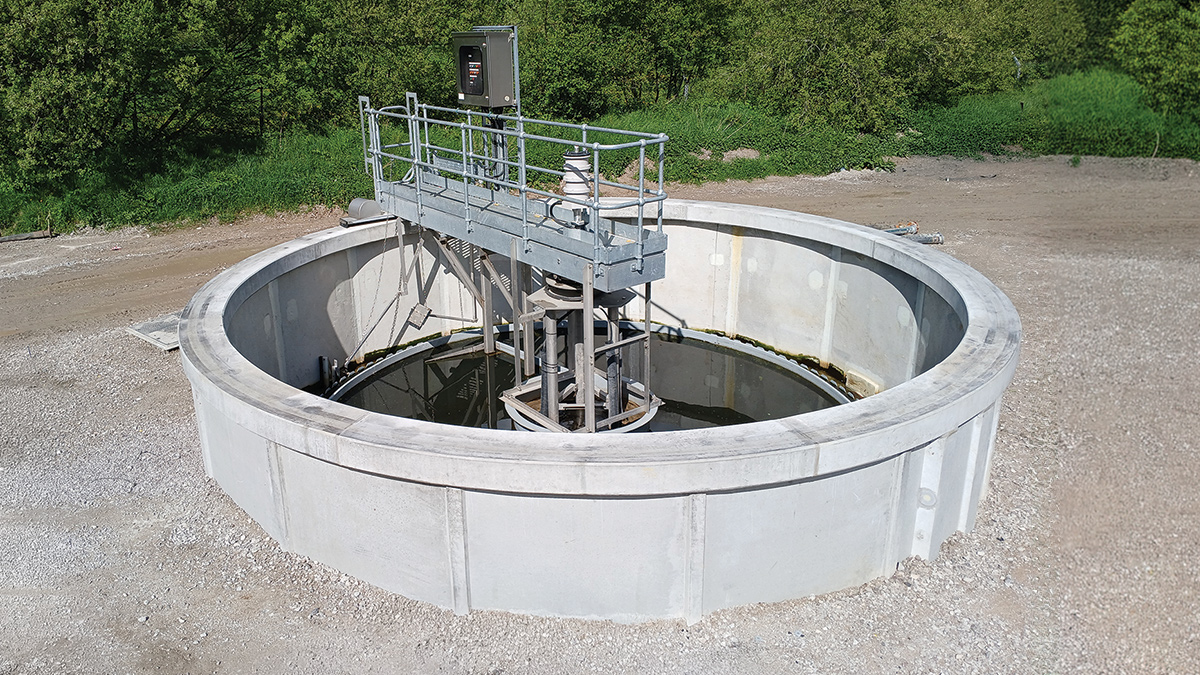
Humus settlement tank – Courtesy of Eric Wright Water Ltd
Final effluent & washwater systems
A new final effluent kiosk was installed, housing online monitoring instrumentation for phosphorus, iron, suspended solids, and pH.
Final effluent is reused for washwater applications across the site, including inlet and imports screening. A new pumping station was constructed to provide both final effluent washwater supply and outfall pumping, improving the resilience of final effluent sampling and settlement processes during periods of high river levels.
Where potable washwater is required, a new Dutypoint booster system provides a reliable supply to the chemical dosing and sludge handling areas. This arrangement ensures clear segregation between process effluent and potable systems, enhancing operational safety.
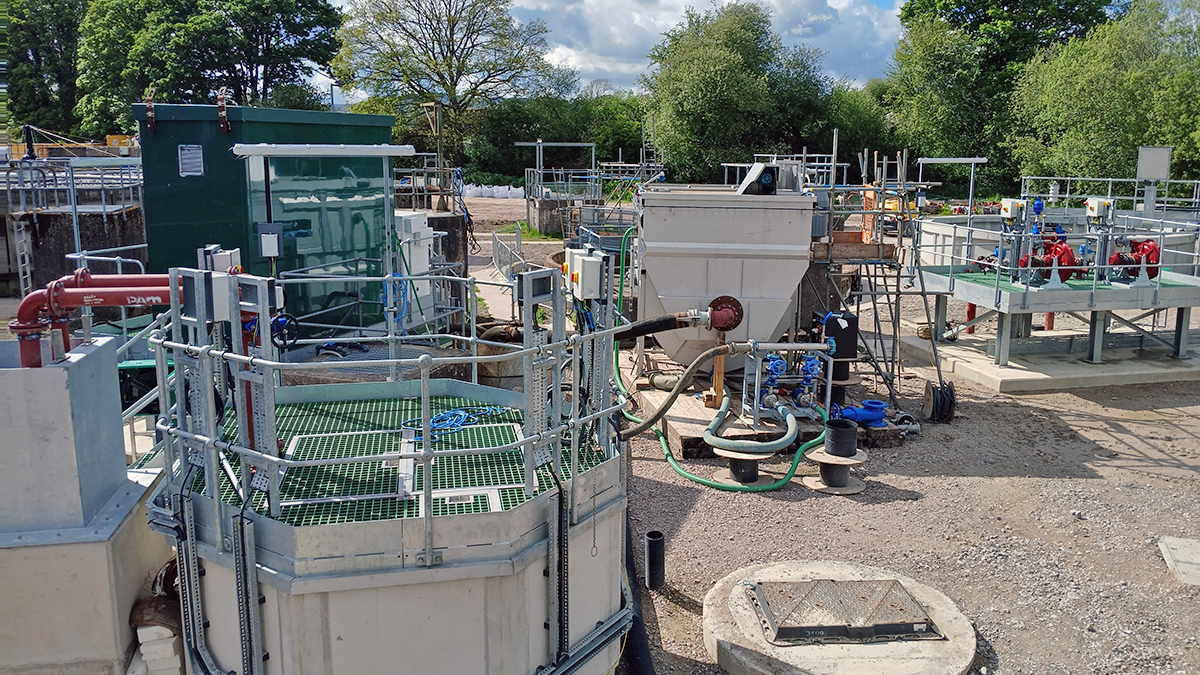
Final effluent chamber and sampling chamber – Courtesy of Eric Wright Water Ltd
Sludge handling & storage
Sludge handling arrangements at Corwen WwTW were upgraded as part of this scheme to improve operational resilience, segregate sludge streams, and enhance overall handling efficiency.
Two new above-ground stainless steel storage tanks, supplied by Stortec Engineering Ltd, were installed to provide dedicated storage for indigenous sludge. This improves process stability and enables more controlled sludge management across the works. In addition, a dedicated imports reception facility was constructed to allow tanker deliveries of cess and sludge to be received, screened, and stored safely on site.
The imported sludge system includes an integrated screening unit, supplied by Huber Technology, to remove gross solids prior to pumped transfer into a new above-ground stainless steel imports tank, also supplied by Stortec Engineering Ltd.
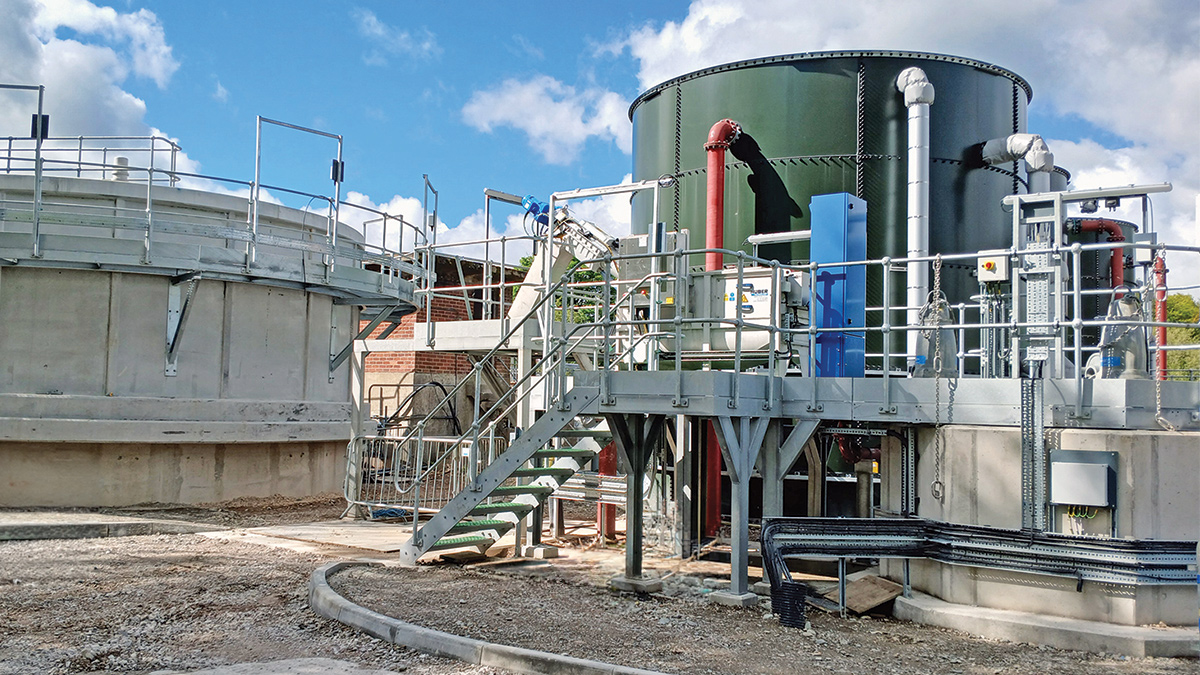
Sludge tanks & imports screen platform – Courtesy of Eric Wright Water Ltd
Electrical & ICA
Key elements of the electrical and ICA upgrades included:
- Upgrade of the incoming power supply and transformer capacity.
- Installation of a new kiosk housing the main MCC, with provision for future expansion.
- Integration of PLC and HMI control systems.
- Installation of MCERTS-compliant instrumentation for flow and sludge monitoring.
Innovations
A number of innovations were adopted for the successful delivery of the project:
- The use of precast concrete settlement tanks, from Shay Murtagh Precast Ltd, reduced programme duration and construction risk.
- A collaborative delivery approach enabled efficient progression of a complex scheme within tight timescales.
- Asset reuse was maximised wherever practicable:
- The inlet screening solution was designed to utilise the existing wet well, avoiding the need for a new structure.
- Existing biofilter beds were refurbished to improve treatment capacity and performance.
- The existing humus tank was retained, with mechanical elements replaced while preserving the structurally sound concrete infrastructure.
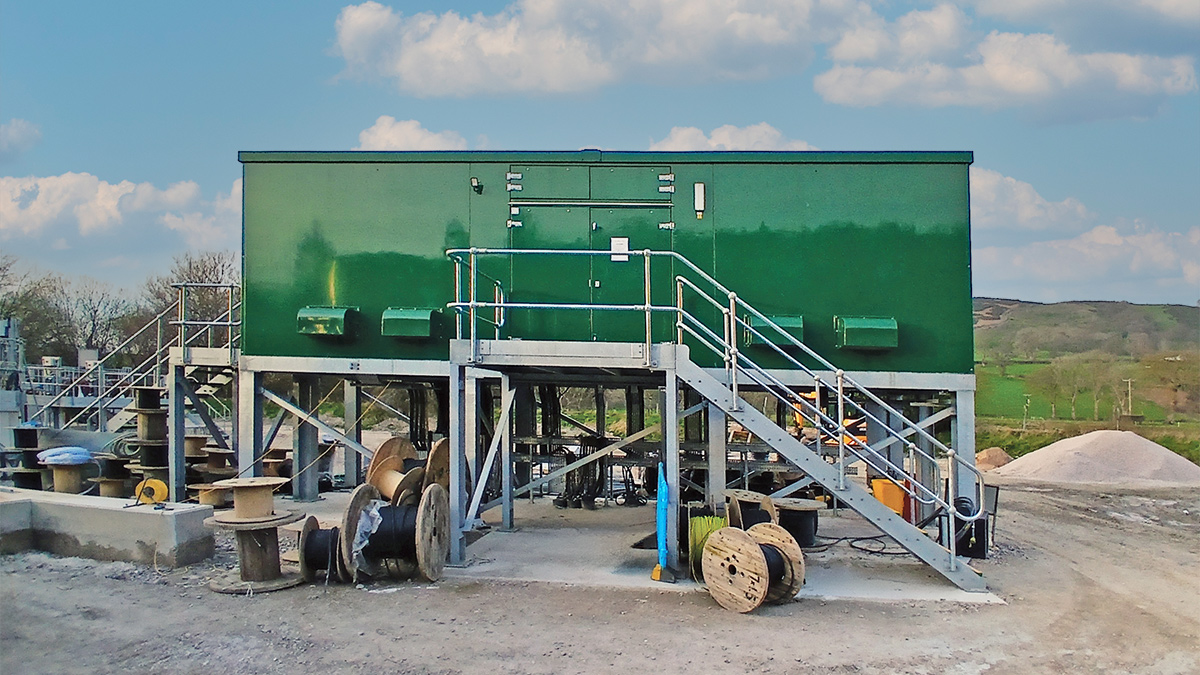
Installation of the MCC kiosk – Courtesy of Eric Wright Water Ltd
Construction constraints
Flood risk
The site is located adjacent to the River Dee and is subject to regular flooding. Critical electrical and mechanical infrastructure was therefore installed on elevated platforms or protected within chambers constructed above the design flood level.
The outfall chamber was sealed and fitted with a non-return valve to allow site floodwater to drain to the outfall while preventing backflow. Process chambers and inlet works upgrades were designed to maintain operational resilience during flood conditions.
Ground conditions
Ground conditions comprised variable made ground overlying clay, gravel, and silt deposits. Due to variability in bearing capacity, and the importance of hydraulic levels across the works to ensure efficient hydraulic performance, piled foundations were adopted for key structures, including settlement tanks and sludge storage tanks.
Live site operation
The project was delivered within a fully operational treatment works. Maintaining compliance throughout construction required careful sequencing, temporary bypass arrangements, and the staged commissioning of new assets.
These activities were managed and delivered by Eric Wright Water Ltd in collaboration with Dŵr Cymru Welsh Water.
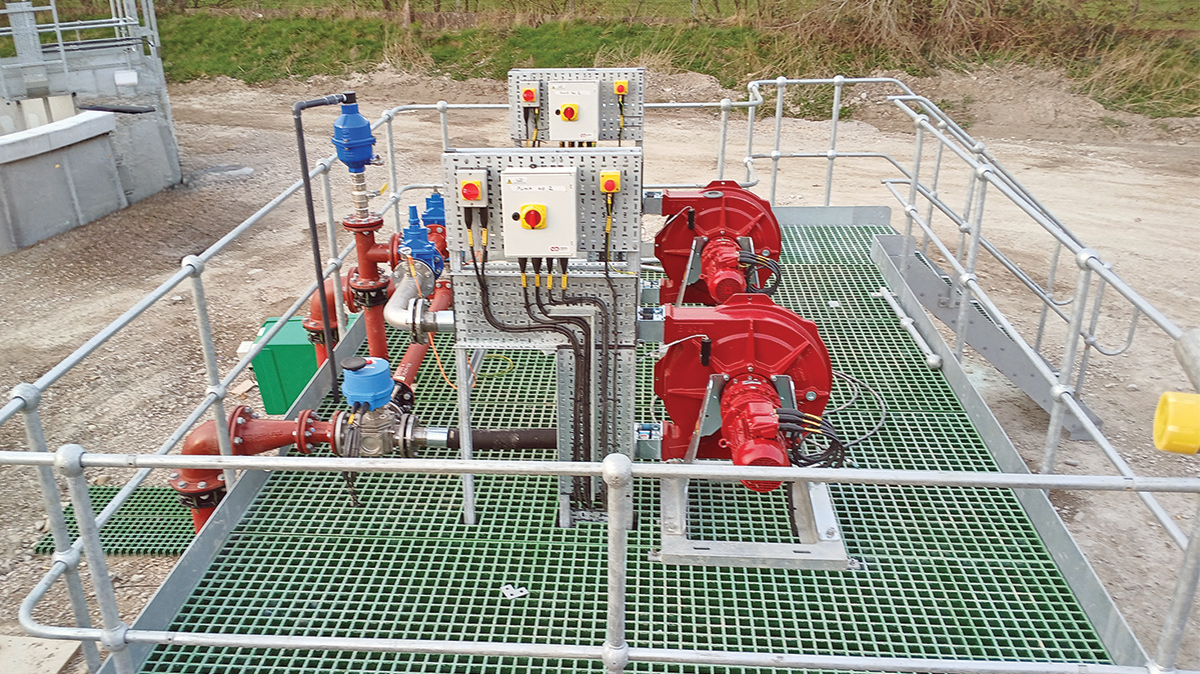
De-sludge return pump platform – Courtesy of Eric Wright Water Ltd
Conclusion
The Corwen WwTW phosphorus upgrade scheme delivers a targeted process intensification and infrastructure renewal project within a constrained and operationally sensitive site.
The introduction of ferric dosing, combined with upgraded settlement processes and improved hydraulic control, ensures compliance with the tightened 1.0 mg/l phosphorus consent. The scheme has also significantly enhanced site resilience through the implementation of flood protection measures and electrical infrastructure upgrades.
The works were delivered while maintaining continuous treatment, demonstrating effective coordination between Dŵr Cymru Welsh Water, the design team, and the contractor. The upgraded works now provide a robust and flexible asset capable of meeting current compliance requirements while accommodating future operational demands.
In addition to achieving regulatory compliance, the scheme supports Dŵr Cymru Welsh Water’s wider ambition to protect and enhance the natural environment, particularly the rivers and catchments across Wales. By improving treatment performance, operational resilience, and long-term asset reliability, the project contributes to sustainable wastewater management and helps deliver meaningful environmental improvements within the communities it serves.
The completed works therefore represent not only an investment in infrastructure resilience, but also a positive step towards safeguarding water quality for future generations.