
Mott MacDonald
River Source Heat Pump System (2025)
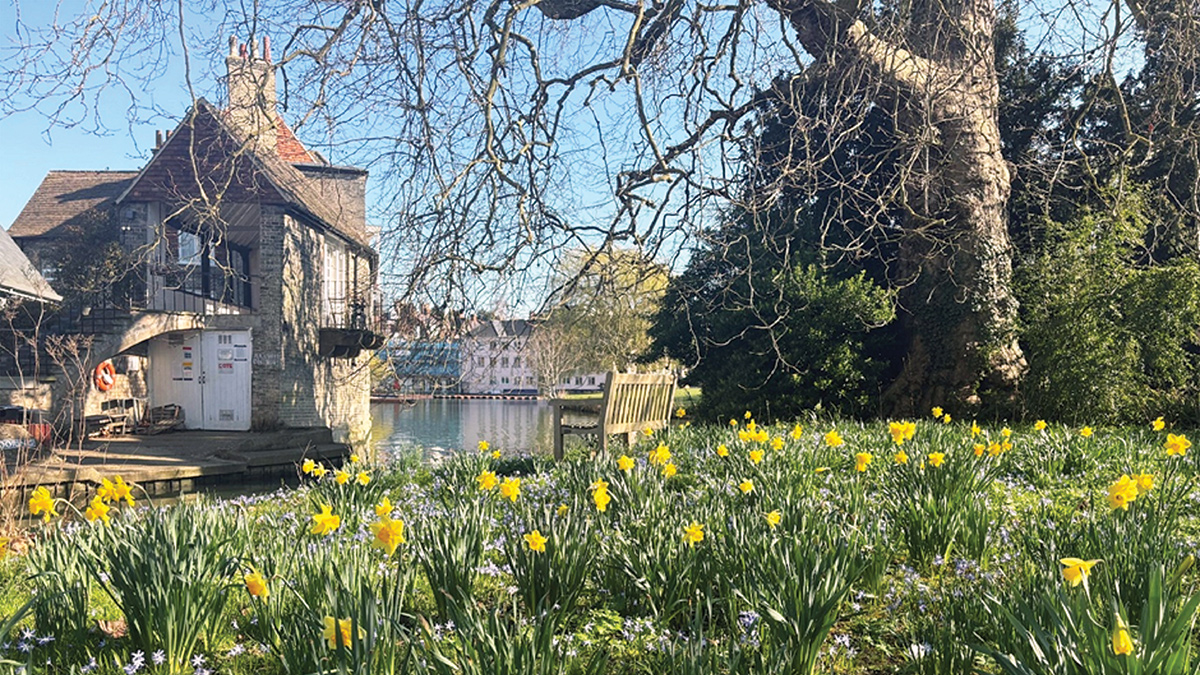
Darwin College on the banks of the River Cam - Courtesy of Mott MacDonald
Darwin College, part of the University of Cambridge, is nestled in the heart of Cambridge and overlooks the picturesque River Cam. Renowned for its commitment to sustainability and environmental stewardship, the college has set an ambitious goal to become carbon neutral by 2032. To achieve this, Darwin College is embracing renewable energy with an innovative River Source Heat Pump (RSHP) System. Approved by Cambridge City Council, the project will see a pump house built on the college’s southern boundary, near the Granta pub. This facility will extract water from the River Cam, harnessing its natural warmth to heat the college buildings before returning the water back to the river, eliminating on-site fossil fuel use and significantly reducing carbon emissions.
Project background
Established in 1964, Darwin College was the first graduate college of the University of Cambridge, and the first to admit both men and women. The college has a long-standing tradition of academic excellence and a strong commitment to environmental sustainability, reflected in its active participation in Cambridge Green Week and various green initiatives. The college’s sustainability strategy focuses on reducing carbon emissions, enhancing energy efficiency, and promoting the use of renewable energy sources. Key projects include the River Source Heat Pump (RSHP) System, extensive fabric improvements to existing buildings, the construction of a centralised energy centre, and the installation of a heat distribution network.
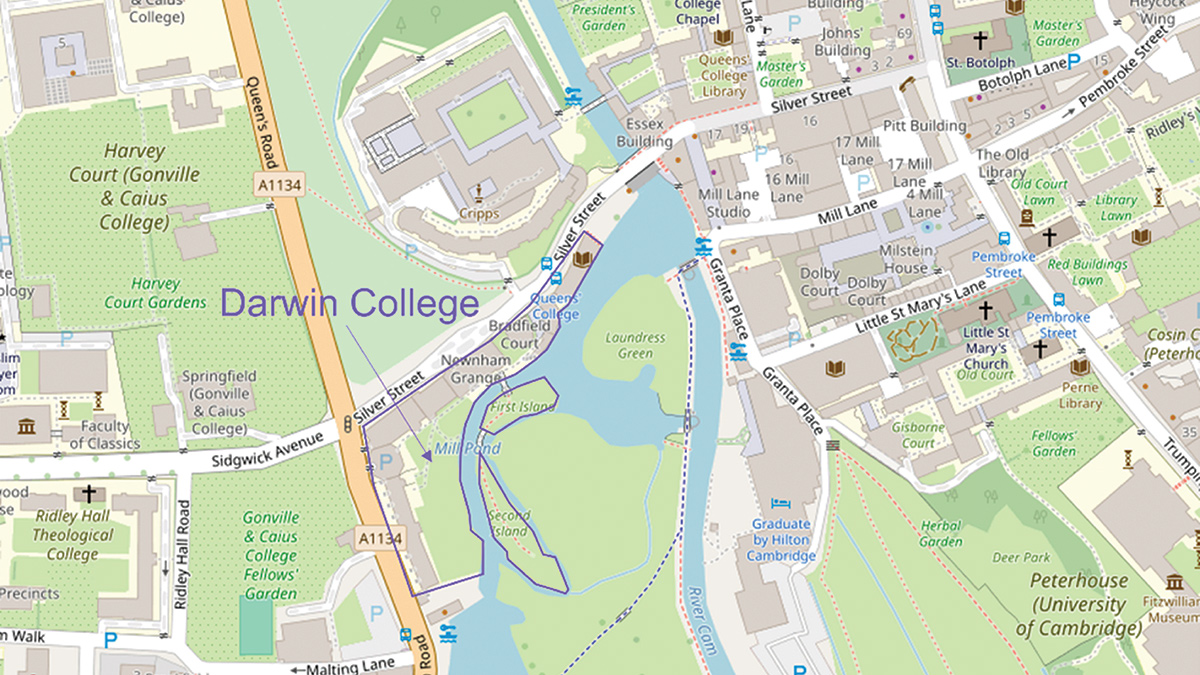
Location of Darwin College and the River Cam
As part of its ongoing efforts, Darwin College is integrating environmental issues into its strategic and operational decisions. The college has adopted an ambitious new framework to guide its sustainability efforts, including planning the de-gasification of its estate and exploring different technological solutions to heating properties and improving energy efficiency. Since 2021, Darwin College has held an annual Green Week, bringing the community together through discussions and activities focused on sustainability.
Overview of the approach
To deliver a sustainable and technically robust RSHP system, Mott MacDonald working closely with Darwin College and the wider design team, adopted a structured, phased approach that ensured environmental integrity, regulatory compliance, and engineering excellence at every stage. This methodology enabled the college to move from concept to construction with clarity, accountability, and stakeholder alignment.
The project was delivered through four key phases.
| PHASE | KEY ACTIVITIES |
| 1. Feasibility Study | Selection of monitoring sites, water level and temperature monitoring, hydrological and flow analysis, environmental and economic assessments. |
| 2. Permit Application | Stakeholder engagement, preparation and submission of regulatory applications, environmental impact assessments, and mitigation planning. |
| 3. Outline & Detailed Design | Development of conceptual and technical designs, planning application submission, and integration with existing infrastructure. |
| 4. Construction | Contractor mobilisation, site preparation, installation of the RSHP system, and ongoing technical oversight. |
This phased approach ensured that each stage built upon the insights and outcomes of the previous one, allowing for informed decision-making and adaptive design. It also provided a clear framework for engaging with regulators, the local community, and environmental stakeholders, aligning the project with both institutional goals and broader sustainability standards.
Monitoring & feasibility study
The implementation of the RSHP system at Darwin College began with a comprehensive monitoring and feasibility study to assess the potential of the River Cam as a sustainable heat source. Darwin College appointed Mott MacDonald to lead this element of the project, drawing on their multidisciplinary expertise in hydrology, environmental engineering, and infrastructure design. Their involvement spanned the full lifecycle of the project, from initial site selection and environmental monitoring to design and construction oversight.
Temperature monitoring & hydrodynamic analysis
Four strategic locations along the River Cam were selected for continuous monitoring of water temperature, depth, and flow characteristics. Mott MacDonald deployed advanced instrumentation to capture high-resolution data on river cross-sections, hydraulic structures, and seasonal variability. Historical flow data from three gauging stations revealed significant fluctuations in river discharge, a critical factor in evaluating the river’s capacity to support heat abstraction without ecological disruption.
Monitoring data & results
Data collected from October 2022 to March 2023 confirmed the river’s thermal stability, even during winter months. This consistency demonstrated the River Cam’s viability as a reliable heat source for the RSHP system. The temperature profiles and flow dynamics provided a robust foundation for the subsequent feasibility assessment.
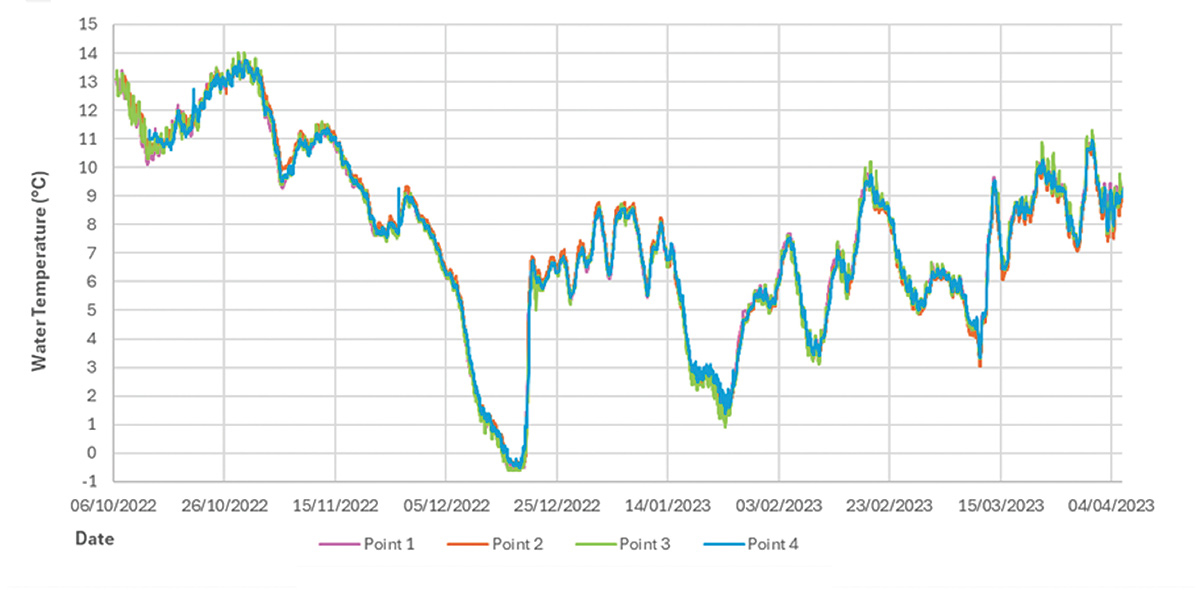
River water temperature graphs – Courtesy of Mott MacDonald
Feasibility study
The feasibility study, led by Mott MacDonald, evaluated technical, environmental, and economic parameters to determine the viability of the RSHP system. This included hydrological modelling, thermal exchange simulations, and energy output projections. The study concluded that the RSHP system could meet the college’s heating demands while aligning with its decarbonisation goals.
Environmental impact assessment (EIA)
A key component of the feasibility phase was a detailed environmental impact assessment. Mott MacDonald assessed potential effects on aquatic ecosystems, water quality, and river morphology. Mitigation strategies were developed, including fish passes, sediment management systems, and temperature control measures to prevent thermal pollution.
Economic evaluation
The economic analysis demonstrated that the RSHP system would deliver long-term cost savings and operational resilience. The study confirmed that the investment would be financially viable, particularly when considered alongside the environmental and reputational benefits of transitioning to renewable energy.
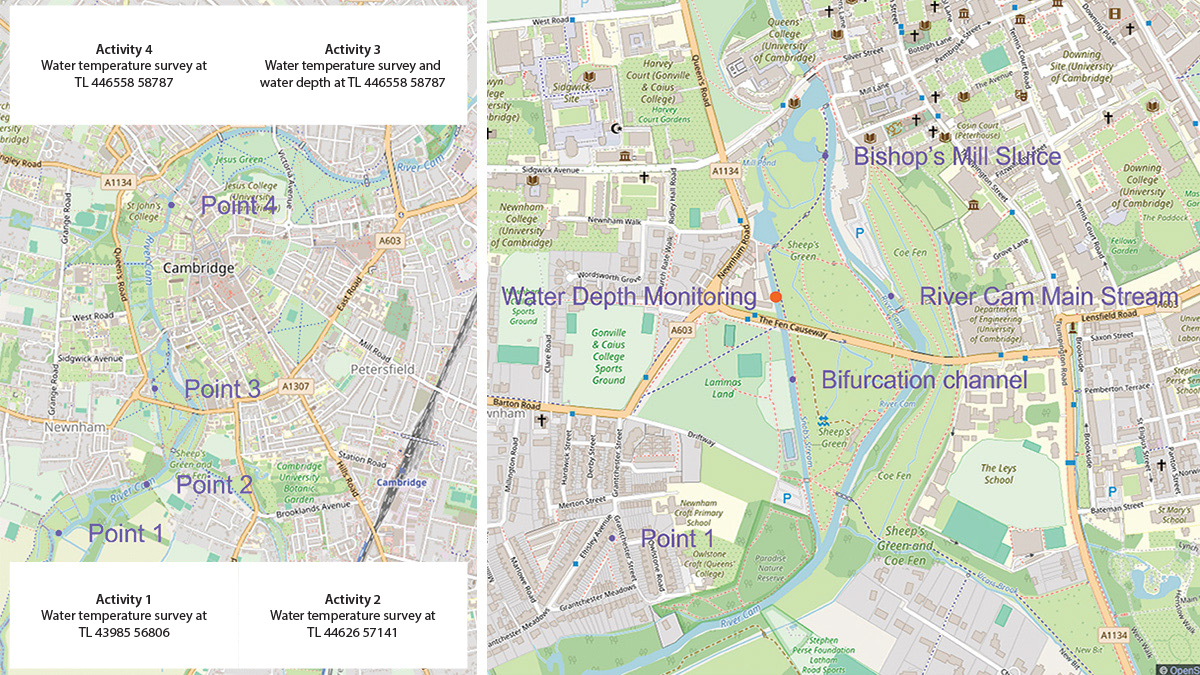
(left) River Cam water temperature monitoring locations and (right) water depth monitoring location
Permit Applications & Regulatory Approvals
Following the feasibility study, Mott MacDonald led the permitting and regulatory approval process. This involved extensive engagement with key stakeholders noted below. This collaborative approach ensured that all environmental, planning, and biodiversity concerns were addressed proactively.
- Environment Agency: Mott MacDonald prepared and submitted applications for water abstraction and discharge permits to the Environment Agency. The consultation process included pre-application advice, meetings, and correspondence to discuss project details and address concerns.
- Local Authority: Engagement with the local planning authority was critical to ensure that the RSHP project met all planning and environmental requirements. This process was led by the project architects included preparing and submitting a comprehensive planning application for the construction of the new pump house/plant room and the installation of the RSHP system.
- River Cam Conservancy: Mott MacDonald engaged with the River Cam Conservancy to ensure that the RSHP system would not adversely impact the river’s health and biodiversity. This included conducting a thorough environmental impact assessment and proposing mitigation measures to protect local wildlife and maintain water quality.
- The Wildlife Trust: The involvement of The Wildlife Trust was instrumental in minimizing biodiversity risks. Their expert advice on the potential impacts of the RSHP system on local wildlife and their recommendations for best practices in environmental management ensured high standards of environmental stewardship.
The successful consultation and engagement with stakeholders resulted in the approval of the necessary permits and regulatory approvals. This collaborative approach ensured that the project would be implemented in an environmentally responsible manner, paving the way for the construction and implementation of the RSHP system.
Planning application, outline & detailed design
Mott MacDonald’s role extended into the planning and design phases, where they developed the RSHP system from concept to construction-ready detail.
This included:
- Outline Design: Conceptual layouts for the heat abstraction and distribution system, integrating sustainability principles and minimising visual and ecological impact.
- Detailed Design: Finalised technical specifications for the pump house, heat exchangers, and distribution network, ensuring compatibility with the college’s existing infrastructure.
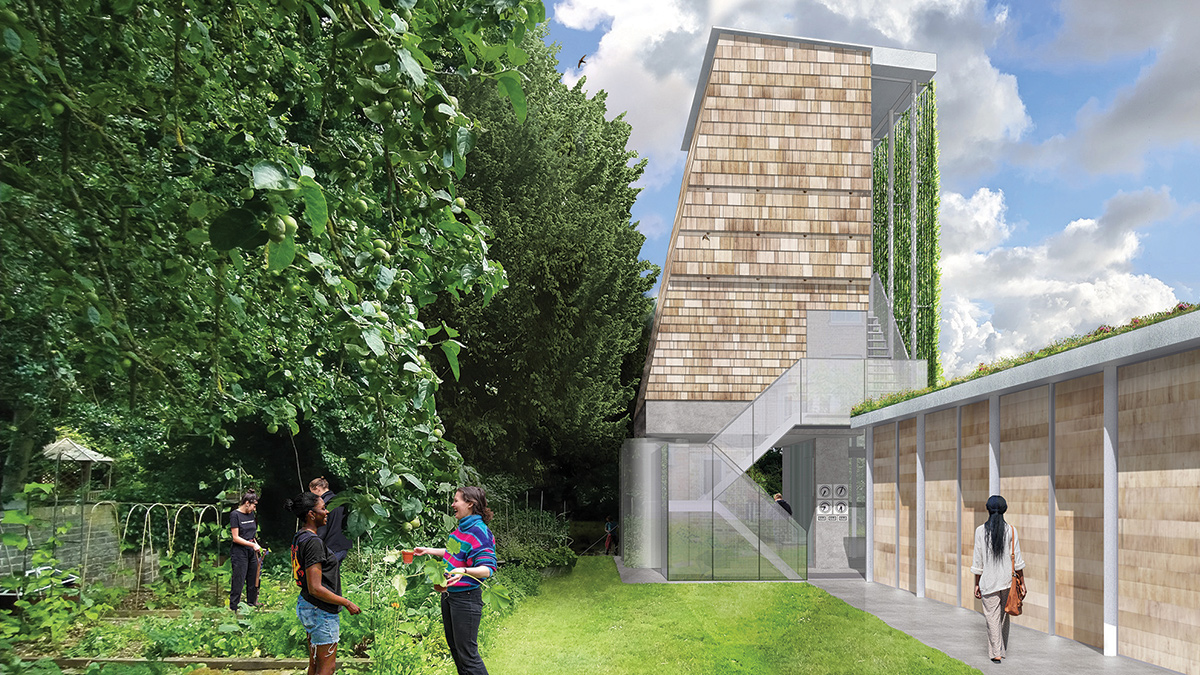
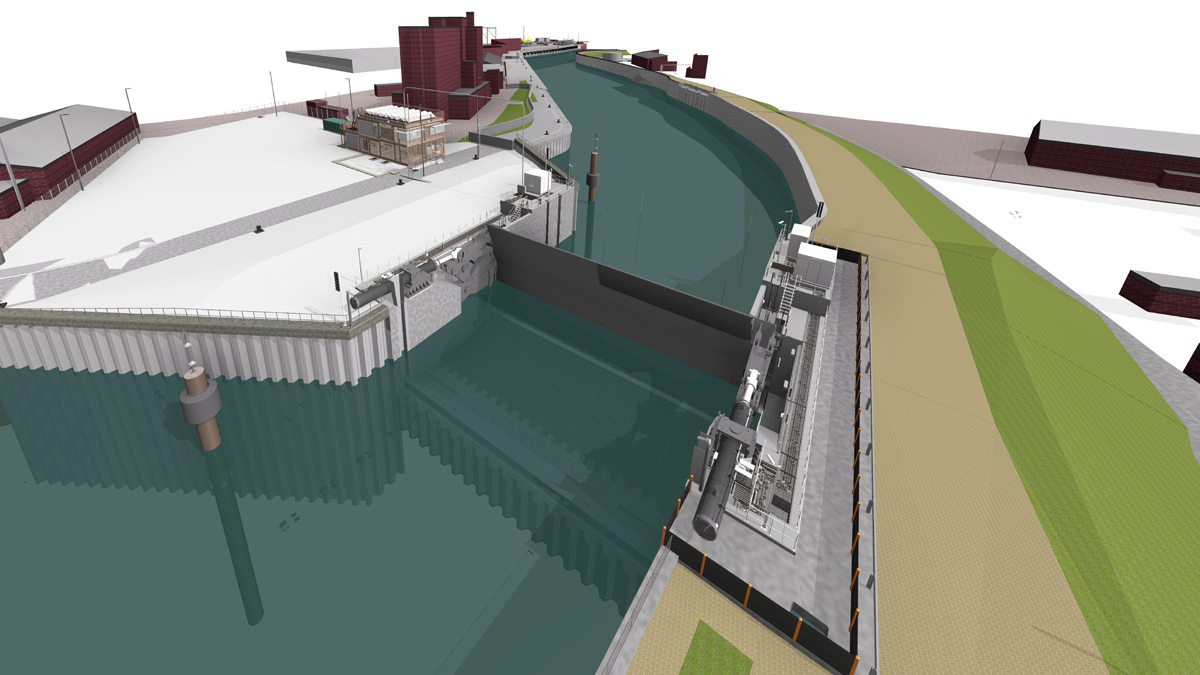
Artist impression of the RSHP System – Courtesy of 5th Studio
Construction of the pump house
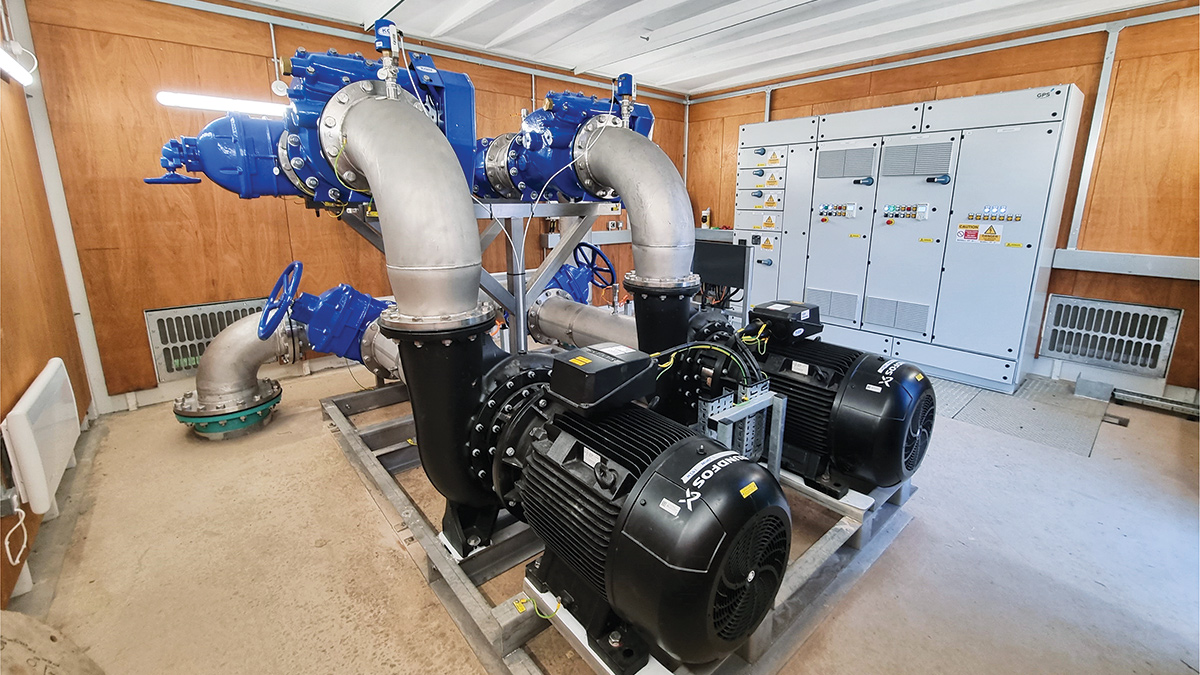
As part of the planning and design process, a new pump house was developed near Newnham Terrace and Silver Street to serve as the central hub of the RSHP system. This facility houses the heat pump and associated equipment and was engineered to deliver optimal performance, resilience, and minimal environmental impact. The design also prioritised visual integration with the surrounding landscape, ensuring the structure complements the historic and ecological character of the site.
Environmental impact assessment
A thorough environmental impact assessment was conducted to evaluate the potential effects of the RSHP system on the local environment. This assessment included measures to protect local wildlife, maintain water quality, and ensure that the project would not adversely affect the river ecosystem. The assessment also addressed potential noise and visual impacts, ensuring that the pump house would blend seamlessly with the surrounding landscape.
Public consultation
The planning application process included public consultations to gather feedback from the community and address any concerns related to the project. This transparent approach helped build community support and ensured that the project aligned with local environmental and planning policies.
Detailed design phase
The detailed design phase focused on optimising the RSHP system’s performance, reliability, and integration with the college’s existing heating network. Mott MacDonald worked on several key components during this phase, including system performance optimisation, reliability and redundancy, and integration with the existing heating network.
Innovative design elements
The Detailed design phase also incorporated several innovative design elements aimed at enhancing sustainability and reducing environmental impact. These included the integration of fish passes and sediment management systems to protect local wildlife and maintain river health. The design also focused on minimising the visual impact of the pump house, ensuring that it blended harmoniously with the surrounding environment.
Stakeholder engagement
Throughout the planning application and detailed design phases, Mott MacDonald engaged with several key stakeholders, including the Environment Agency, the local authority, and the River Cam Conservancy. This collaborative approach ensured that the project met all regulatory requirements and addressed any potential concerns from stakeholders.
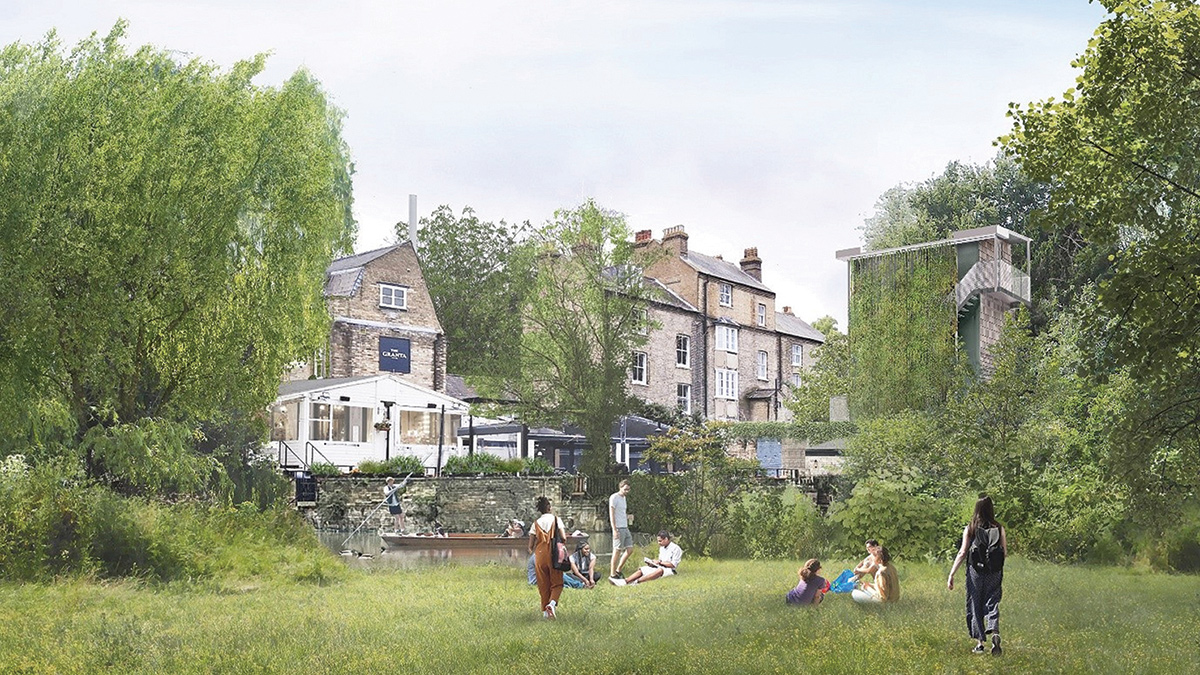
Artist impression from Sheep’s Green – Courtesy of 5th Studio
Technical description & construction phase
The RSHP system extracts ‘warm’ water from the river and discharges it back at a colder temperature, with a maximum temperature differential less than 3°C. This process is designed to ensure minimal environmental impact while efficiently capturing thermal energy from the river. The new pump house will serve as the central hub for the heat pump, providing the primary source of heat to surrounding buildings on Newnham Terrace and Silver Street.
The RSHP system uses advanced heat pump technology to convert the thermal energy from the river into usable heat for the college’s heating network. The process involves several stages:
- Heat extraction: Water is drawn from the river through an intake structure designed to minimise debris and protect aquatic life. The extracted water passes through a heat exchanger, where thermal energy is transferred to a refrigerant.
- Compression: The refrigerant, now carrying the thermal energy, is compressed to increase its temperature. This stage is crucial for raising the temperature of the heat to a level suitable for heating buildings.
- Heat distribution: The heated refrigerant transfers its energy to the college’s heating network through another heat exchanger. This network distributes the heat to buildings on Newnham Terrace and Silver Street, providing a reliable and sustainable source of warmth.
- Water discharge: After the thermal energy is extracted, the cooled water is returned to the river through a discharge structure. The design ensures that the discharged water is evenly distributed and does not cause thermal pollution.
- Backup & resilience: During periods when the river water is too cold to provide sufficient thermal energy, a backup heat source is required. The RSHP system incorporates direct electric heat sources as a resilience option. These electric heaters can be activated to ensure a continuous supply of heat, maintaining comfort levels within the college buildings.
- Environmental safeguards & integration: The RSHP system is designed with several environmental considerations to ensure sustainability and minimal impact on the river ecosystem. These include fish passes, sediment management, and temperature control.
- Integration with existing heating network: The RSHP system is seamlessly integrated with Darwin College’s existing heating network. This integration involves upgrading the current infrastructure to accommodate the new heat source and ensure efficient heat distribution across the college estate. The detailed design phase included extensive planning to connect the pump house to the existing network, optimizing performance and reliability.
By leveraging advanced heat pump technology and incorporating robust environmental safeguards, the RSHP system at Darwin College represents a significant step towards achieving carbon neutrality. This innovative project not only provides a sustainable heating solution but also sets a strong example for other institutions and organizations to follow in their pursuit of renewable energy and environmental stewardship.
Conclusion
The River Source Heat Pump System at Darwin College represents a significant step towards achieving carbon neutrality and demonstrates the college’s commitment to sustainability and environmental stewardship. The project not only provides a sustainable heating solution but also sets a strong example for other institutions to follow. By embracing innovative technologies and collaborative approaches, Darwin College is leading the way in eco-innovation and renewable energy.