
Donegan Civil Engineering
Caisson Shaft Storm Tank – Gillingham WRC
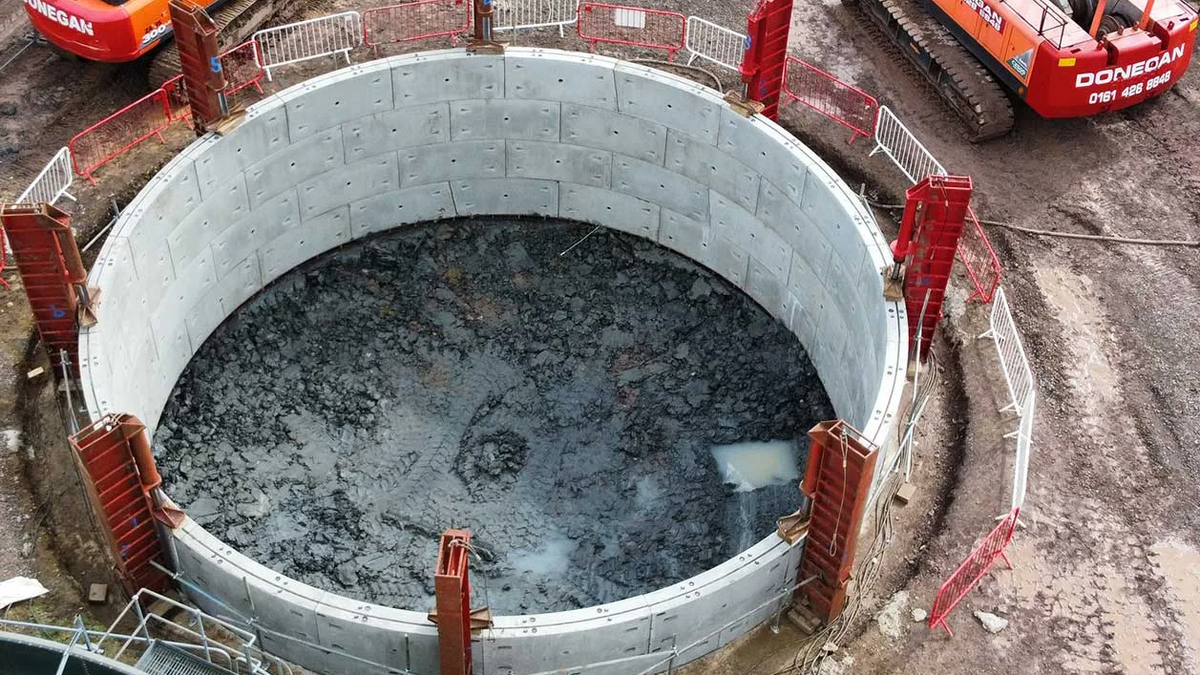
Caisson Shaft Storm Tank - Gillingham WRC
Client: Wessex Water
Value: Approx. £400,000
Project Description / Main Operations
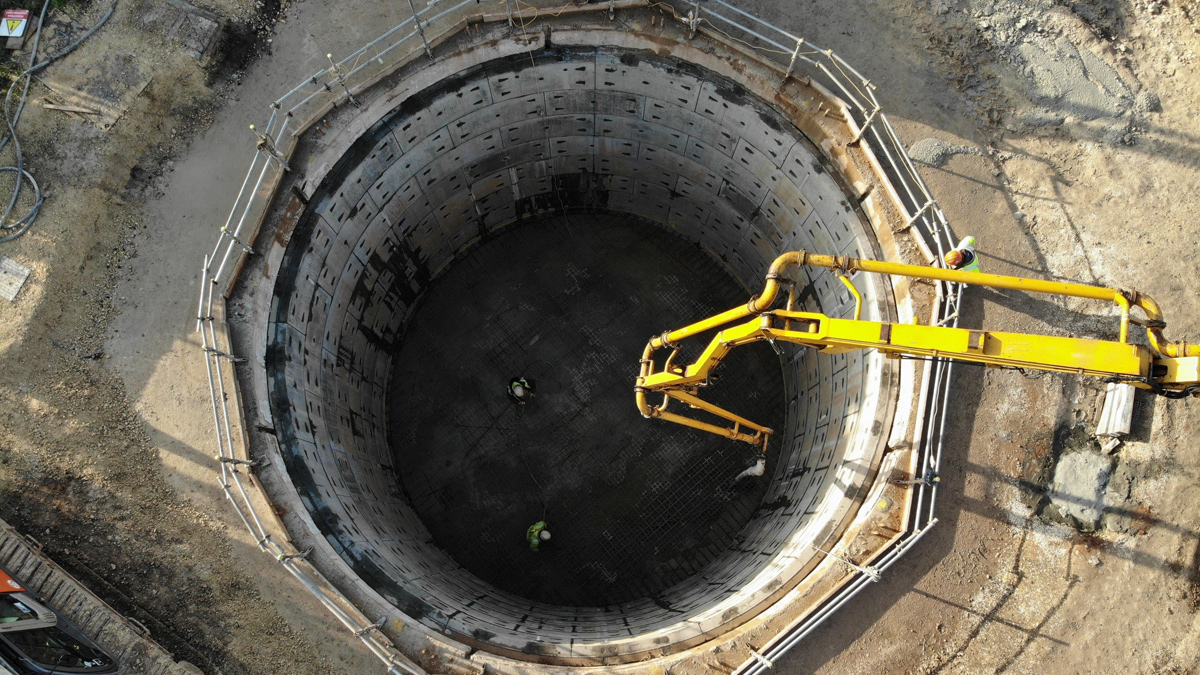
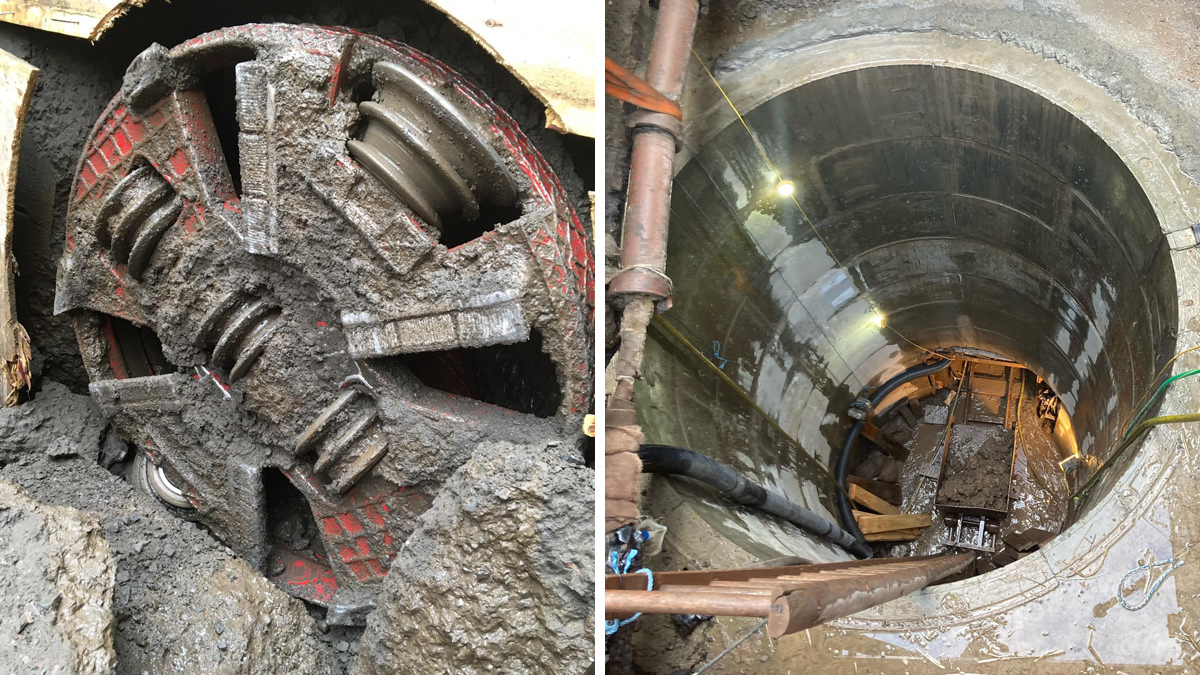
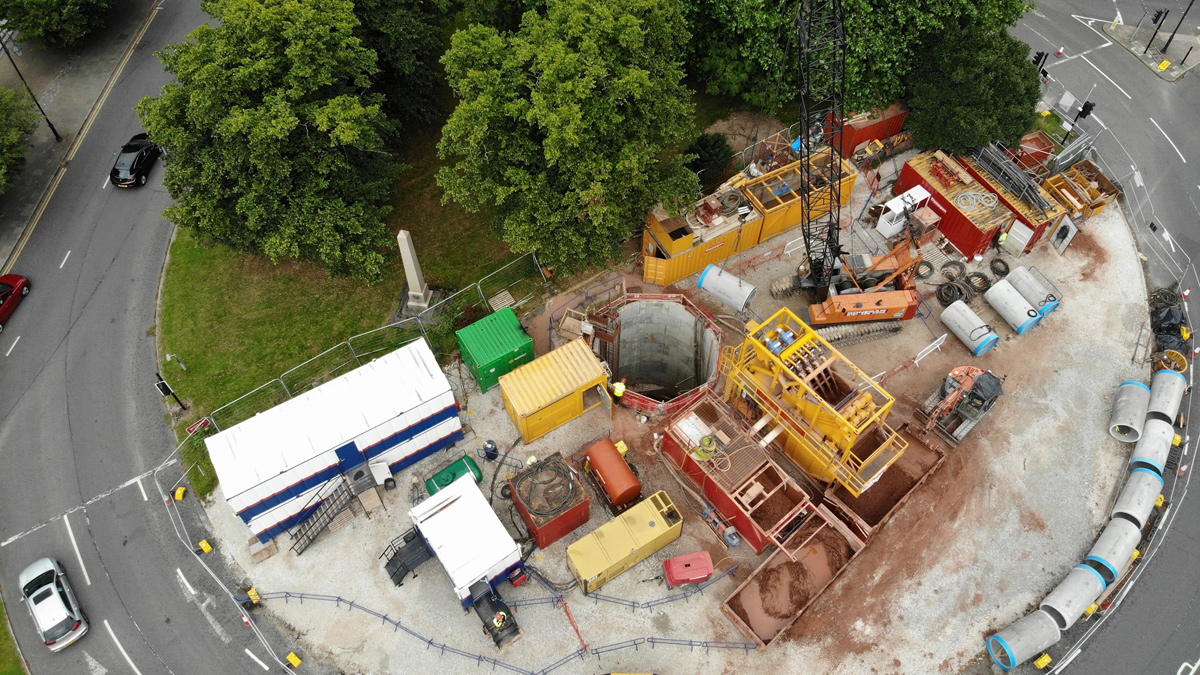
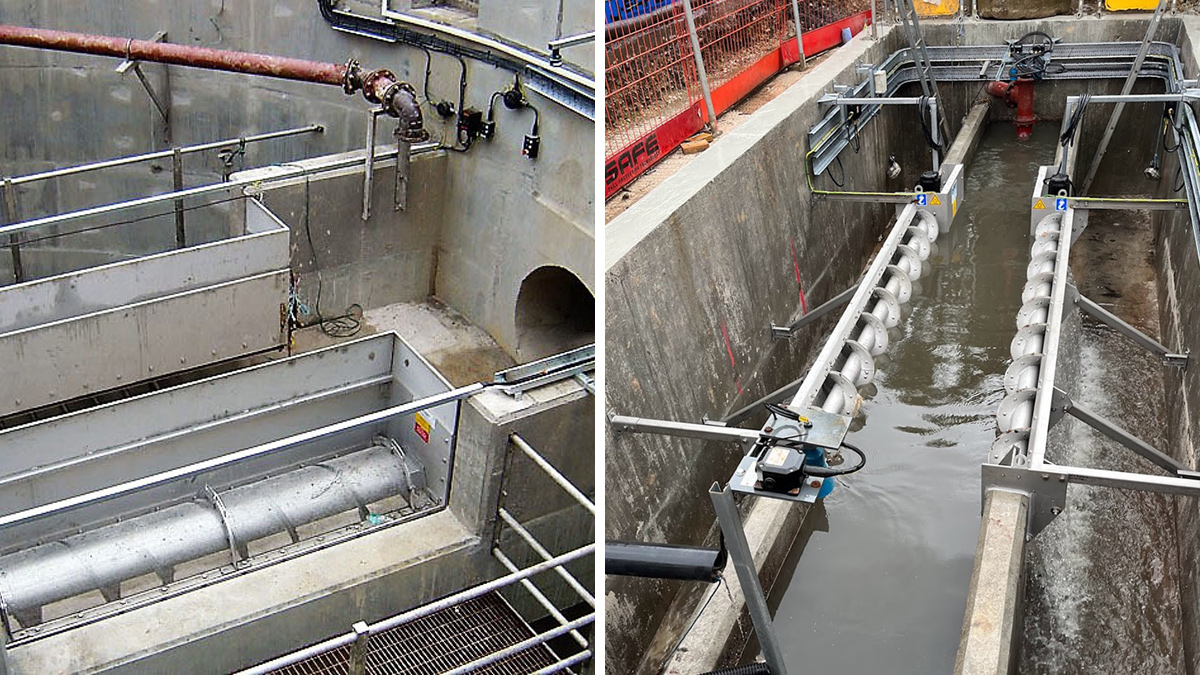
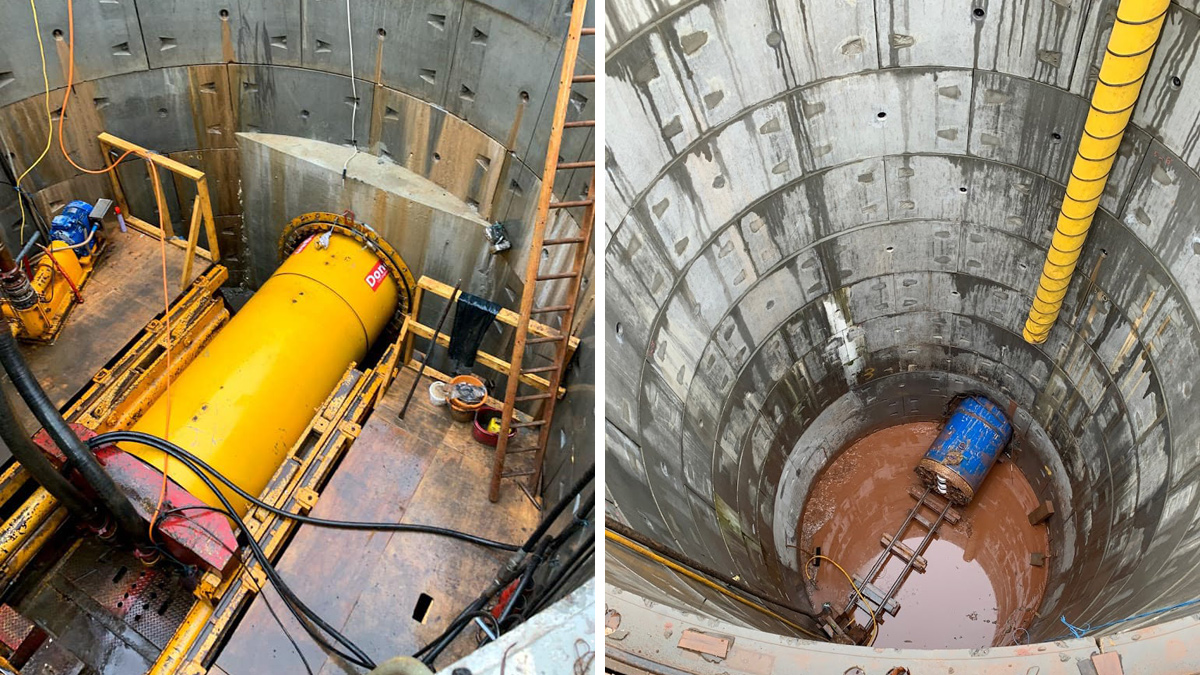
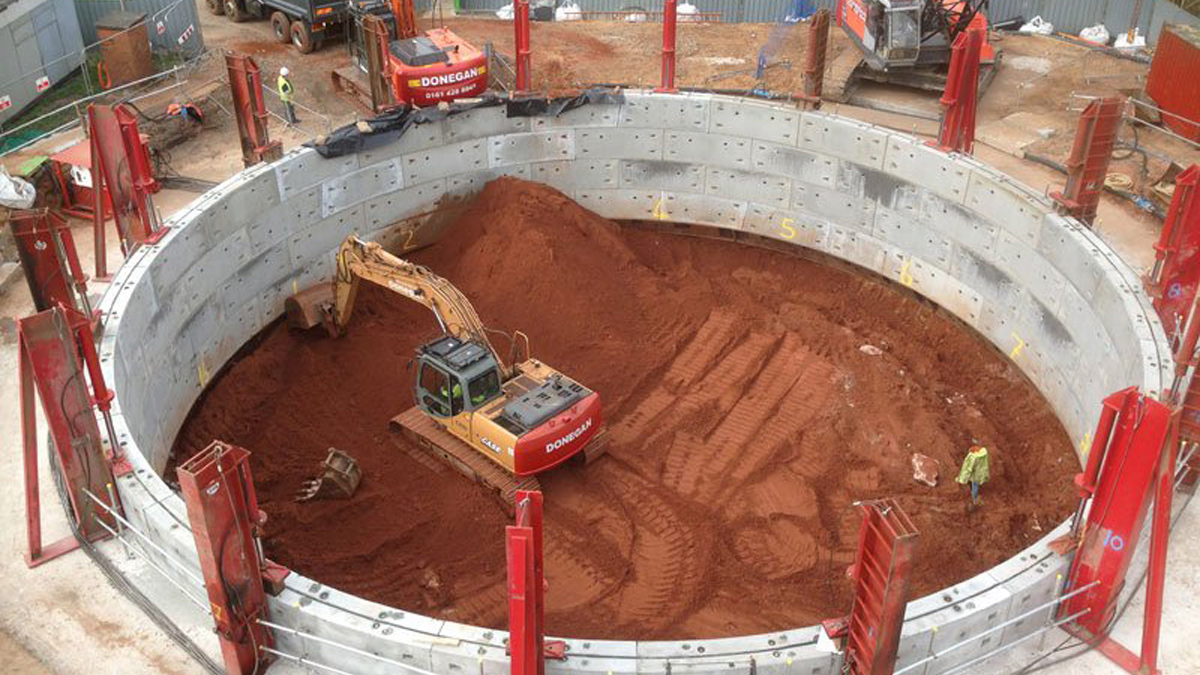
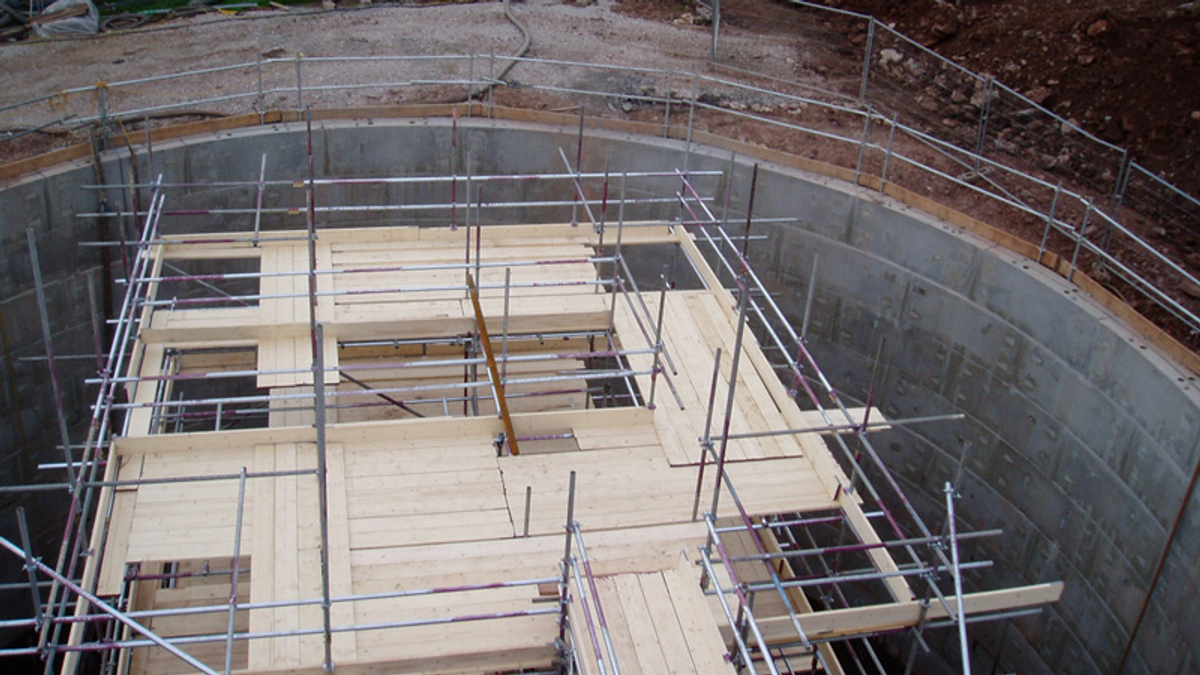
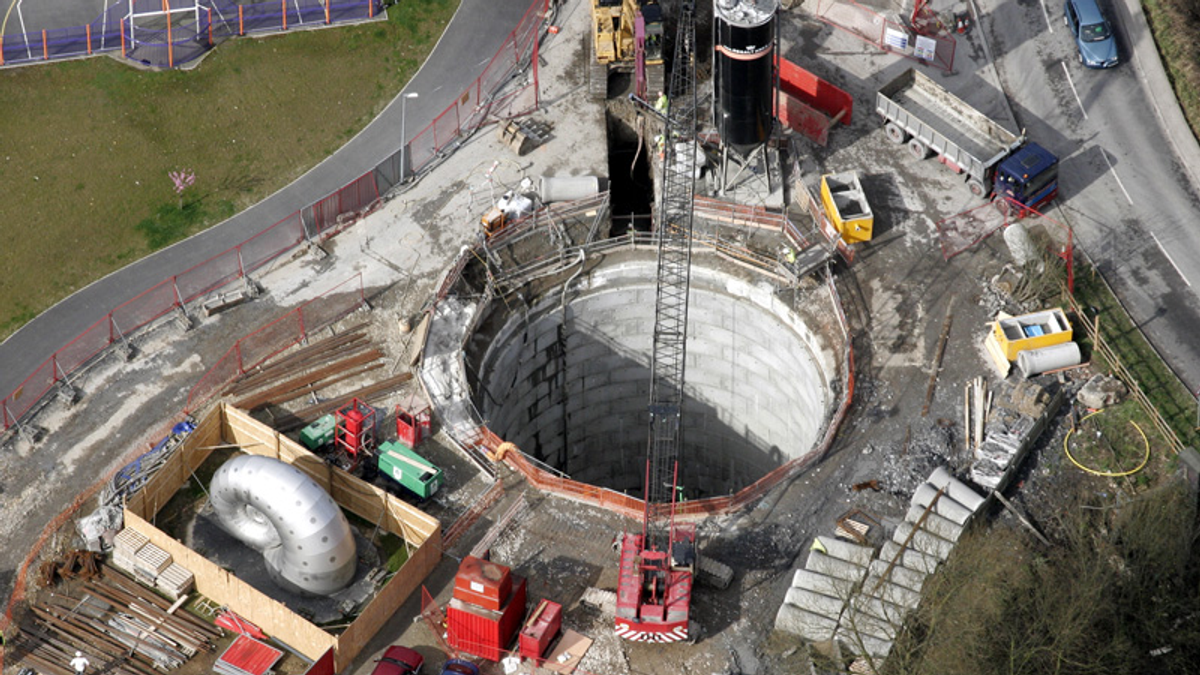
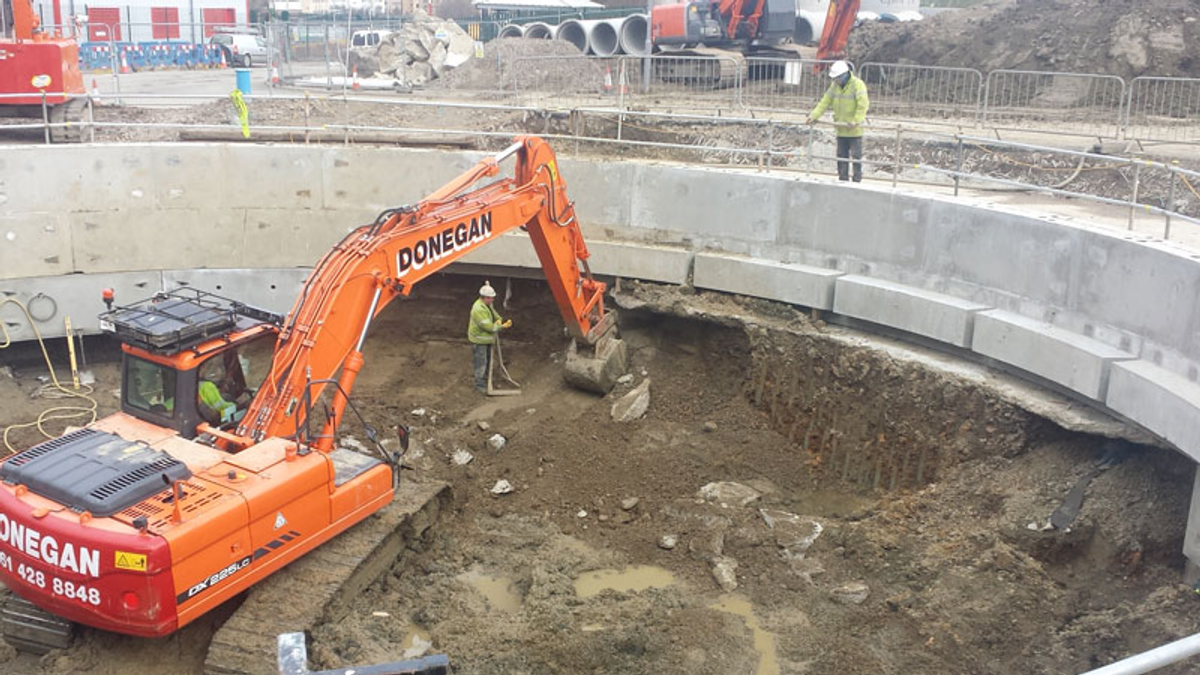
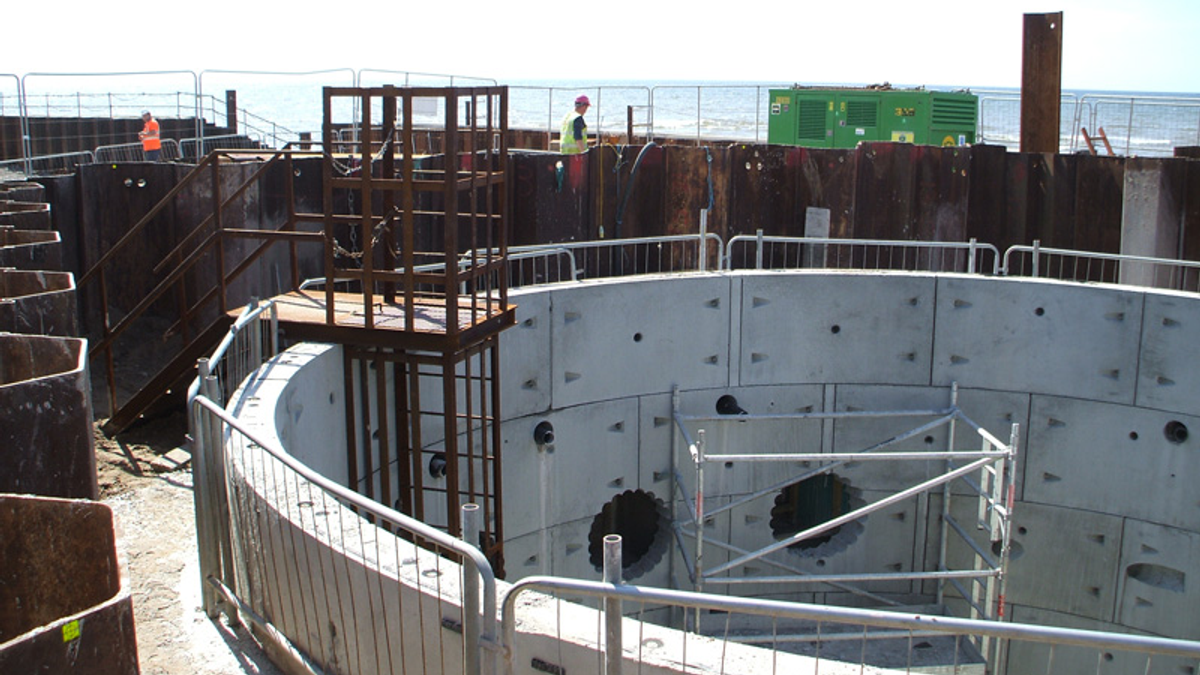
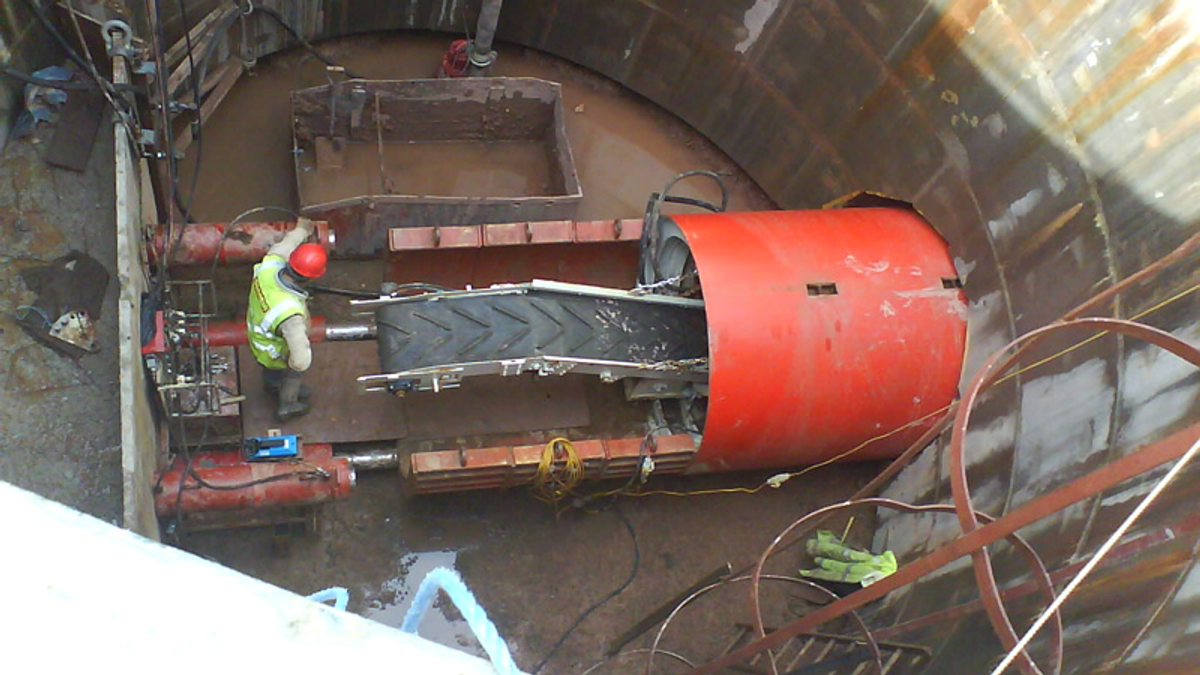
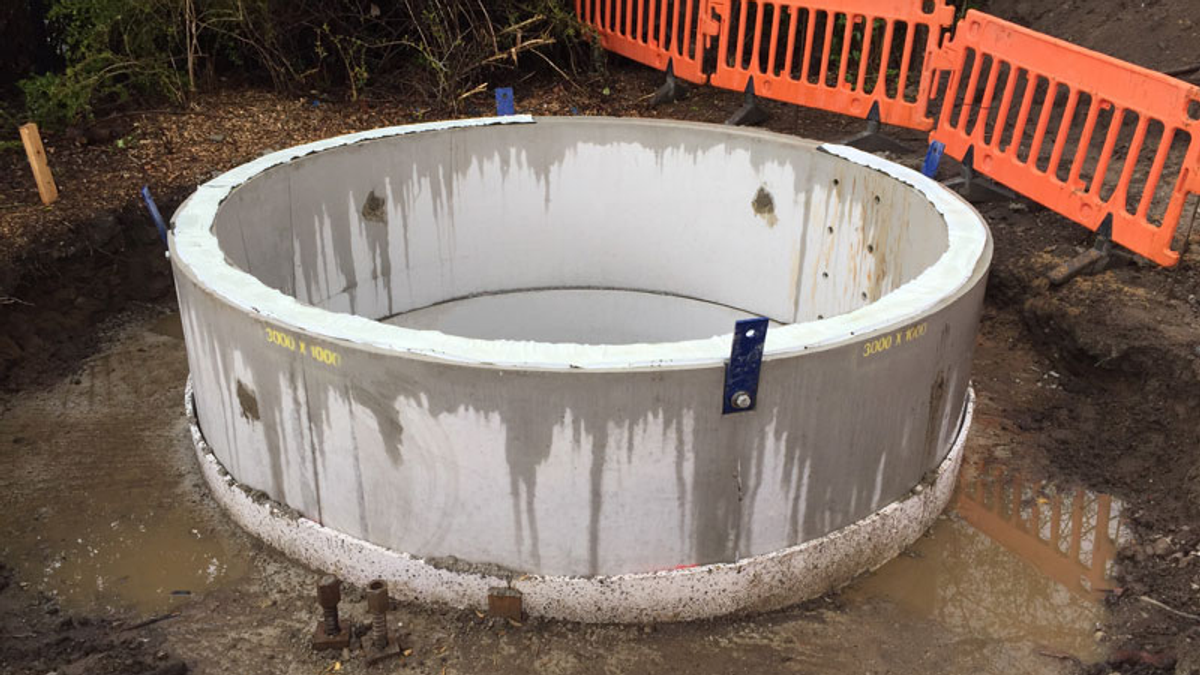
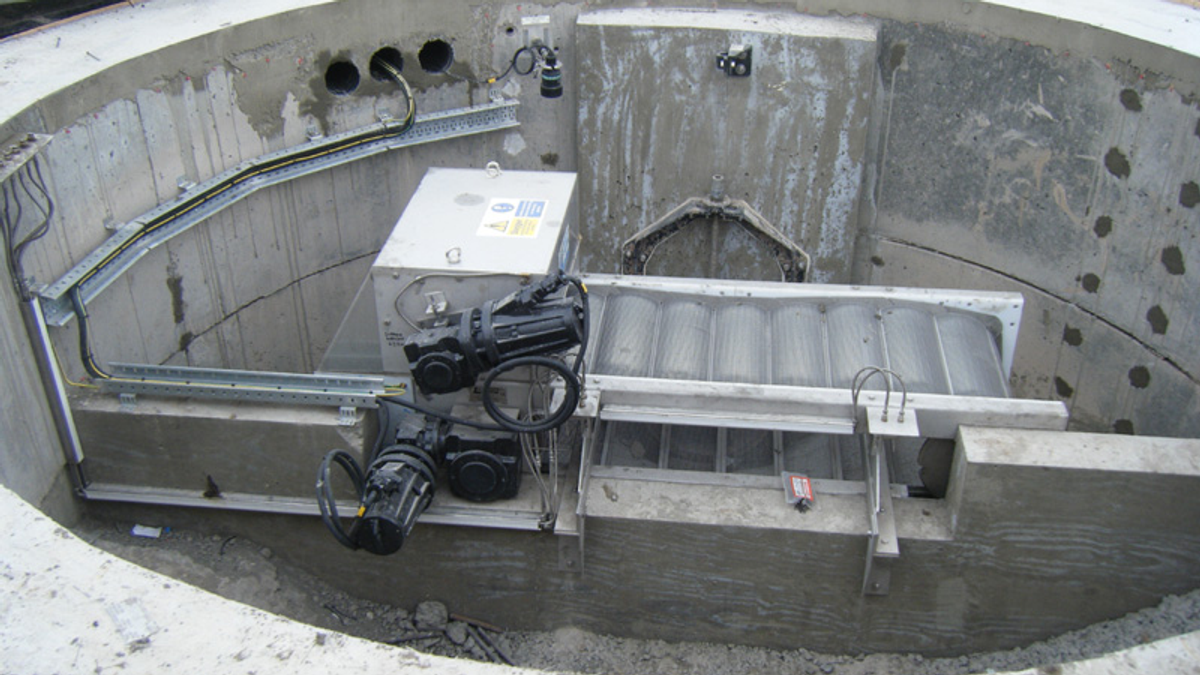
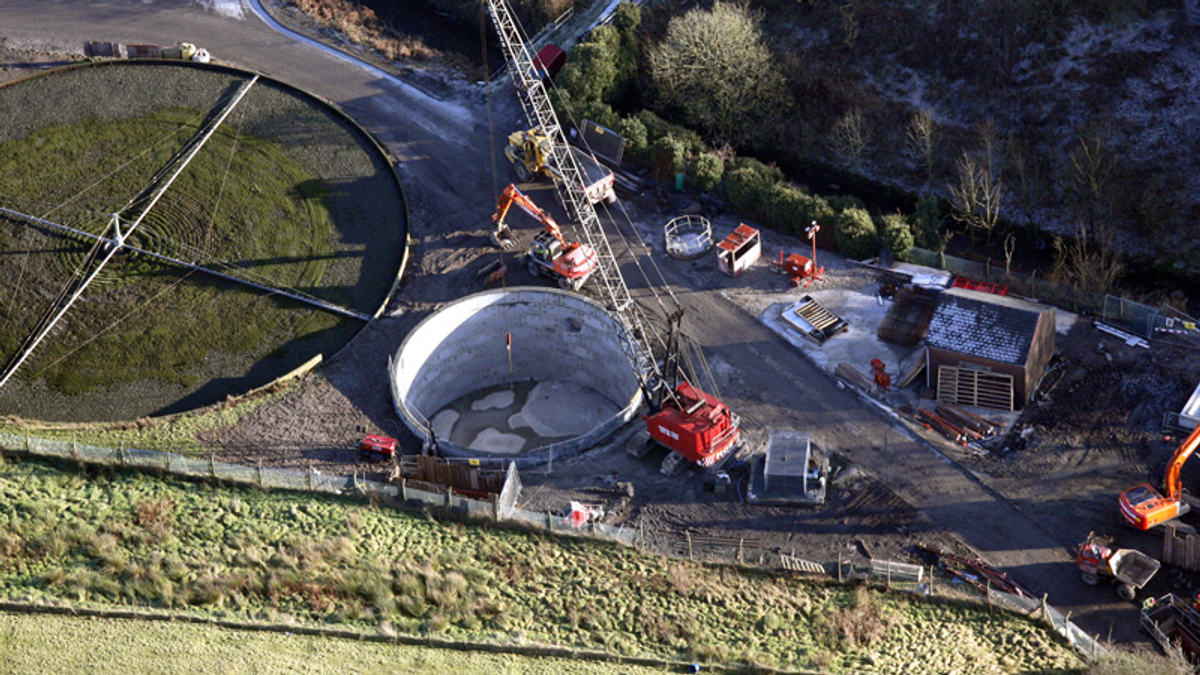
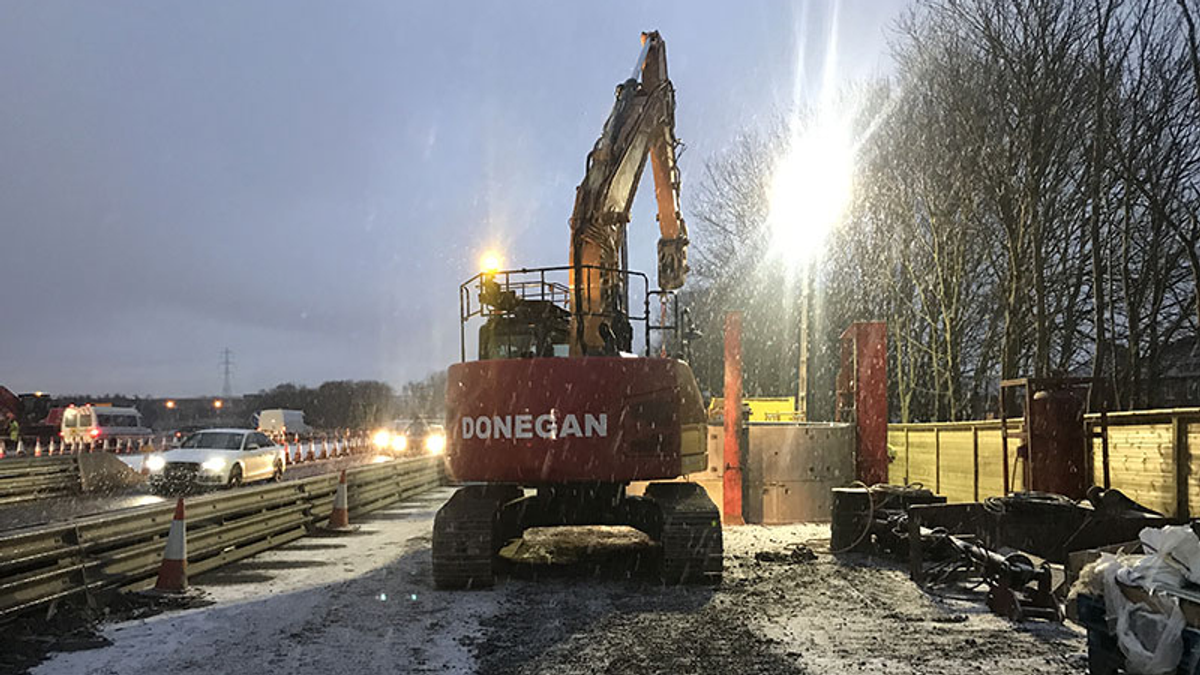
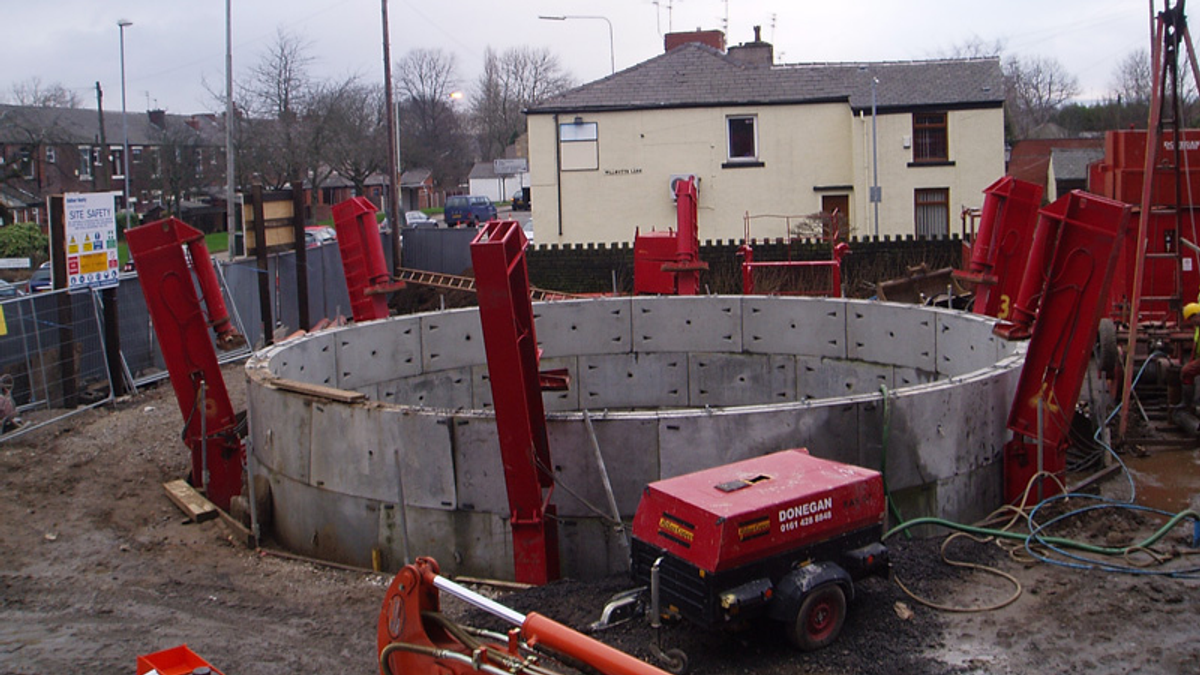
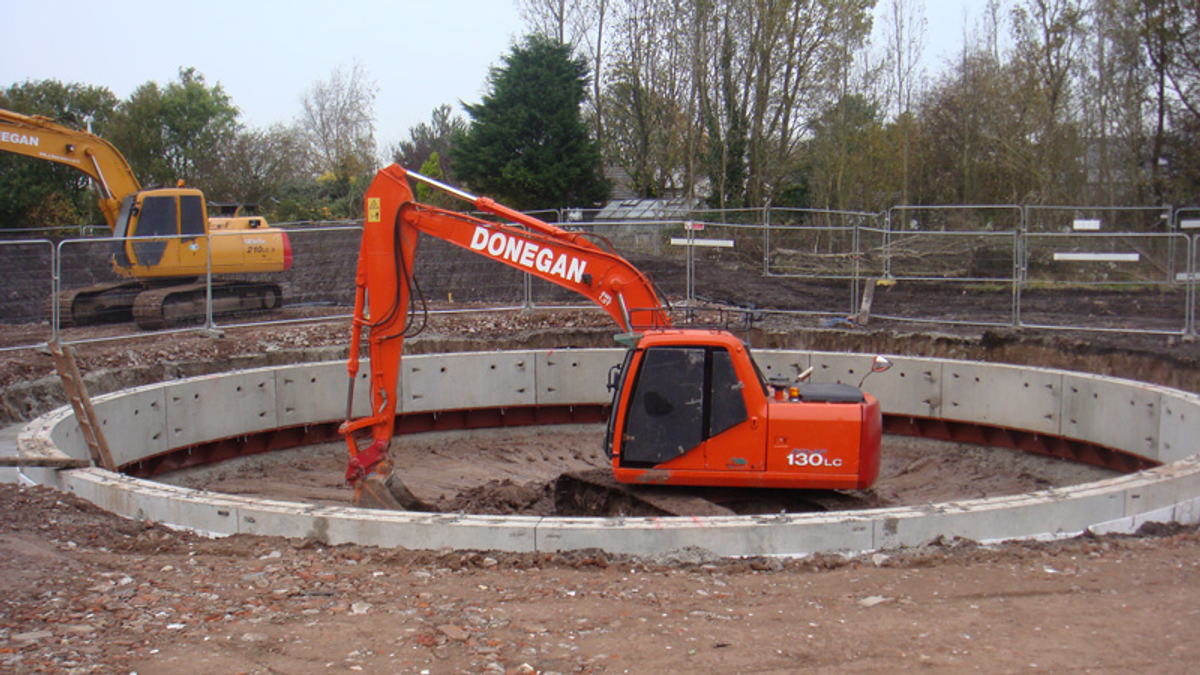
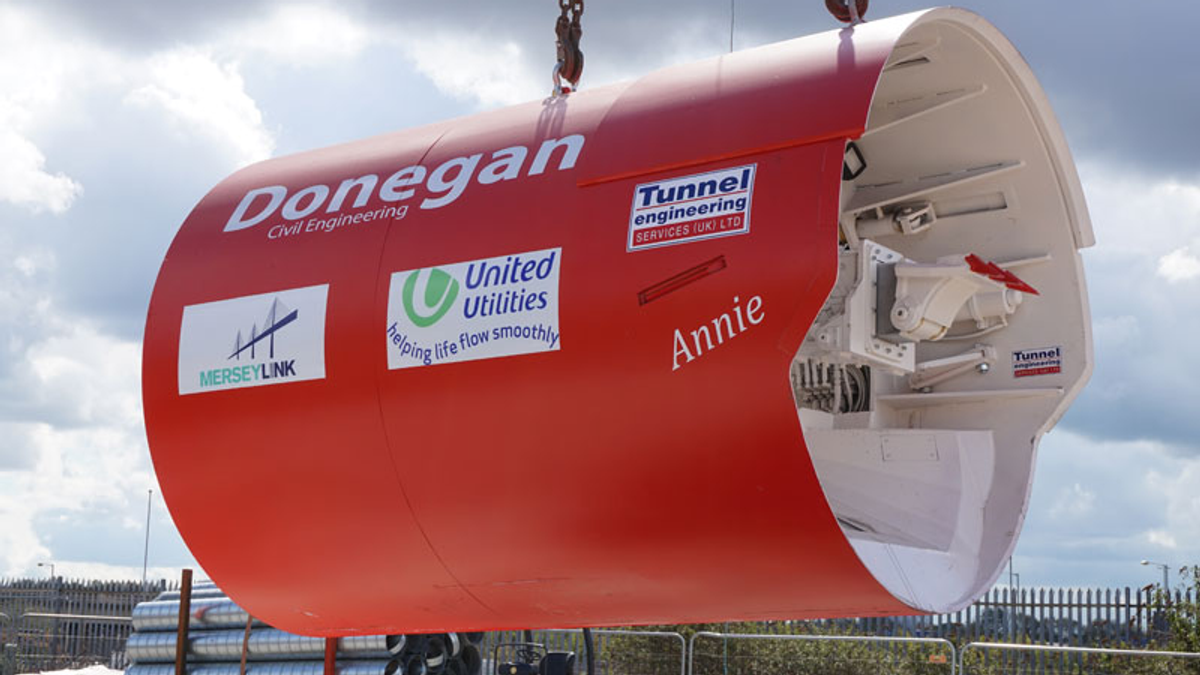
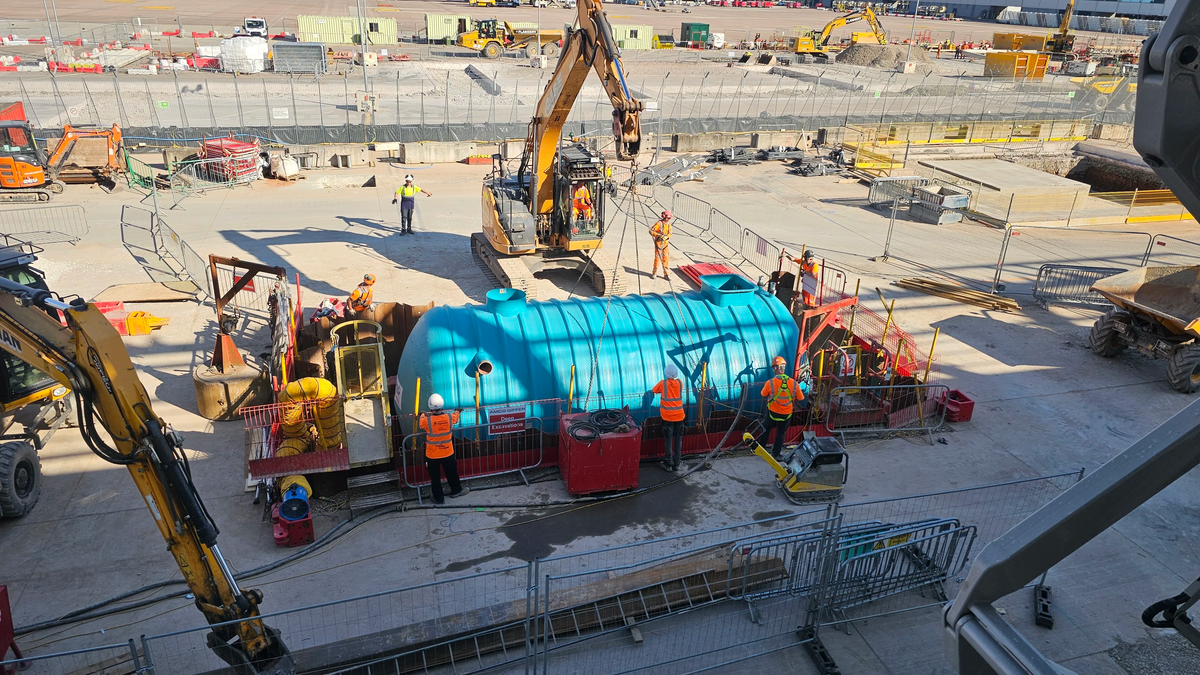
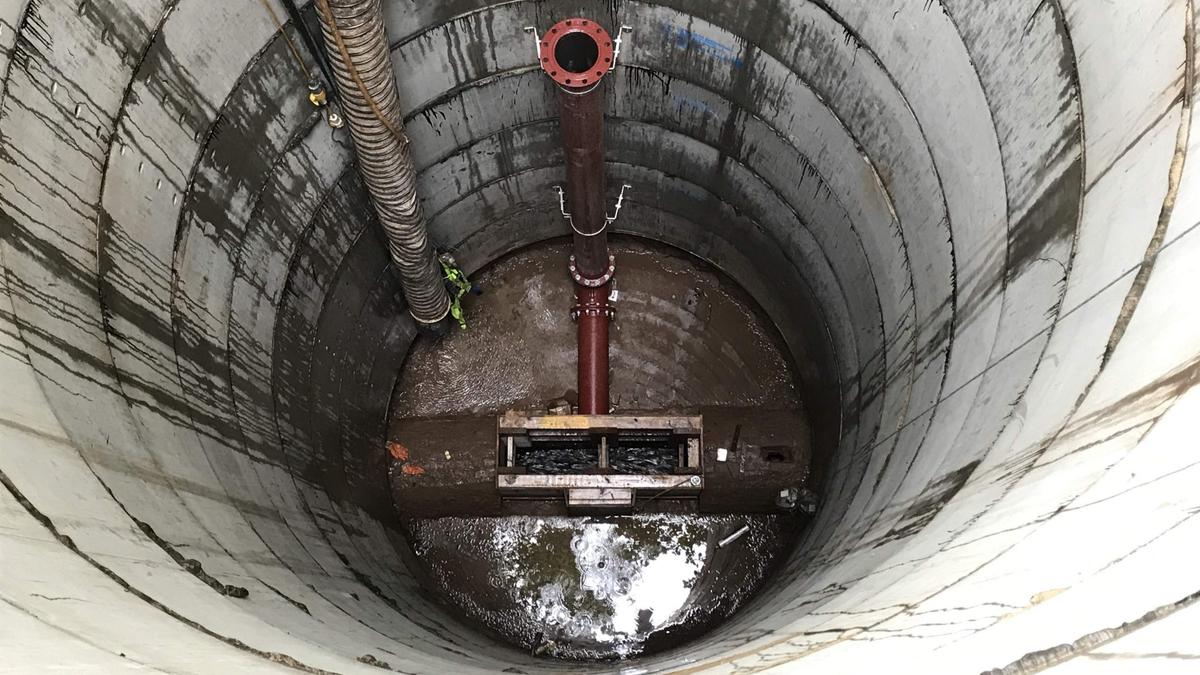
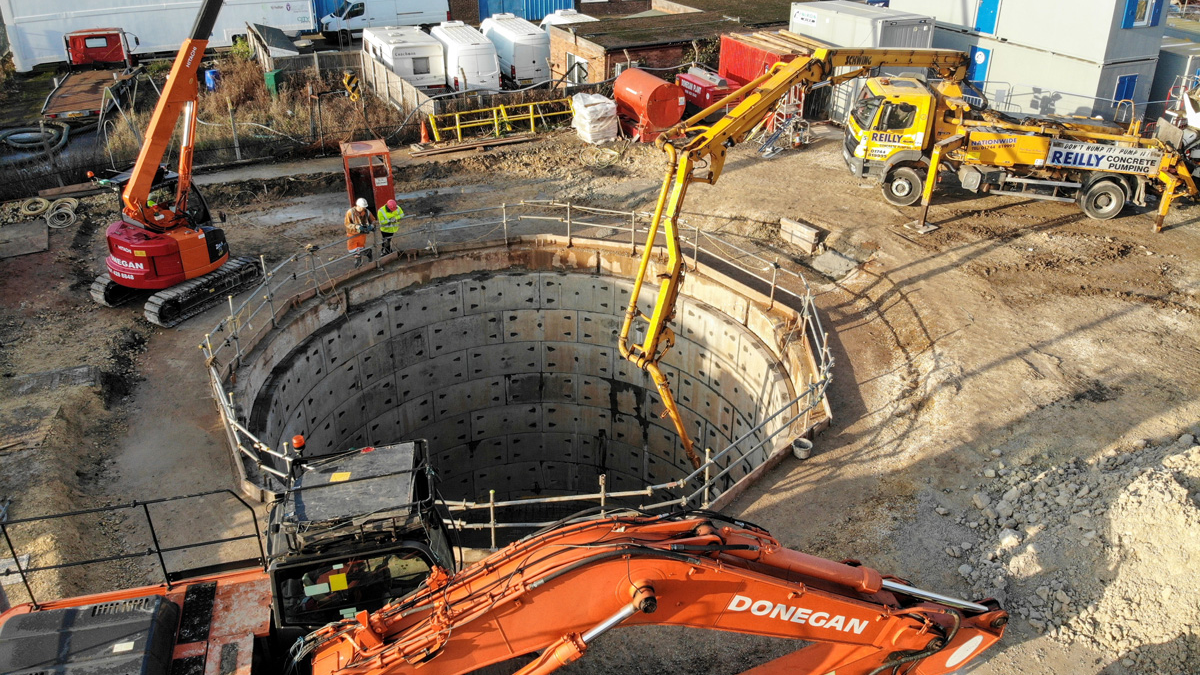
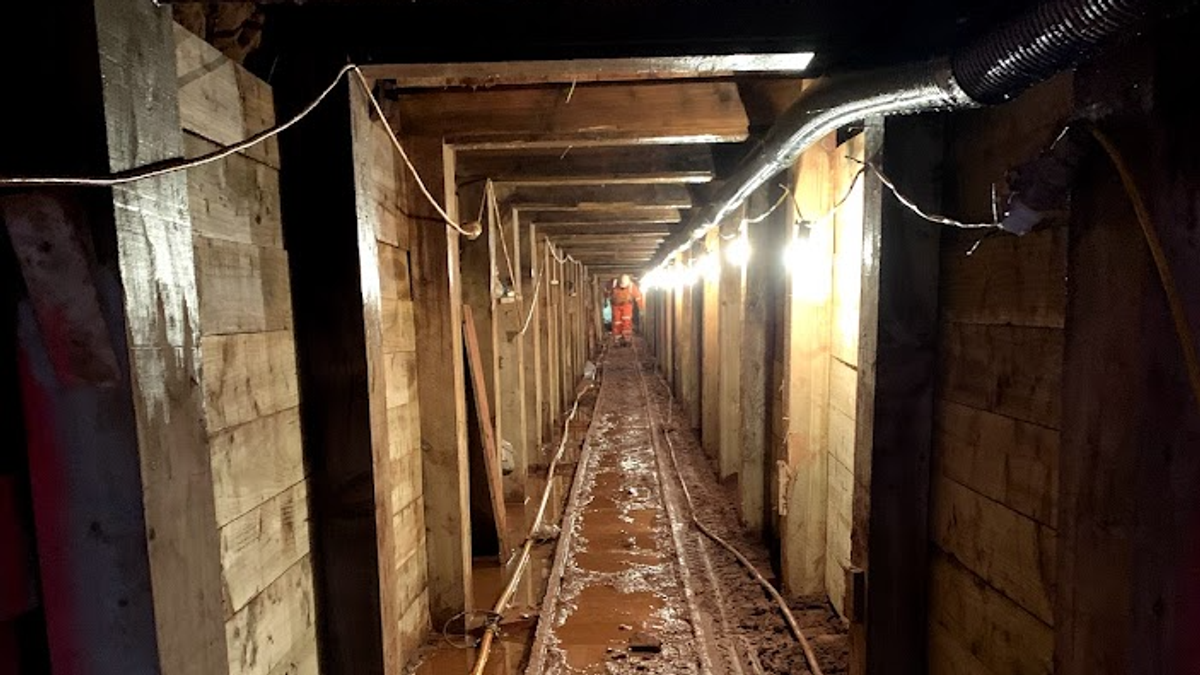
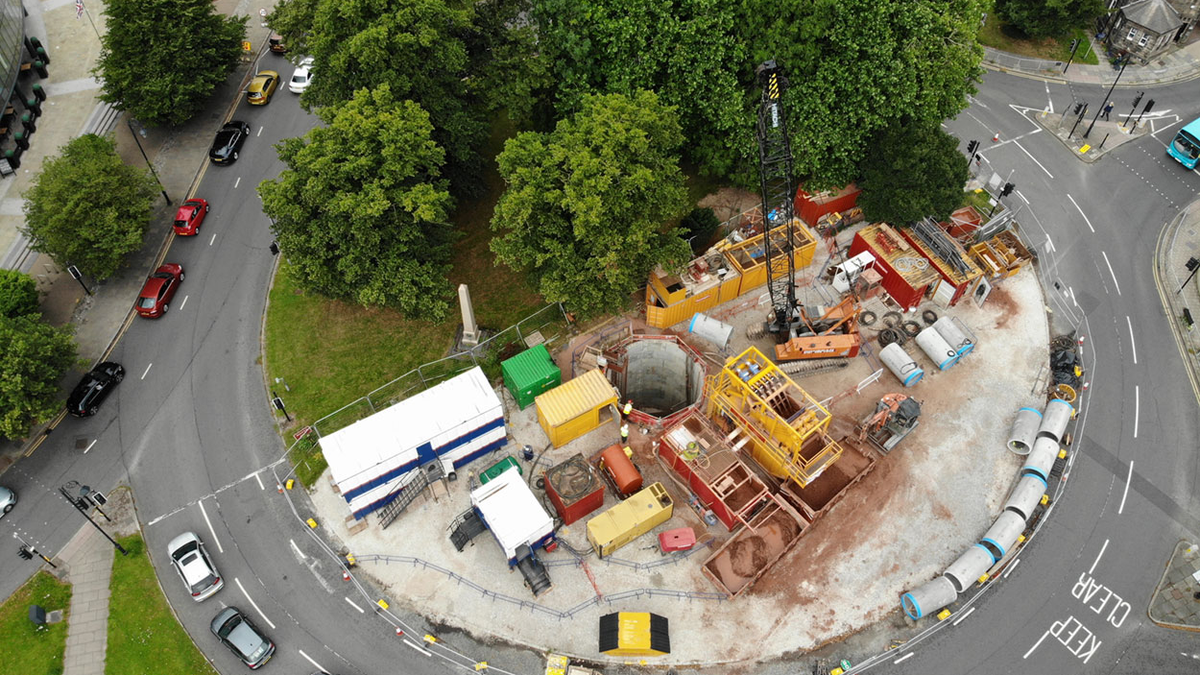
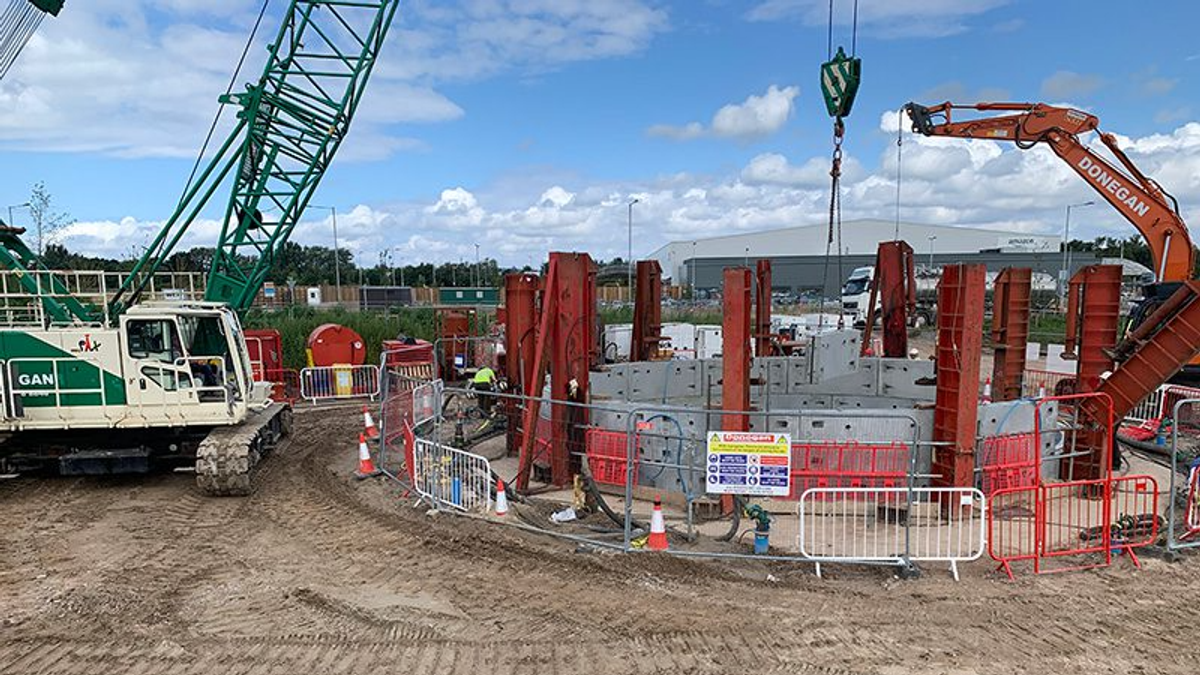
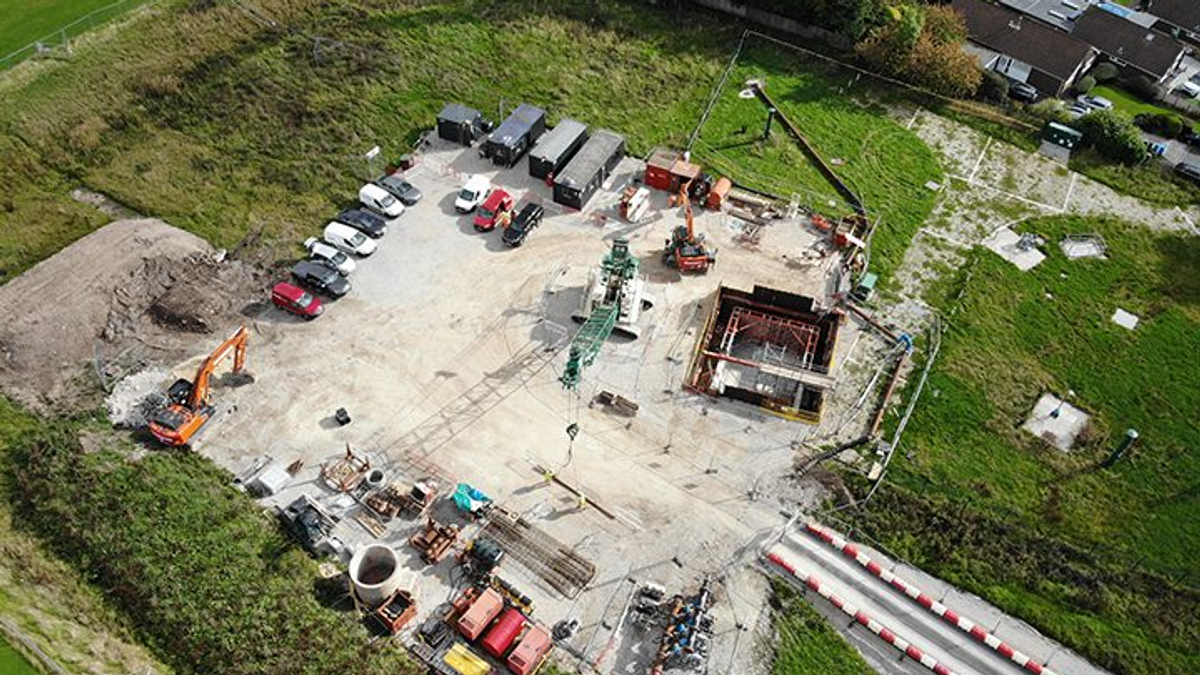
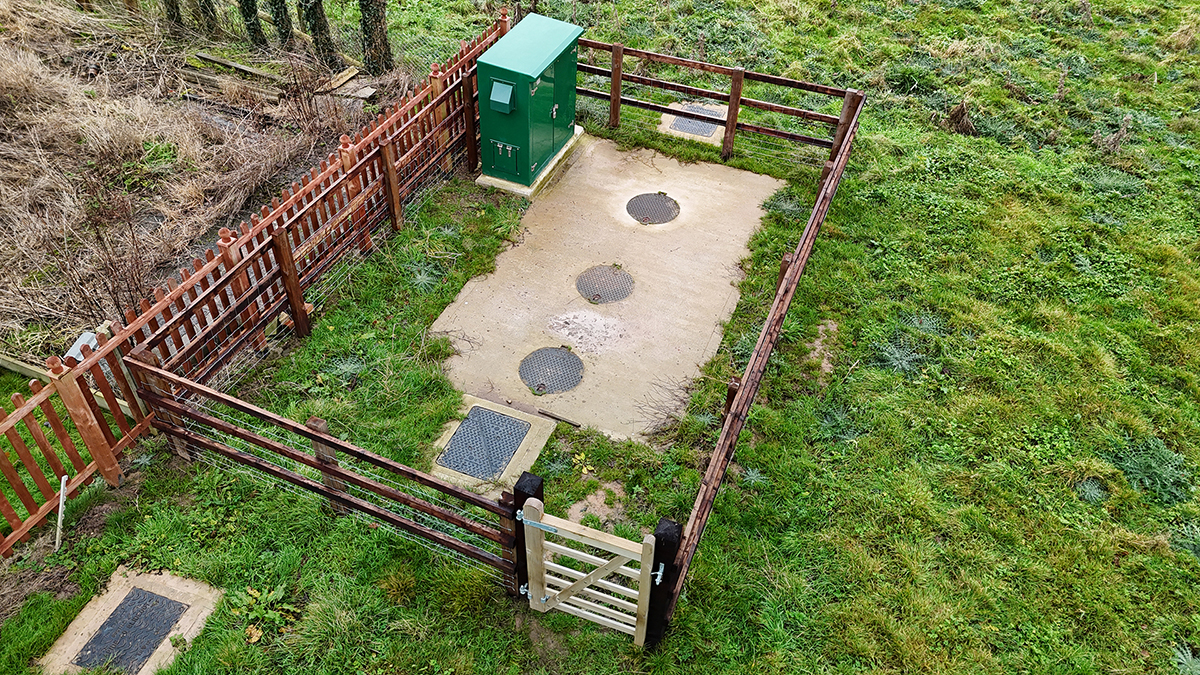
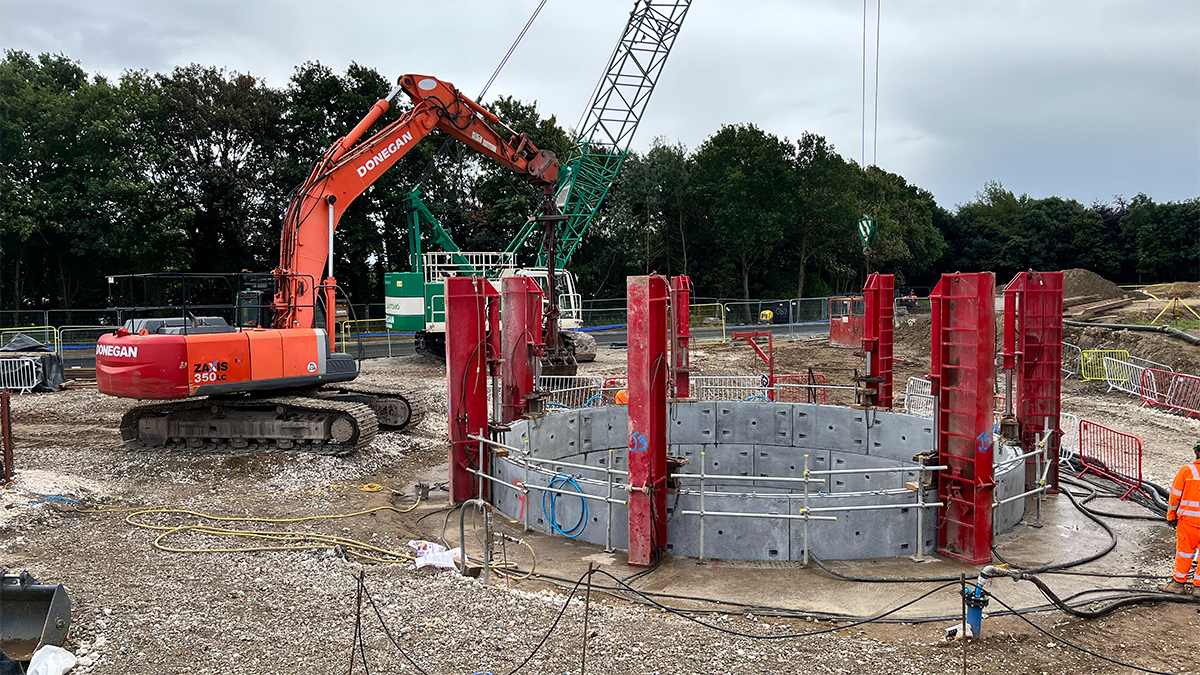
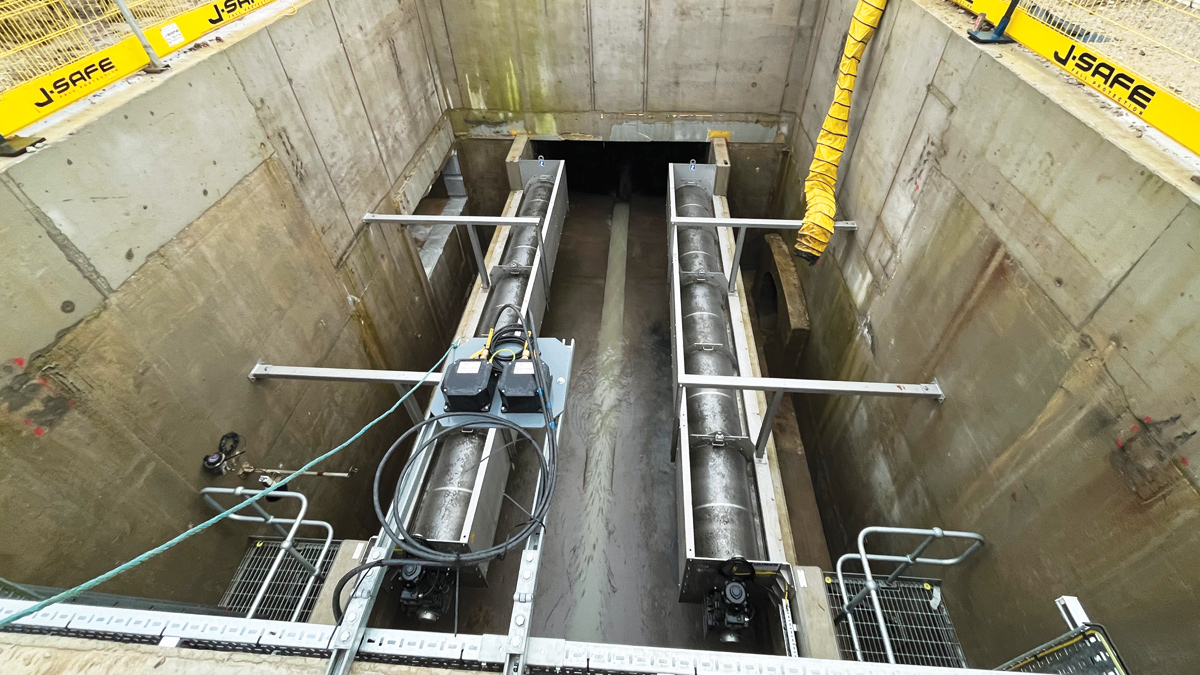
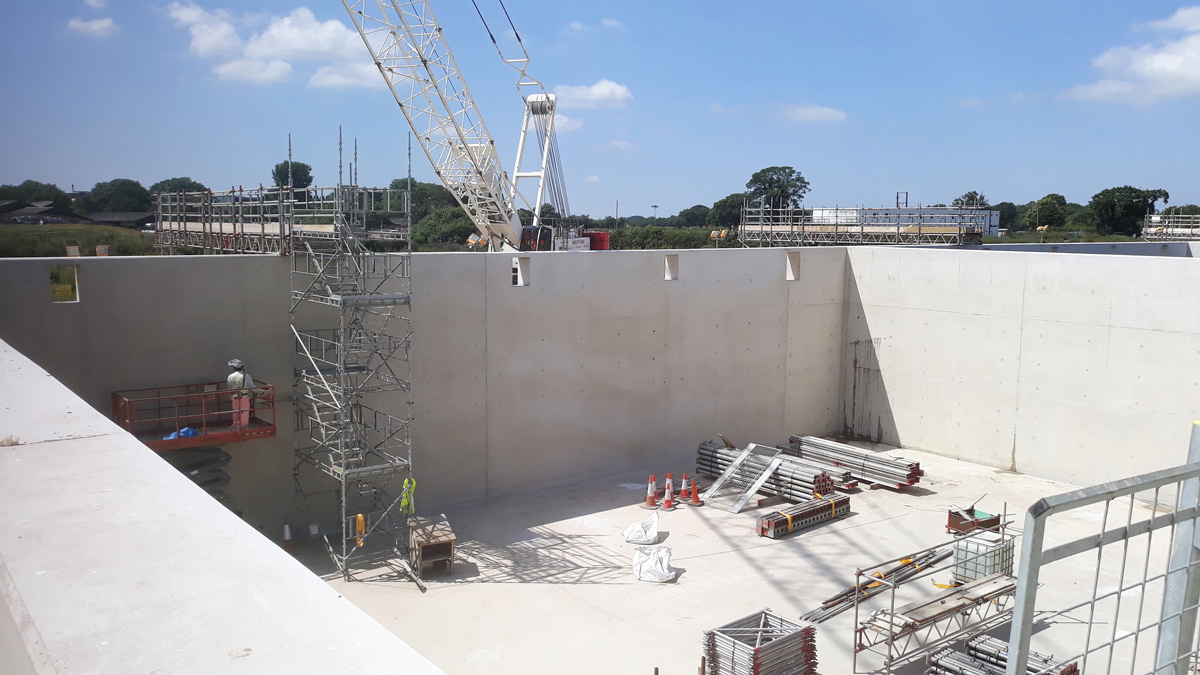
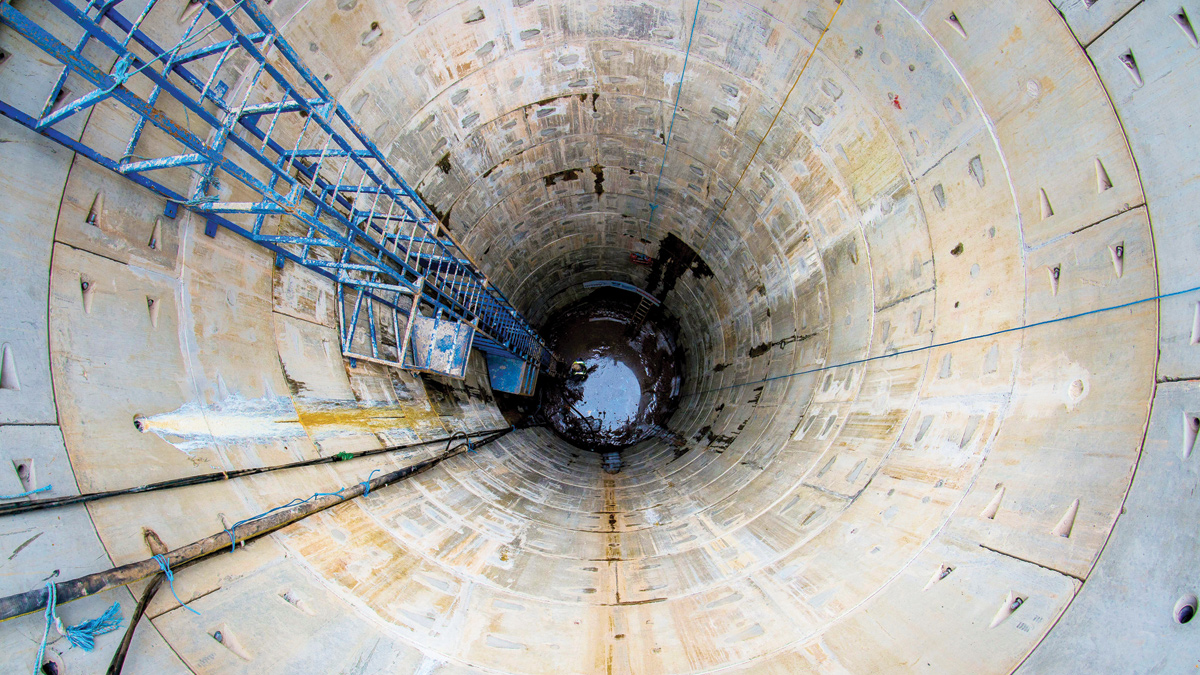
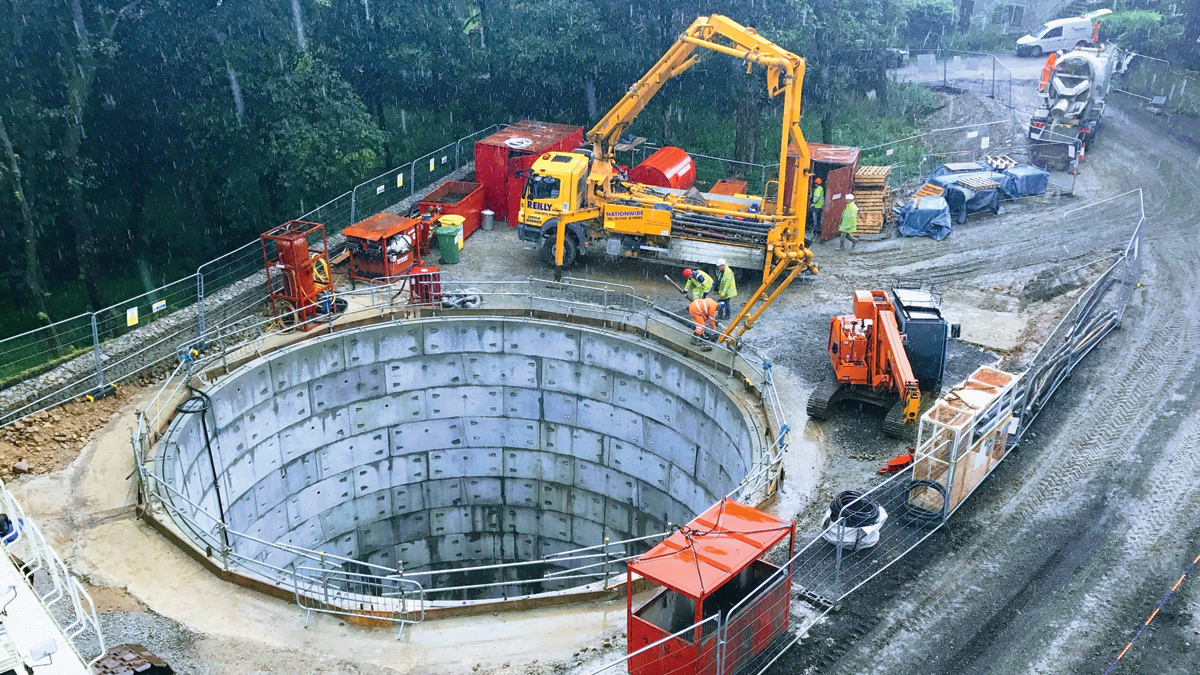
V J Donegan & Co Ltd delivered the civil engineering works to form Storm Tank No. 2 at Gillingham WRC via a caisson shaft solution, including detailed design, sinking operations, base plug construction and integration with existing site networks. The works provided a MEICA-ready, watertight storage asset to increase the site’s storm resilience and align with Wessex Water’s spill management strategy.
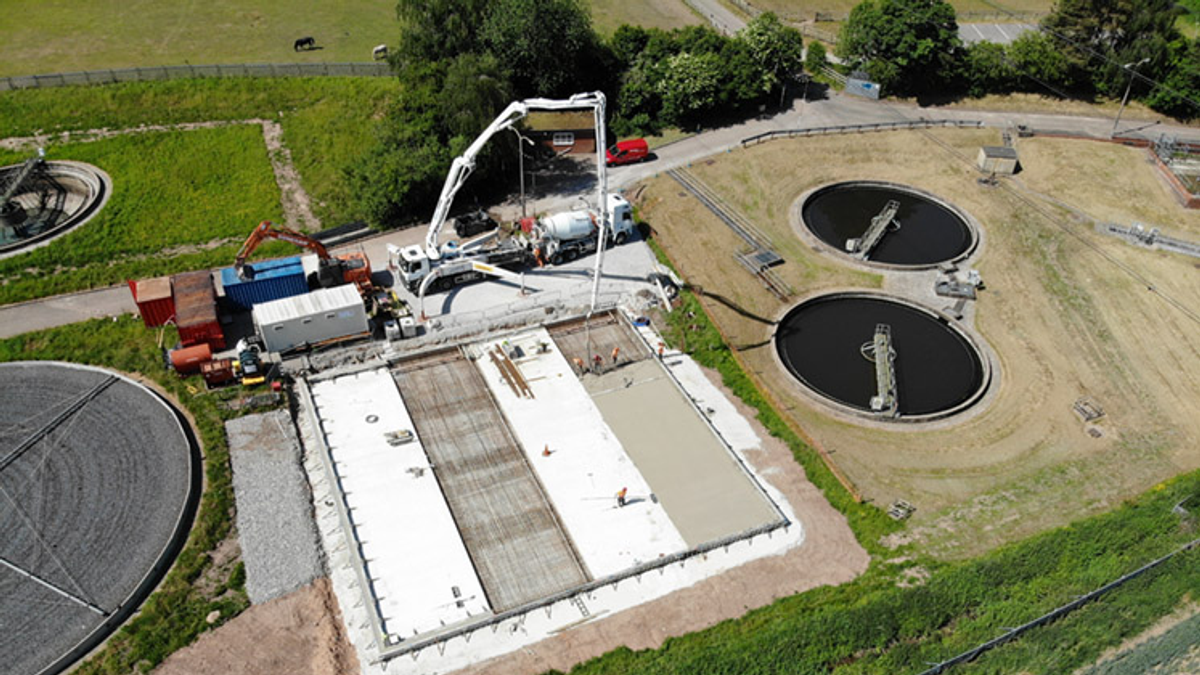
Wessex Water’s upgrade at Gillingham required additional storm storage capacity and compliant tie-ins to the existing process. The civils package comprised the design, supply and installation of a caisson shaft and base, with associated pipework interfaces, safe access, testing and handover documentation.
Scope and method:
- Detailed design responsibilities – design of the caisson shaft, temporary works, anti-flotation measures and reinforced concrete base plug, working to provided levels, storage requirements and outline drawings.
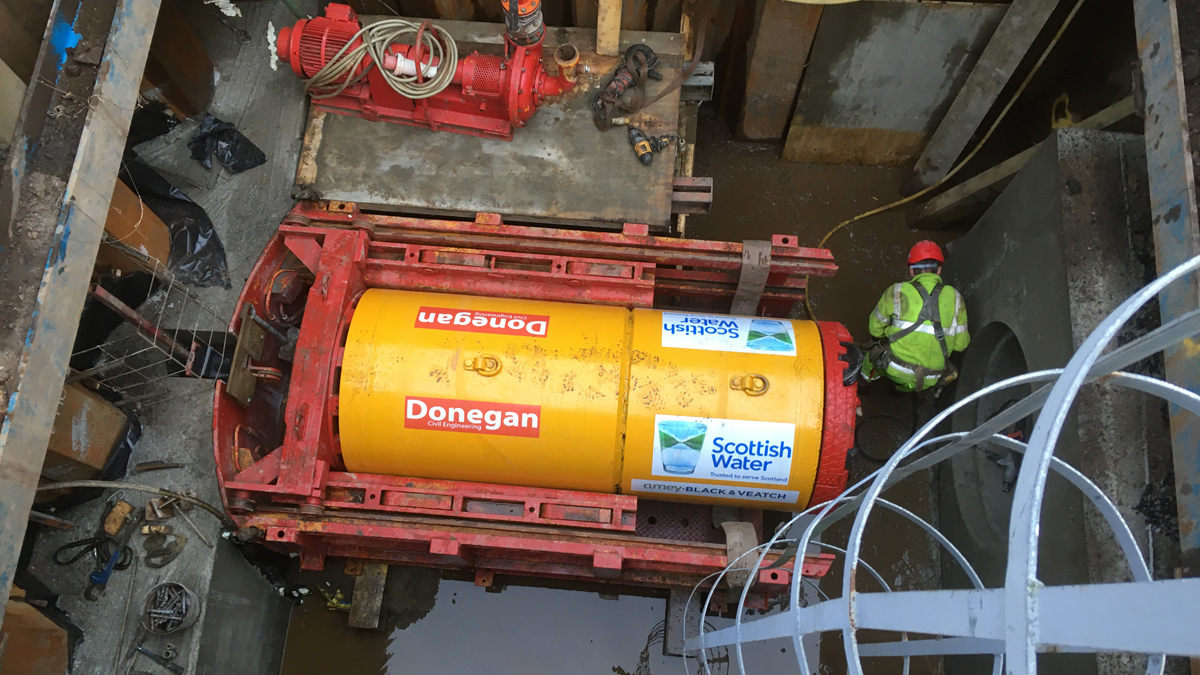
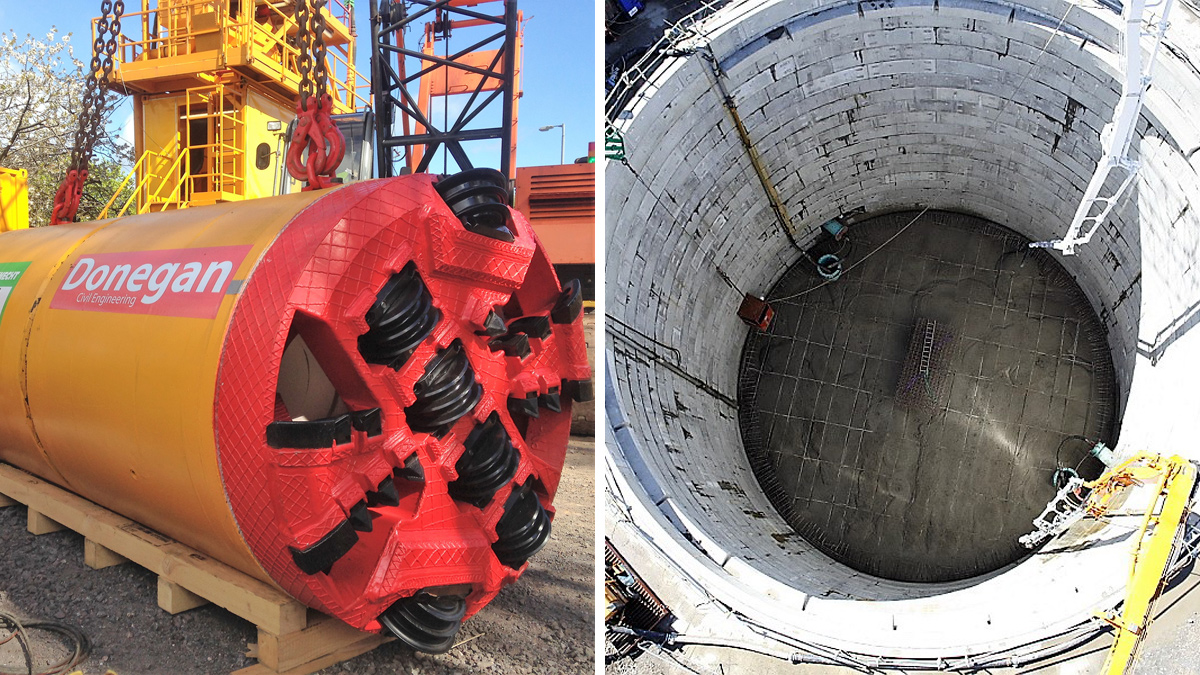
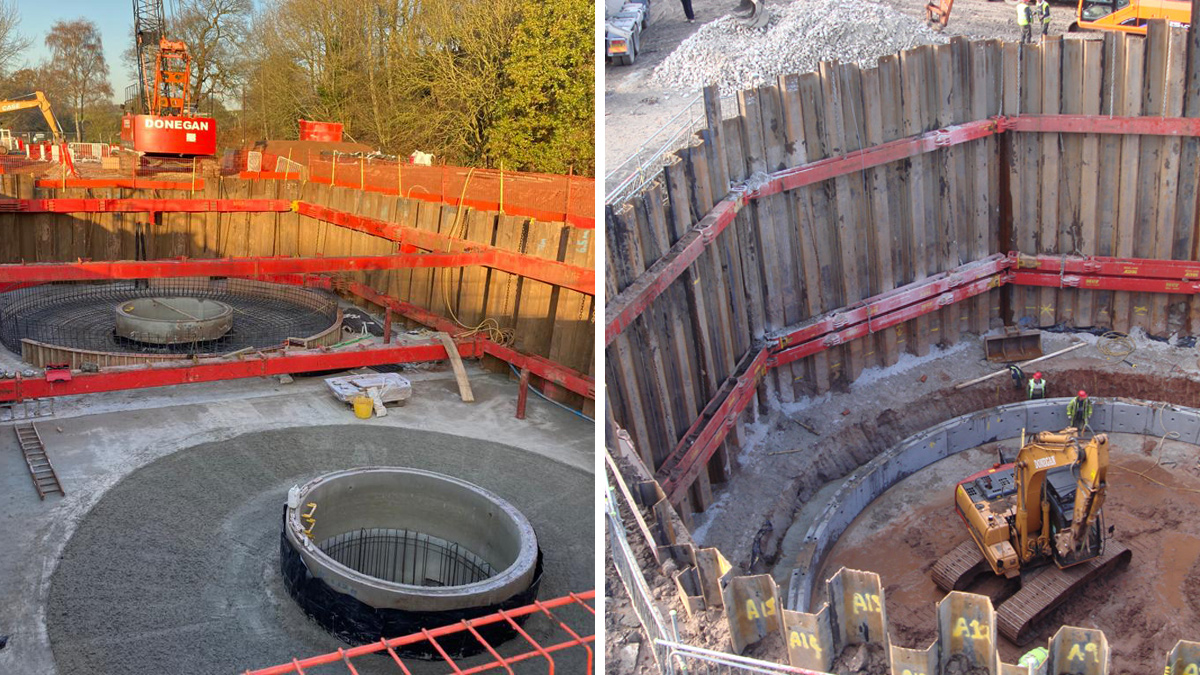
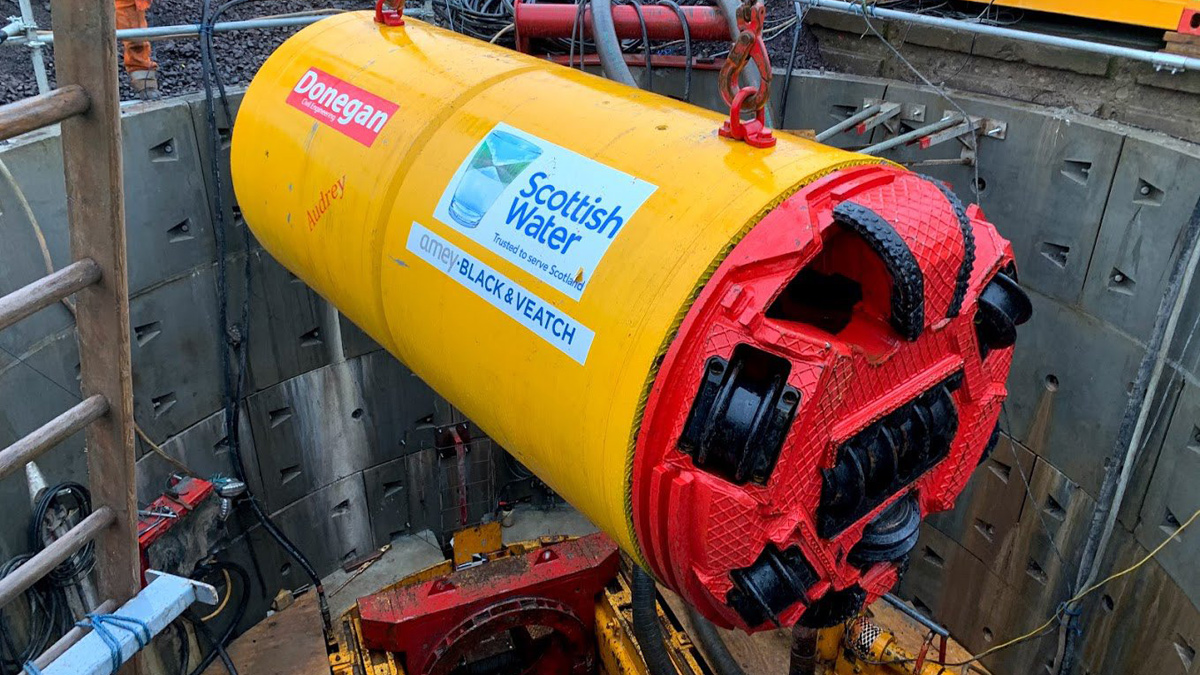
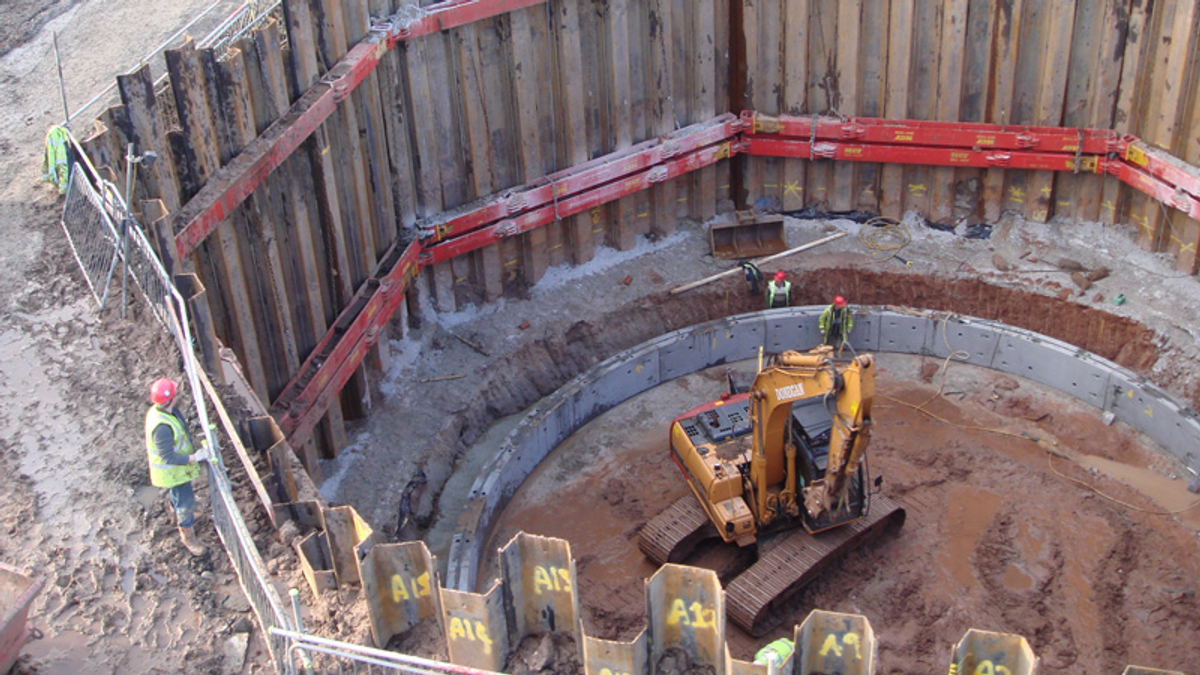
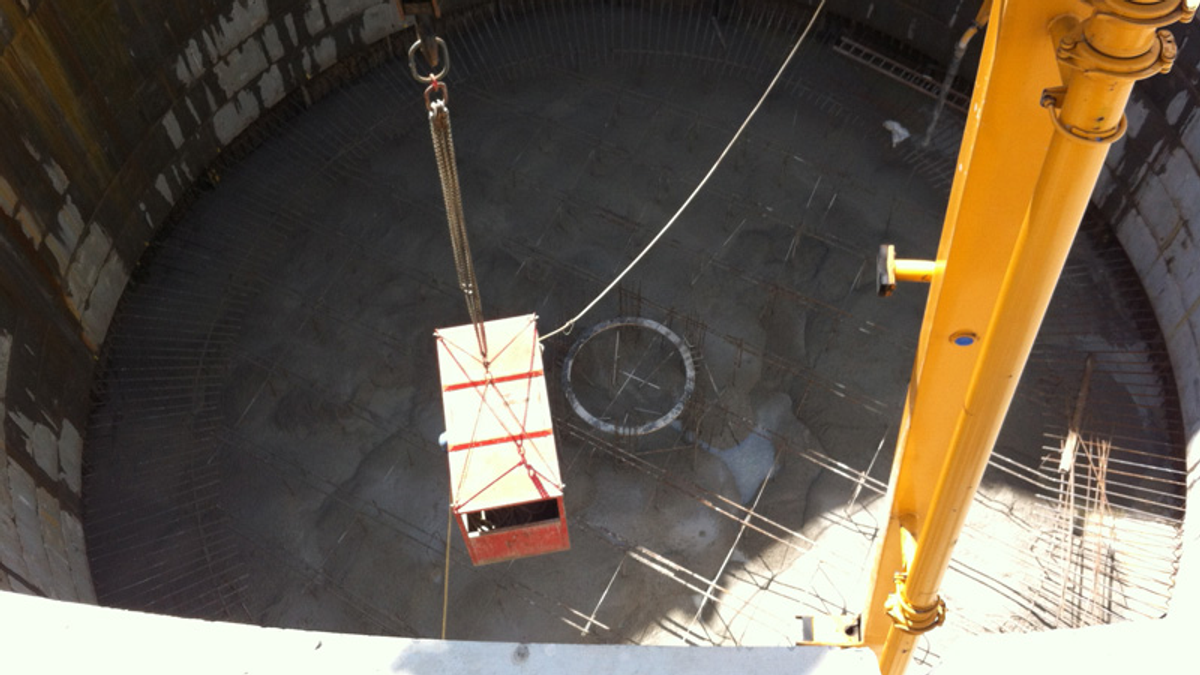
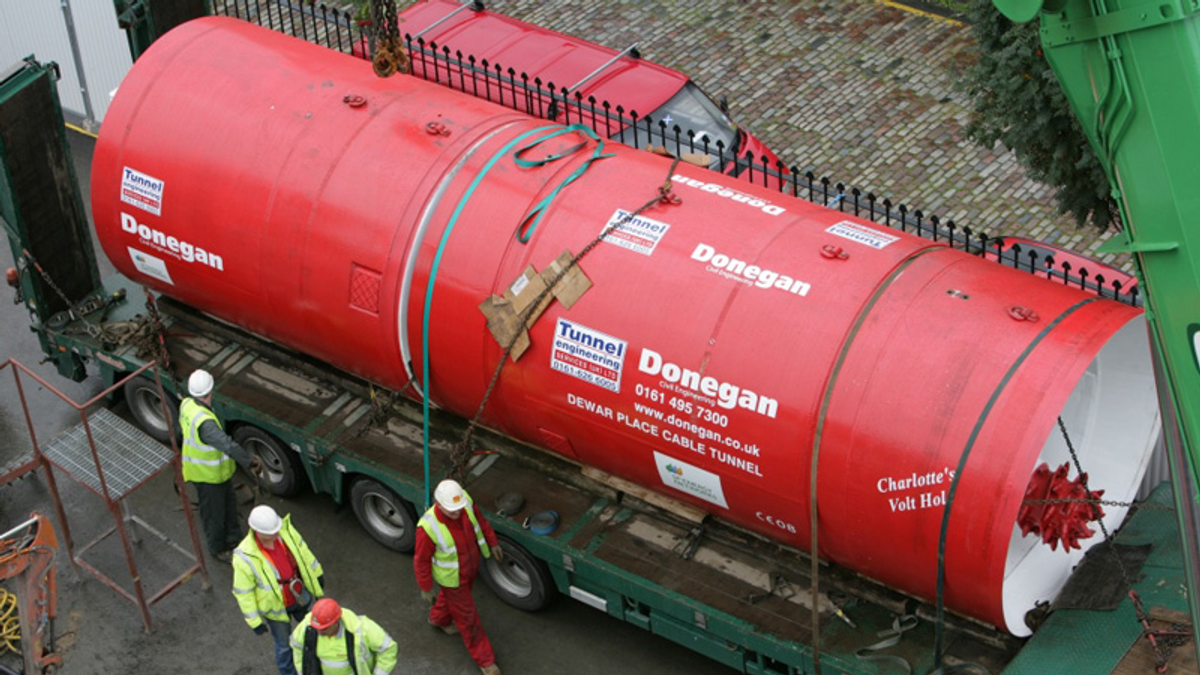
- Caisson procurement and sinking – supply of caisson segments and components, and sinking in controlled stages with set-out checks, sinkability controls and tolerances to land at design formation.
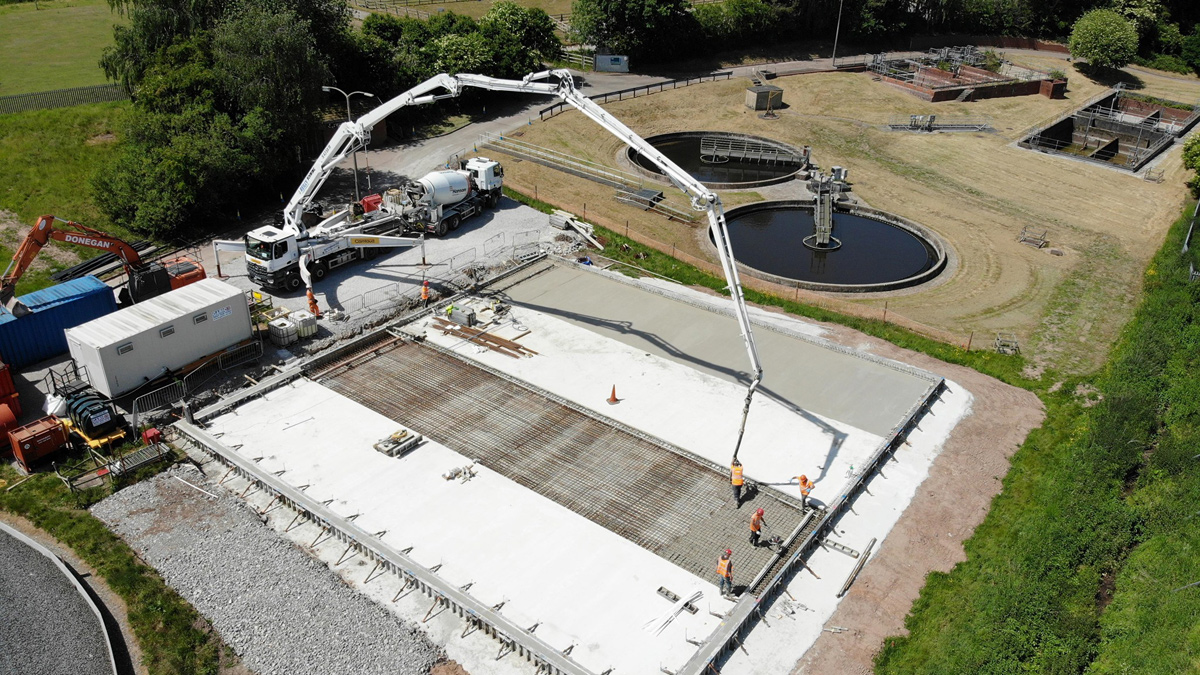
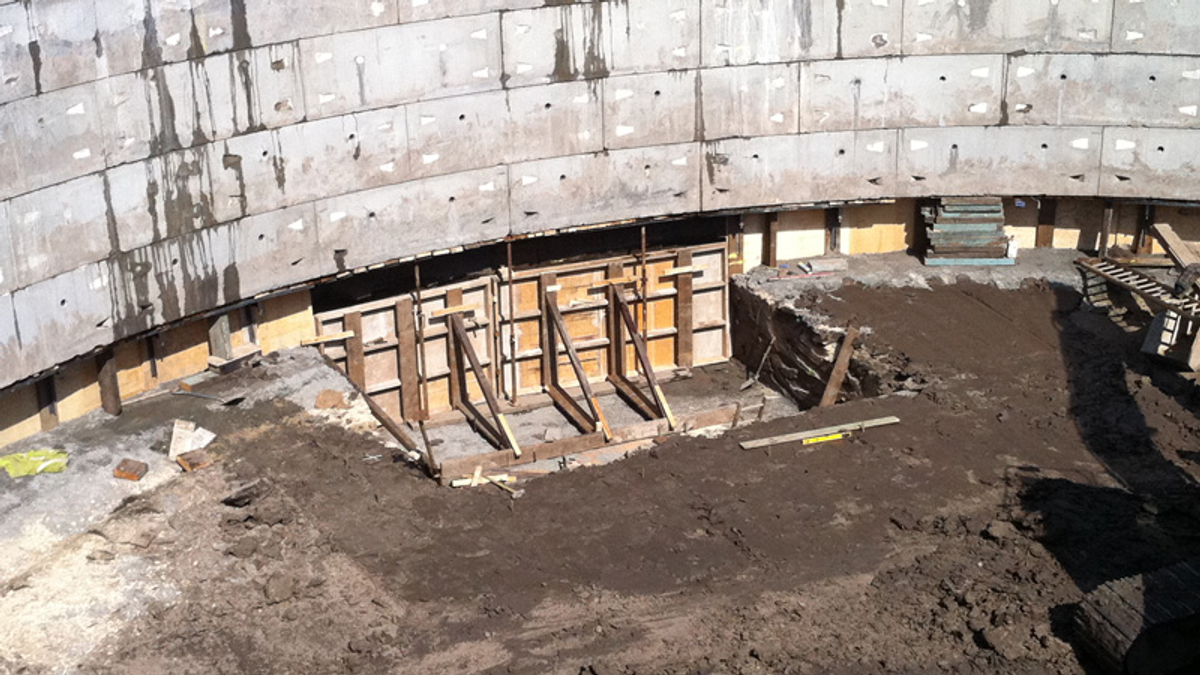
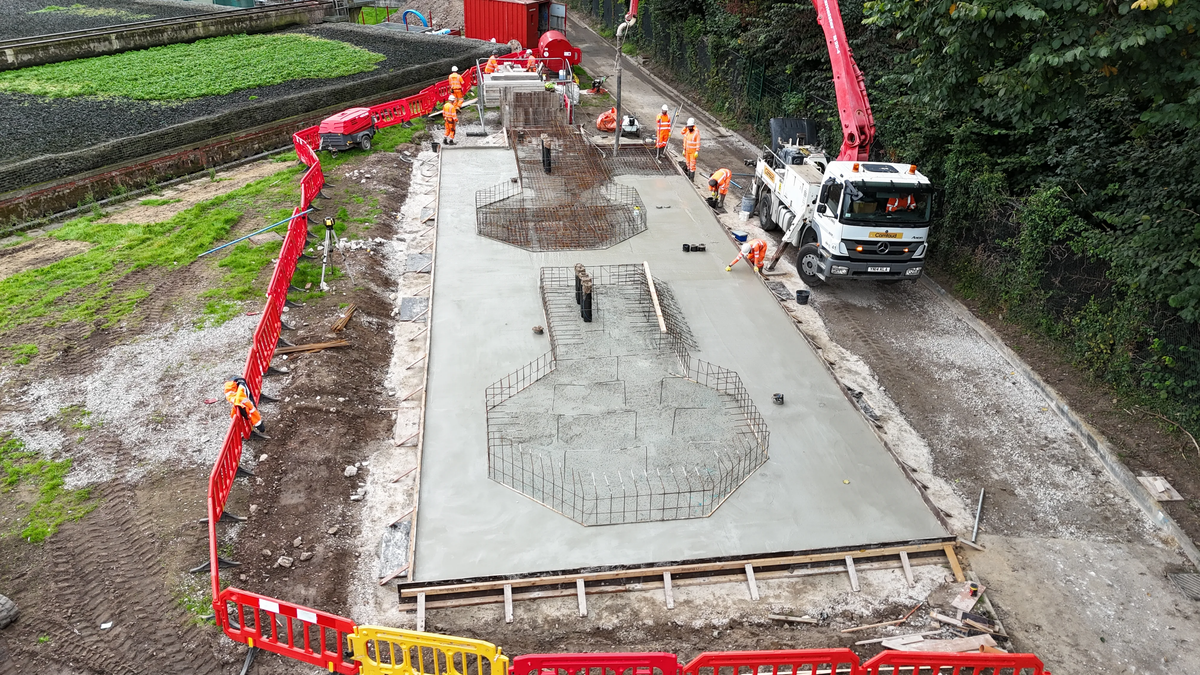
- Base plug and reinforced concrete works – construction of an in-situ anti-flotation base plug and any jacking collar or upstands required; waterproofing and finishing to specified tolerances.
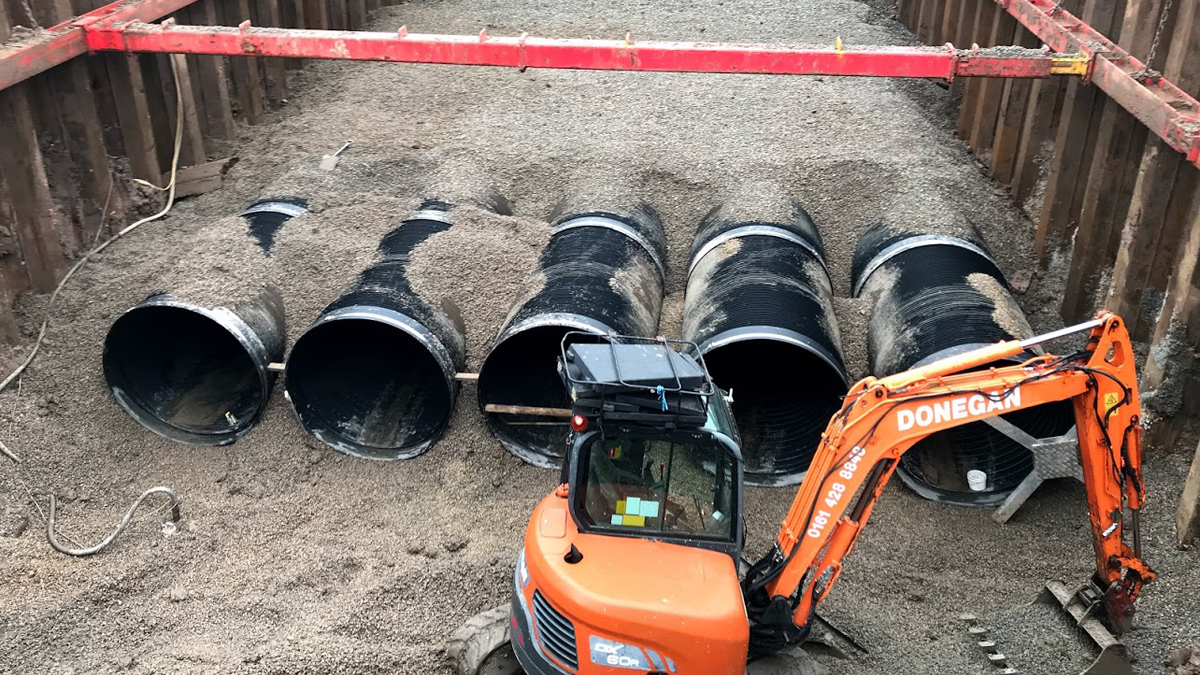
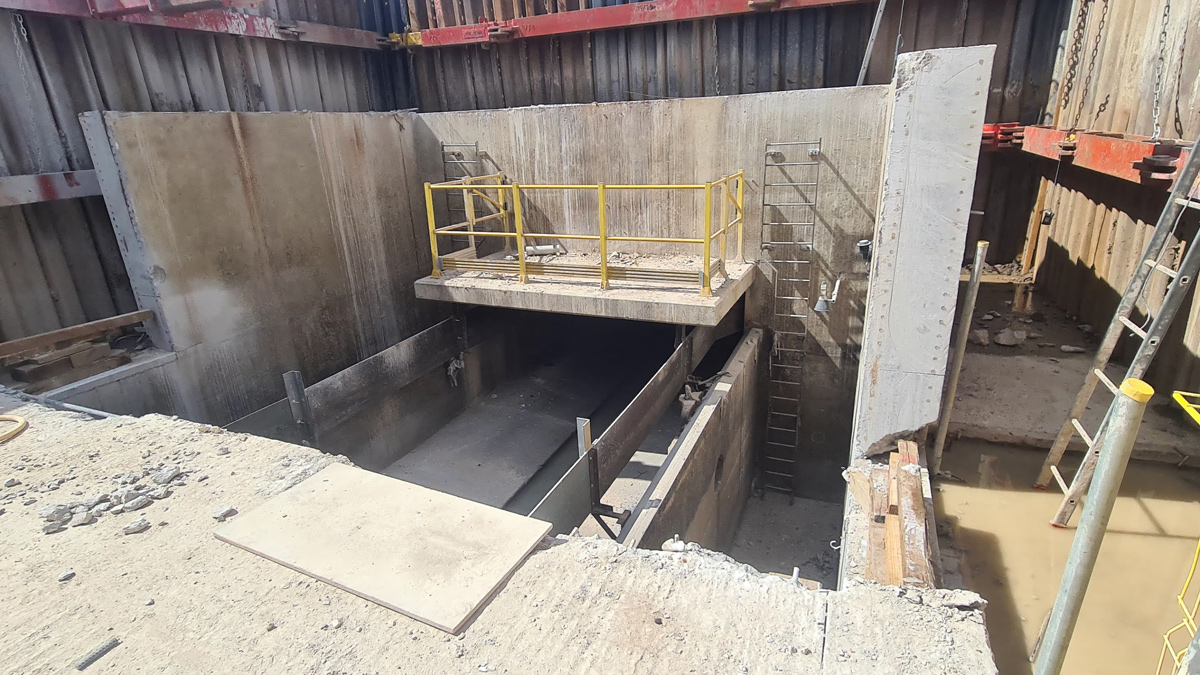
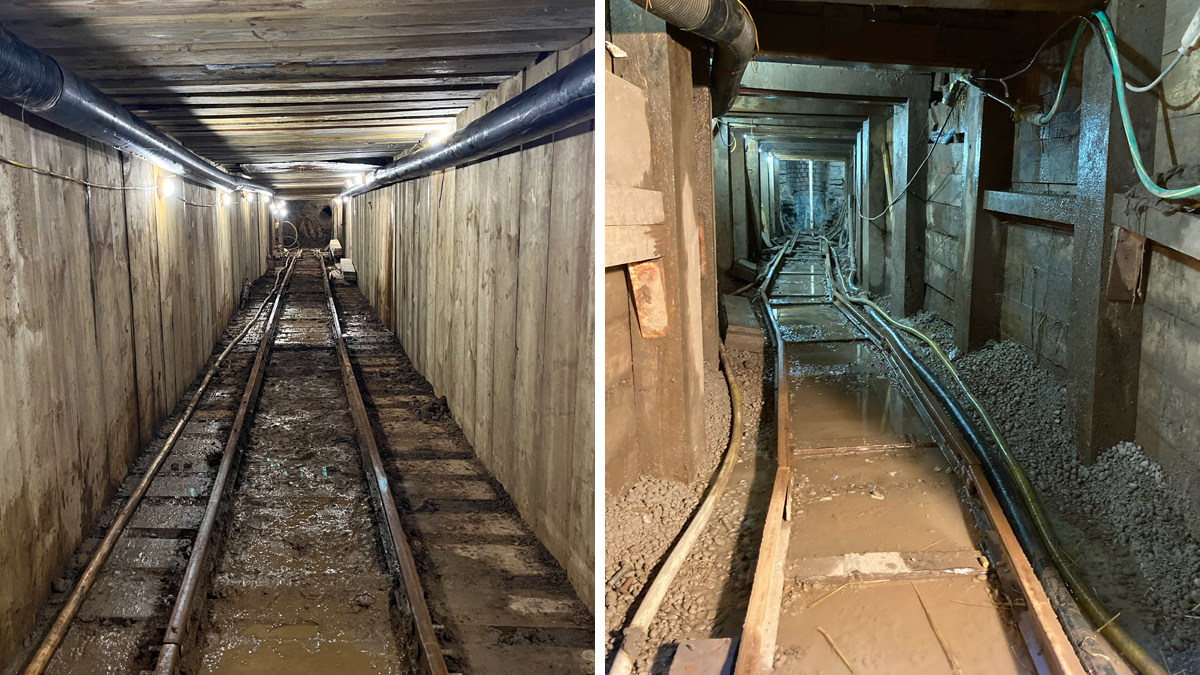
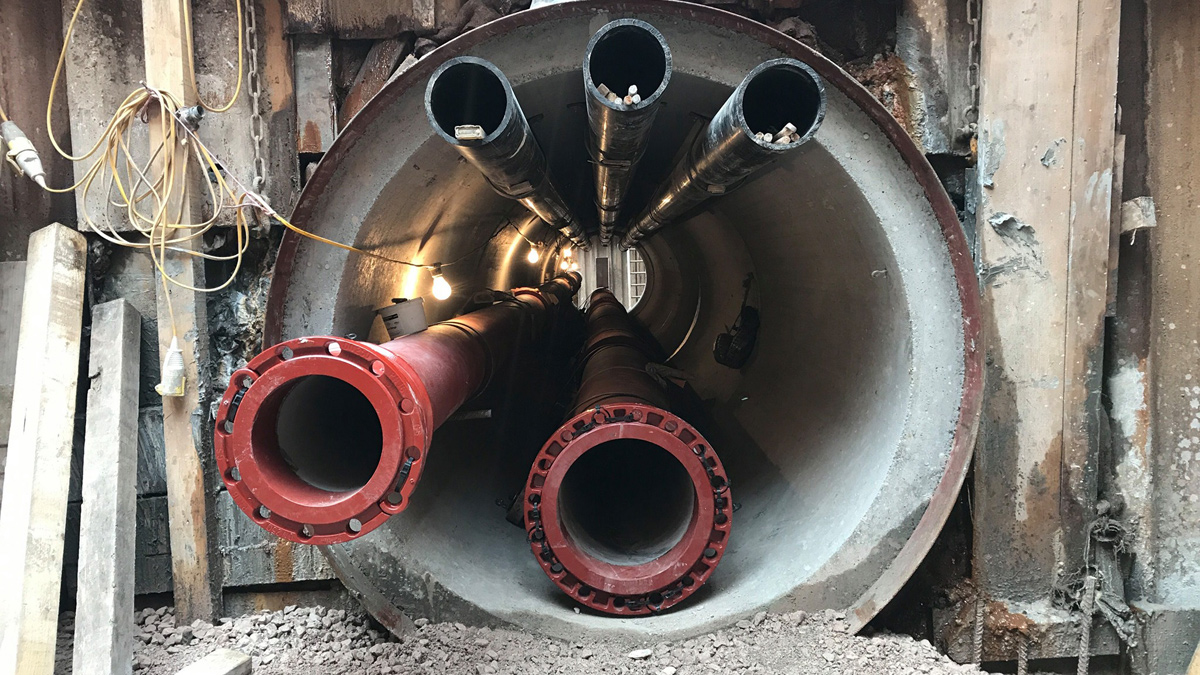
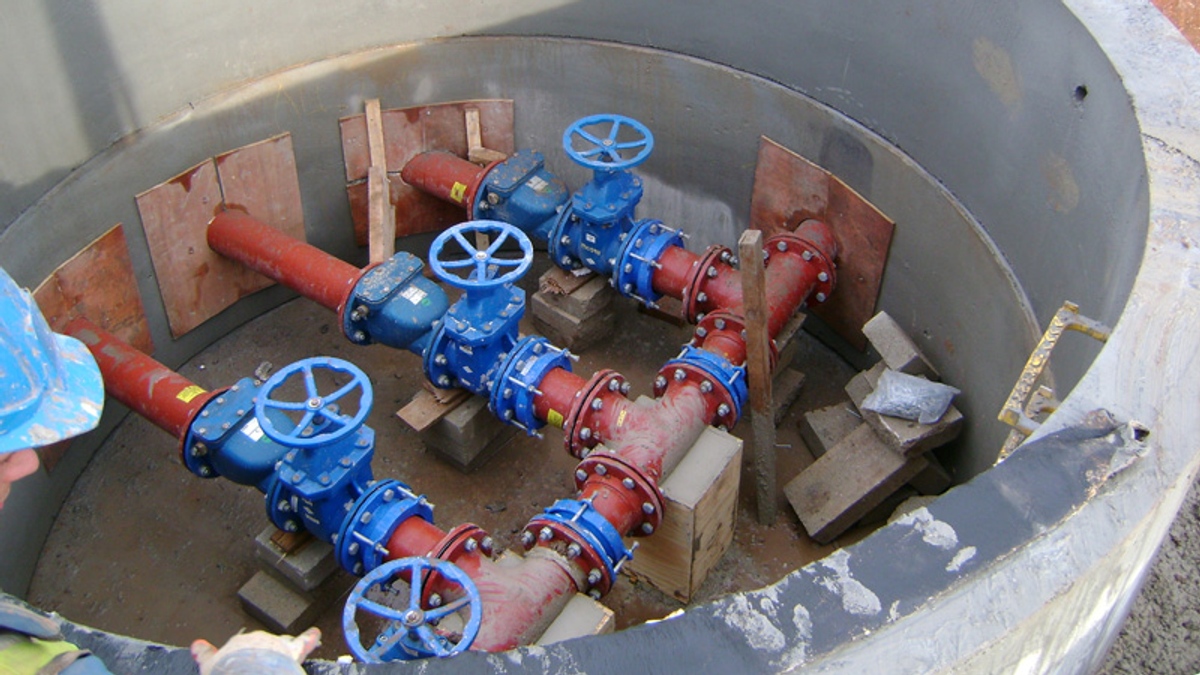
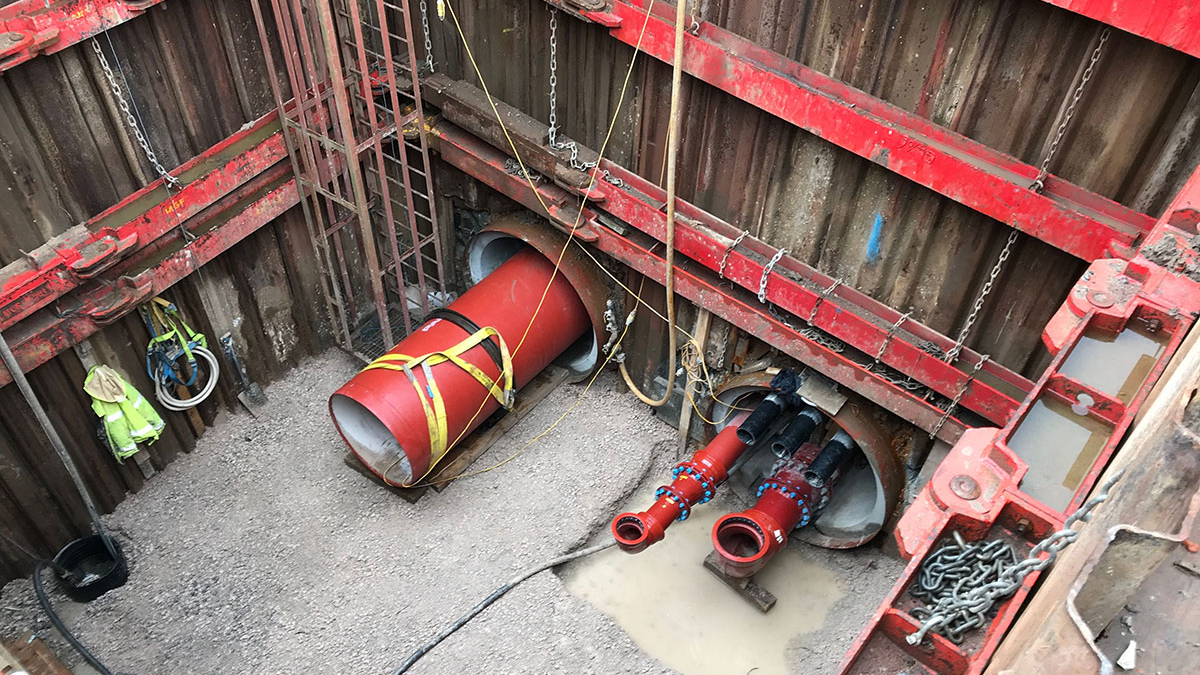
- Connections and interfaces – pipework connections to existing networks as defined in the Works Information and drawings, including penetrations, collars and reinstatement.
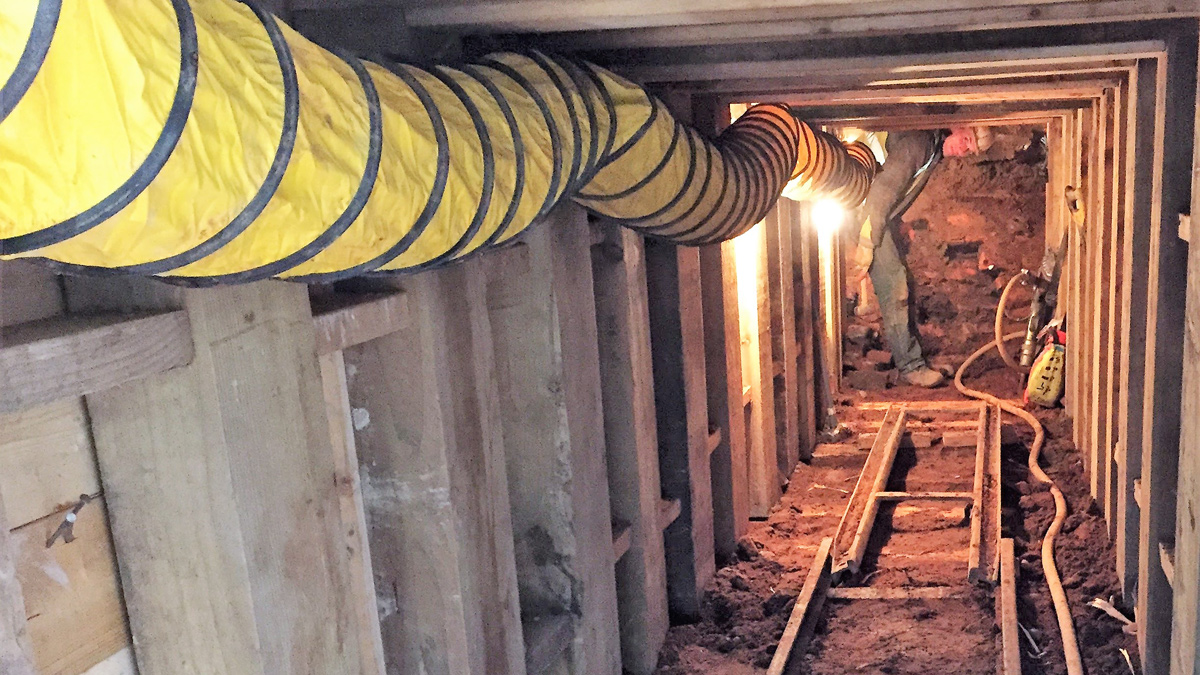
- Temporary works and dewatering – design, check, monitoring and sequencing of temporary works; groundwater and arisings management in line with environmental requirements.
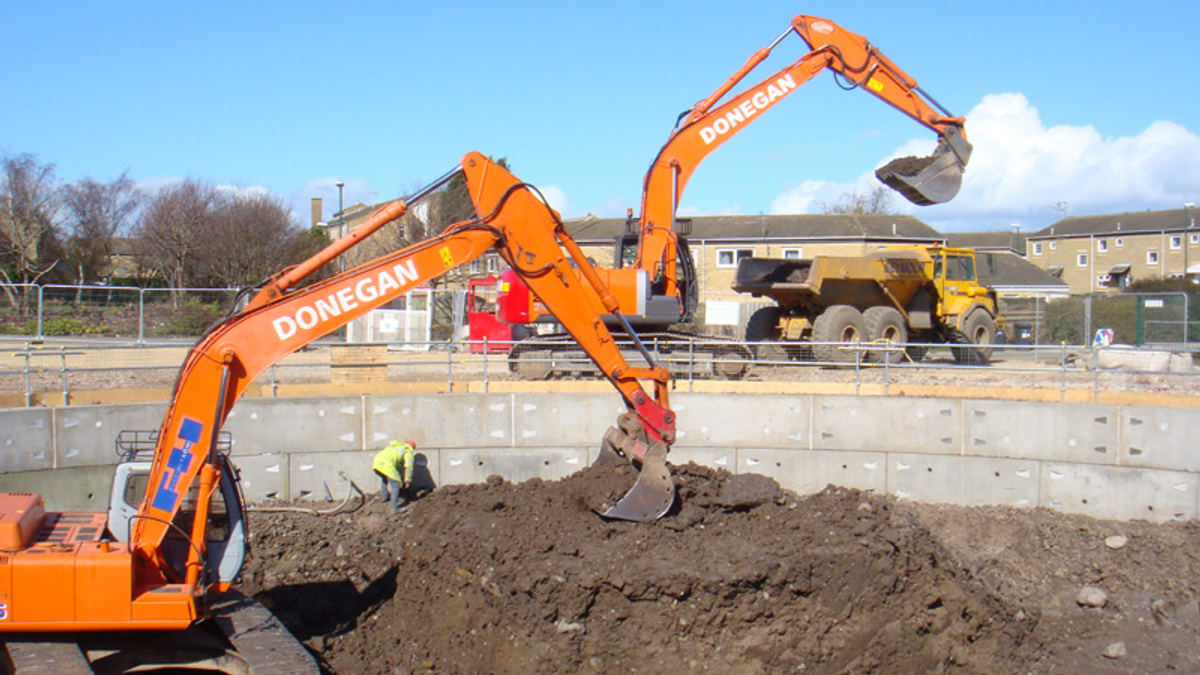
- Muck-away and materials management – handling, classification and off-site disposal of excavated arisings; site housekeeping and segregation.
- Quality, testing and handover – inspection and test plans with hold points, watertightness checks as specified, surveys and as-builts, and H&S File submission.
Challenges and how they were solved
- Ground and groundwater conditions – sinkability and uplift risks managed through temporary works design, staged sinking, real-time monitoring and a conservative anti-flotation base plug design.
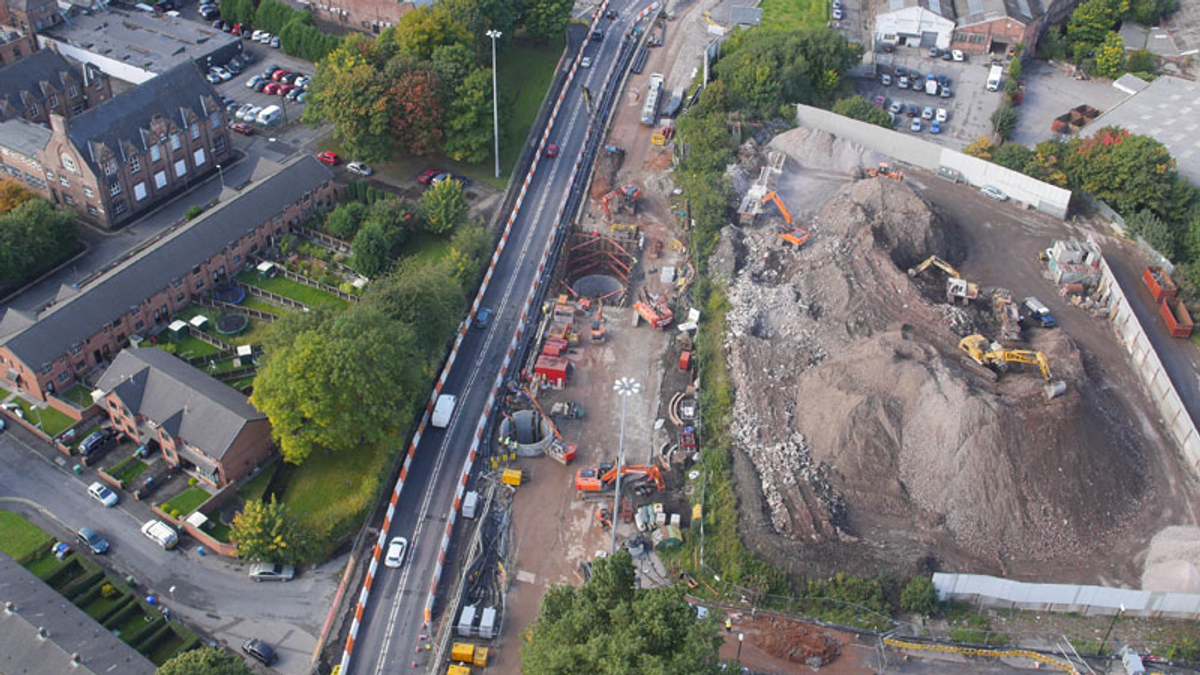
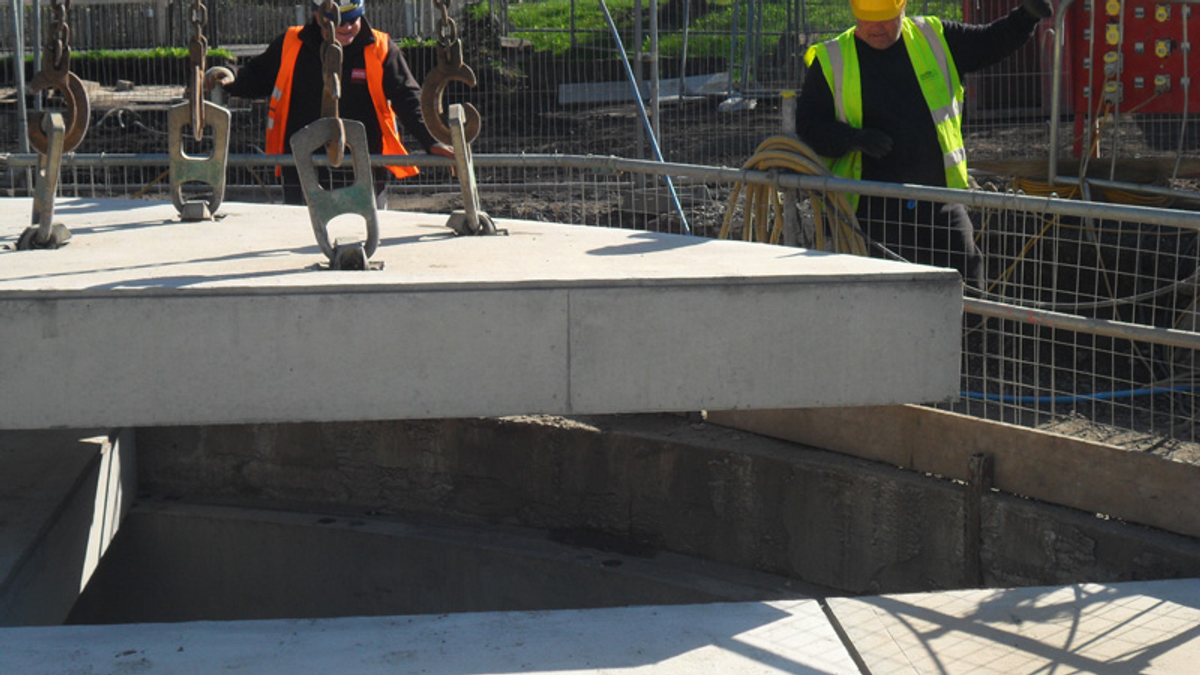
- Live-site interfaces and a tight working area – deliveries and lifting operations sequenced to maintain safe access; tie-ins coordinated to minimise process disruption and protect existing assets.
- Tolerances and watertightness – early set-out verification and template checks for penetrations and ducts, with an inspection and test plan carrying hold points at critical stages (sinking milestones, base pour, connections).
- Programme certainty – activity-based planning aligned with the sinking methodology and concrete cure windows, with a proactive early-warning culture to protect time risk allowances.
Outcome / Client benefits
- A MEICA-ready, watertight caisson storm tank integrated with existing networks, increasing site storm capacity and resilience.
- Predictable delivery through a clear activity schedule and defined change control.
- Clean handover with as-built records, test evidence and an updated H&S File.
For More Information, contact us at http://www.donegan.co.uk